Issue · Healthcare

Healthcare

Every healthcare bill, vote, and legislator stance in Wisconsin, automatically classified by Maddy, our AI policy reader.

Total bills
399
2025-2026 Regular Session
Top supporter
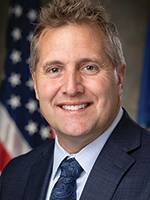
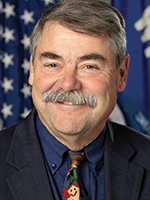
Shannon Zimmerman
79% support rate
Top opponent
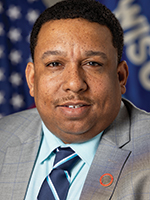
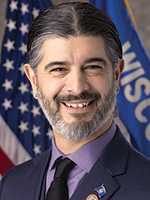
Russell Goodwin
31% support rate
Ranked legislators
10
5 support · 5 oppose
Key legislators

Who's moving healthcare in Wisconsin

Legislators moving healthcare in Wisconsin
Legislator Party Stance Support rate Votes
Shannon Zimmerman
Shannon Zimmerman House · District 30
R
Support
79% 35
Will Penterman
Will Penterman House · District 38
R
Support
71% 41
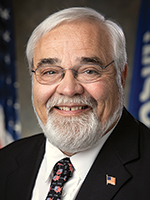
Jeff Mursau
Jeff Mursau House · District 36
R
Support
69% 44
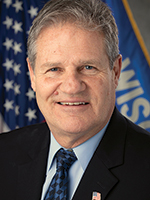
Chanz Green
Chanz Green House · District 74
R
Support
67% 47
Paul Melotik
Paul Melotik House · District 22
R
Support
67% 47
Russell Goodwin
Russell Goodwin House · District 12
D
Oppose
31% 42
Joe Sheehan
Joe Sheehan House · District 26
D
Oppose
33% 43
Vinnie Miresse
Vinnie Miresse House · District 71
D
Oppose
35% 46
Ryan Clancy
Ryan Clancy House · District 19
D
Oppose
38% 44
Christian Phelps
Christian Phelps House · District 93
D
Oppose
39% 47
Showing 211–220 of 399 bills

All healthcare bills

signed · Wisconsin · Senate Mar 28, 2025

SB 68: Relating to: the prescription drug monitoring program. (FE)

SB 68 amends Wisconsin's prescription drug monitoring program to require healthcare practitioners (like doctors and pharmacists) to review a patient's prescription history before issuing new prescriptions for certain medications. This review must occur before prescribing, and can be done by the practitioner or their agent following standard practices. The requirement applies until April 1, 2030, after which the rule expires. The bill updates existing statutes to clarify this review process and sets a specific end date for the mandate.
Sub-Topics Prescription Drugs
signed · Wisconsin · Senate Oct 22, 2025

SB 183: Relating to: reimbursement of emergency services under the Medical Assistance program when a patient is not transported, reporting on changes to the scope of practice of emergency medical responders and emergency medical services practitioners, and eligibility for the expenditure restraint incentive program. (FE)

SB 183 modifies reimbursement rules for emergency medical services under Wisconsin's Medical Assistance program. It sets a maximum $175 reimbursement rate for emergency responders when patients are not transported to a hospital. The bill also requires reporting on changes to emergency medical responder scope of practice and updates eligibility for the expenditure restraint incentive program. These changes directly affect emergency medical service providers billing the Medical Assistance program.
failed · Wisconsin · Senate Mar 23, 2026

SB 350: Relating to: school mental health and pupil wellness aid and making an appropriation.

SB 350 creates state funding to help schools increase mental health staff. Starting in the 2026-27 school year, school districts, charter schools, and participating private schools can receive 50% reimbursement for additional spending on counselors, social workers, psychologists, and nurses compared to the prior year. The bill adds $16.5 million for 2025-26 and $18 million for 2026-27 to this program. This directly supports schools seeking to expand mental health services for students.
failed · Wisconsin · Senate Mar 23, 2026

SB 639: Relating to: veterans mental health services and making an appropriation. (FE)

SB 639 allocates $5 million in state funds specifically for veterans' mental health services through the Department of Veterans Affairs. It requires the department to promote veterans' access to community-based mental health care and provide grants to organizations offering these services. The bill also streamlines rulemaking by allowing the department to issue emergency rules for administering these services without usual requirements for emergency rule justification. This directly affects veterans seeking mental health support and community organizations delivering those services. The funding and program structure are established for the 2026 biennium.
failed · Wisconsin · Assembly Mar 23, 2026

AB 220: Relating to: discrimination in employment, housing, public accommodations, education, insurance coverage, national guard, jury duty, and adoption and in the receipt of mental health or vocational rehabilitation services.

Assembly Bill 220 seeks to expand anti-discrimination protections across various aspects of life. The bill proposes to amend numerous state statutes to prohibit discrimination based on gender identity, gender expression, and sexual orientation. This would directly affect individuals in areas such as employment, housing, public accommodations, education, insurance coverage, and adoption. Key provisions include requiring government contractors not to discriminate on these grounds, while clarifying that affirmative action requirements may not apply to these new protected characteristics in certain contracts.
failed · Wisconsin · Assembly Mar 23, 2026

AB 337: Relating to: training to address student mental health and making an appropriation. (FE)

AB 337 requires public school staff in Wisconsin to receive training focused on student mental health and social-emotional learning. This bill directly affects school staff, including teachers and administrators, by mandating new training programs. It authorizes a $500,000 funding increase for fiscal years 2025-26 and 2026-27 to support these training initiatives through the Department of Public Instruction. The legislation creates a new statutory requirement (115.28 (63)(d)) for schools to implement this training, funded by the specified appropriations.
failed · Wisconsin · Assembly Mar 23, 2026

AB 12: Relating to: state agency status for certain physician assistants and advanced practice nurses who provide services without compensation for local health departments or school districts. (FE)

Assembly Bill 12 grants "state agency status" to physician assistants and advanced practice nurse prescribers who volunteer their services. This status applies when they provide uncompensated healthcare services for local health departments or school districts. For local health departments, this covers services requiring medical oversight, and for schools, it includes immunization programs. By gaining state agency status, these providers would be considered agents of the Department of Health Services for specific legal protections, such as representation by the attorney general, provided they adhere to state protocols.
failed · Wisconsin · Senate Mar 23, 2026

SB 547: Relating to: elimination of certain abortion-related regulations.

SB 547 eliminates specific abortion-related regulations in Wisconsin statutes. It repeals requirements for parental consent for minors seeking abortions (repealing 253.10), mandatory ultrasounds (repealing 441.07), and certain medical certification rules (repealing 457.26 and 940.15). The bill also amends provisions related to medical emergency definitions and updates references to "induced abortion" in other laws. These changes directly affect healthcare providers by removing reporting burdens and minors seeking abortion services by eliminating parental consent and ultrasound mandates. The bill takes effect March 1, 2026, after repeal of the referenced statutes.
Sub-Topics Women's Health
passed · Wisconsin · Assembly Mar 23, 2026

AB 43: Relating to: permitting pharmacists to prescribe certain contraceptives, extending the time limit for emergency rule procedures, providing an exemption from emergency rule procedures, granting rule-making authority, and providing a penalty. (FE)

Assembly Bill 43 permits pharmacists to prescribe and dispense hormonal contraceptive patches and self-administered oral hormonal contraceptives to individuals aged 18 and older. Pharmacists must adhere to new rules, including requiring patients to complete a self-assessment questionnaire and undergo a blood pressure screening. The bill also mandates that pharmacists report prescriptions to the patient's primary care provider, provide a written record, and carry malpractice liability insurance. Furthermore, it ensures these contraceptives are covered under Medical Assistance when prescribed by pharmacists and grants the Pharmacy Examining Board authority for related rule-making.
failed · Wisconsin · Assembly Mar 23, 2026

AB 177: Relating to: sales and use tax exemption for diapers and feminine hygiene products. (FE)

AB 177 exempts diapers and feminine hygiene products from state sales tax. The bill defines "diapers" as absorbent garments for people with incontinence and "feminine hygiene products" to include tampons, pads, menstrual cups, and similar items (excluding grooming products like soap or toothpaste). It adds these categories to the list of tax-exempt items under Wisconsin’s sales tax code (77.54(75)), directly affecting consumers who purchase these essential products. The exemption applies to both retail sales and use of these items, removing a tax burden on these daily necessities.
Showing 211 to 220 of 399 bills
Previous 1 21 22 23 40 Next