Issue · Healthcare

Healthcare

Every healthcare bill, vote, and legislator stance in Wisconsin, automatically classified by Maddy, our AI policy reader.

Total bills
399
2025-2026 Regular Session
Top supporter
Shannon Zimmerman
79% support rate
Top opponent
Russell Goodwin
31% support rate
Ranked legislators
10
5 support · 5 oppose
Key legislators

Who's moving healthcare in Wisconsin

Legislators moving healthcare in Wisconsin
Legislator Party Stance Support rate Votes
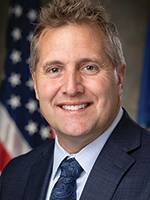
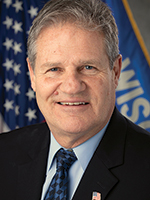
Shannon Zimmerman
Shannon Zimmerman House · District 30
R
Support
79% 35
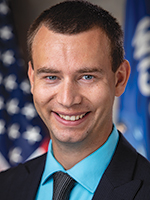
Will Penterman
Will Penterman House · District 38
R
Support
71% 41
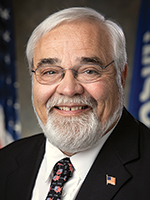
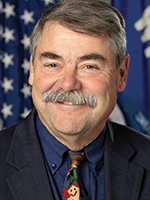
Jeff Mursau
Jeff Mursau House · District 36
R
Support
69% 44
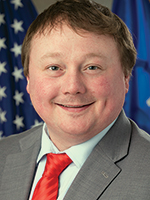
Chanz Green
Chanz Green House · District 74
R
Support
67% 47
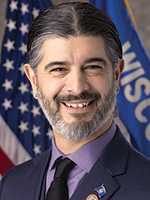
Paul Melotik
Paul Melotik House · District 22
R
Support
67% 47
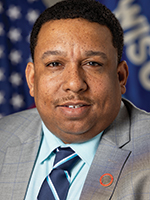
Russell Goodwin
Russell Goodwin House · District 12
D
Oppose
31% 42
Joe Sheehan
Joe Sheehan House · District 26
D
Oppose
33% 43
Vinnie Miresse
Vinnie Miresse House · District 71
D
Oppose
35% 46
Ryan Clancy
Ryan Clancy House · District 19
D
Oppose
38% 44
Christian Phelps
Christian Phelps House · District 93
D
Oppose
39% 47
Showing 131–140 of 399 bills

All healthcare bills

failed · Wisconsin · Assembly Mar 23, 2026

AB 865: Relating to: the use of live animals in medical training and providing a penalty.

AB 865 prohibits medical training programs in the state from using live animals to teach human medical treatment when equivalent alternatives exist, such as simulators, cadavers, or virtual models. It applies directly to medical schools, residency programs, and institutions training doctors, residents, and students. The law requires institutions to switch to these alternatives if they are available in the state, and imposes a $1,000 fine per live animal used in violation. This creates a concrete policy change requiring medical training to adopt non-animal methods where feasible.
failed · Wisconsin · Assembly Apr 9, 2026

AB 890: Relating to: vaccination of minors without parental consent. (FE)

AB 890 allows healthcare providers to administer medically appropriate vaccines to minors aged 16 or older without parental consent if the minor requests it. The bill requires providers to obtain the minor’s consent before billing third parties for the vaccination; if the minor declines third-party billing, they pay directly and the department bills them per existing fee rules. This directly affects minors aged 16+ seeking vaccinations, healthcare providers, and billing processes for such services. The policy changes focus on expanding minor autonomy for specific vaccinations while maintaining clear billing requirements.
failed · Wisconsin · Senate Mar 23, 2026

SB 802: Relating to: a health professional assistance program and making an appropriation. (FE)

SB 802 creates a voluntary health professional assistance program to support licensed health care providers experiencing conditions that could impair their ability to practice safely. The program, funded by a $70 fee paid by providers when obtaining or renewing a participating credential, offers confidential screening, evaluation, treatment, and ongoing monitoring services. Credentialing boards can choose to participate for specific licenses, and providers or colleagues may report concerns without civil liability for good-faith reports. The program is operated by a contracted entity meeting specific requirements and complements existing disciplinary processes without affecting boards' authority over unrelated conduct.
signed · Wisconsin · Assembly Apr 3, 2026

AB 905: Relating to: threats to health care providers and providing a penalty.

AB 905 creates a new penalty for threatening healthcare providers, staff, or their family members when the threat is related to their work. It specifically targets threats made knowing the victim is a healthcare worker (current or former) or a family member, and the threat occurs in response to actions taken at a healthcare facility or by a provider acting in their official capacity. The bill defines "health care facility" and "health care provider" using existing statutory terms to clarify the scope of protection. This law directly affects healthcare workers and their families by establishing criminal penalties for targeted threats connected to their professional roles.
failed · Wisconsin · Assembly Apr 7, 2026

AB 984: Relating to: requirements for the use of a memory care designation by community-based residential facilities. (FE)

AB 984 sets new standards for community-based residential facilities that use the "memory care" designation in their name, advertising, or communications. It requires these facilities to serve only individuals with irreversible dementia (like Alzheimer’s) and to provide mandatory staff training on dementia care. The training must cover dementia basics, person-centered care, communication techniques, non-drug behavioral interventions, and supporting residents’ independence - both for initial hiring and annually thereafter. These requirements take effect July 1, 2027, with existing facilities needing compliance by that date to continue using the designation.
Sub-Topics Long-Term Care
passed · Wisconsin · Assembly Mar 23, 2026

AB 971: Relating to: tuition and materials reimbursement for community paramedics and community emergency medical services practitioners. (FE)

AB 971 creates a state program to reimburse community paramedics and community emergency medical services practitioners for tuition and materials costs incurred in completing approved training programs. It covers individuals who paid for their own training or employers who paid for their employees' training. To qualify, applicants must complete a state-approved training program and receive department approval. Reimbursement requires applying through the state board and meeting specific training completion criteria.
signed · Wisconsin · Senate Apr 6, 2026

SB 832: Relating to: remote dispensing sites under the pharmacy practice law.

SB 832 establishes a new regulatory framework for pharmacies operating remotely without a pharmacist physically present on-site. It defines "remote dispensing sites" (now called "remotely supervised pharmacies") and allows the pharmacy board to create rules exempting these sites from standard pharmacy requirements. The bill clarifies that such remote operations are not classified as community or institutional pharmacies under existing rules. It repeals previous provisions requiring pharmacist presence and modifies licensing rules to specifically accommodate these remote pharmacy models.
Sub-Topics Prescription Drugs
failed · Wisconsin · Assembly Mar 23, 2026

AB 821: Relating to: forensic examinations done on a crime victim to gather evidence, modifying administrative rules relating to reimbursement for forensic examinations, and making an appropriation. (FE)

AB 821 creates a $2.5 million biennial grant program to help health care facilities recruit and retain staff who perform forensic exams on crime victims. It requires facilities to establish new positions, recruitment programs, or training for providers conducting exams related to domestic abuse or strangulation cases. The bill also revises reimbursement rules to ensure health care providers receive payment for exam costs (including STD testing/treatment) regardless of whether victims cooperate with law enforcement. This directly affects health care facilities and providers who conduct these forensic examinations for victims of specific offenses.
passed · Wisconsin · Assembly Mar 23, 2026

AB 915: Relating to: tax credit for small businesses offering individual coverage health reimbursement arrangements. (FE)

AB 915 creates a $400-per-employee tax credit for Wisconsin small businesses (with 1-50 employees) that offer individual coverage health reimbursement arrangements (ICHRA) to their workers. To qualify, businesses must contribute at least $400 per covered employee annually into the ICHRA, and employees must accept the arrangement. The credit reduces state income tax liability for qualifying businesses, with partnerships and LLCs required to allocate the credit to owners based on ownership shares. This policy directly affects small employers seeking to provide health benefits without traditional group plans, while requiring specific contribution levels to claim the credit.
Sub-Topics Income Tax Tax Credits
failed · Wisconsin · Assembly Mar 23, 2026

AB 904: Relating to: immunity for certain controlled substances offenses for aiders and aided persons.

AB 904 creates immunity from prosecution and parole/probation revocation for people who seek help during a suspected overdose (aiders) and offers treatment-based alternatives instead of jail for the person experiencing the overdose (aided persons). Specifically, aiders who get help immediately after seeing someone overdose cannot lose parole or face charges for drug possession under certain circumstances. Aided persons can avoid prosecution by completing a treatment program or serving 15 days in jail if treatment isn't available, with prosecutors required to offer deferred prosecution tied to treatment. The bill applies to offenses involving controlled substances, paraphernalia, or masking agents directly related to overdose assistance.
Showing 131 to 140 of 399 bills
Previous 1 13 14 15 40 Next