Issue · Criminal Justice

Criminal Justice

Every criminal justice bill, vote, and legislator stance in Wisconsin, automatically classified by Maddy, our AI policy reader.

Total bills
250
2025-2026 Regular Session
Top supporter
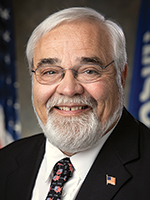
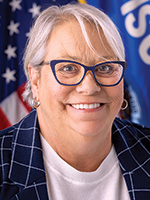
Jeff Mursau
70% support rate
Top opponent
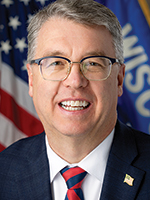
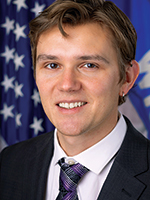
Ryan Clancy
32% support rate
Ranked legislators
10
5 support · 5 oppose
Key legislators

Who's moving criminal justice in Wisconsin

Legislators moving criminal justice in Wisconsin
Legislator Party Stance Support rate Votes
Jeff Mursau
Jeff Mursau House · District 36
R
Support
70% 54
Will Penterman
Will Penterman House · District 38
R
Support
67% 48
Brad Pfaff
Brad Pfaff Senate · District 32
D
Support
64% 36
Eric Wimberger
Eric Wimberger Senate · District 2
R
Support
64% 36
Scott Krug
Scott Krug House · District 72
R
Support
64% 58
Ryan Clancy
Ryan Clancy House · District 19
D
Oppose
32% 53
Renuka Mayadev
Renuka Mayadev House · District 77
D
Oppose
32% 58
Christine Sinicki
Christine Sinicki House · District 20
D
Oppose
32% 58
Alex Joers
Alex Joers House · District 81
D
Oppose
32% 58
Christian Phelps
Christian Phelps House · District 93
D
Oppose
33% 57
Showing 141–150 of 250 bills

All criminal justice bills

failed · Wisconsin · Assembly Mar 23, 2026

AB 634: Relating to: release of audio and video footage following officer-involved deaths or other critical incidents involving a law enforcement officer. (FE)

AB 634 requires law enforcement agencies to publicly release bodycam, vehicle camera, and relevant audio/video footage within 15 days of specific incidents, including officer-involved deaths, critical incidents (like great bodily harm or death in custody), or firearm discharges by officers. This applies to footage showing actions leading to the incident, though agencies may redact sensitive information like victim identities, medical details, or confidential investigative strategies under defined exemptions. Affected parties, such as identified officers, victims, or families, must be notified 48 hours before release to review the footage. The bill aims to increase transparency while balancing privacy and investigative needs.
signed · Wisconsin · Senate Apr 9, 2026

SB 533: Relating to: intentionally disarming a correctional officer and providing a penalty.

SB 533 defines "equipment" for correctional officers to include tools used for communication, seeking help, or accessing locked areas, alongside items designed to cause harm or restraint. The bill amends penalties for intentionally disarming an officer or removing their issued equipment. It directly affects correctional officers and individuals who interfere with their authorized tools, making such actions a punishable offense under existing law. The legislation clarifies what constitutes prohibited interference with an officer's duties-related equipment.
failed · Wisconsin · Senate Mar 23, 2026

SB 679: Relating to: prohibiting a law enforcement agency from accessing personal data in exchange for payment without a warrant.

SB 679 prohibits law enforcement agencies from obtaining personal data from third parties (like tech companies or data brokers) in exchange for payment without a court warrant. It covers data such as location history, health records, financial details, browsing habits, and biometric information. Exceptions allow access if police have a warrant, face an emergency involving immediate danger, the data is publicly available, or the individual consented. This directly affects how police can legally acquire personal information from private entities.
failed · Wisconsin · Assembly Mar 23, 2026

AB 370: Relating to: crime victim notification cards. (FE)

AB 370 creates standardized crime victim notification cards to help victims stay informed about court proceedings involving offenders. The bill directs the Director of State Courts to design these free cards, which victims can fill out with their contact information and details about the inmate or probationer. County courts and victim-witness offices must provide the cards to victims, who can then send completed cards to the relevant court to receive updates. The bill also protects victims' mailing addresses in court records from public inspection under state law.
failed · Wisconsin · Assembly Mar 23, 2026

AB 34: Relating to: court-issued criminal complaints in officer-involved deaths.

AB 34 prevents courts from allowing criminal complaints against law enforcement officers in officer-involved deaths when a district attorney has already determined there is no basis for prosecution. The bill requires that courts and judges cannot issue complaints unless "new or unused evidence" is presented, effectively barring judicial override of a district attorney's initial decision. This directly affects law enforcement officers involved in such deaths and the legal process for pursuing criminal charges against them. The law applies to cases defined under statute 175.47 (1) (c), limiting judicial action based on a district attorney's prior assessment.
Sub-Topics Courts Law Enforcement
failed · Wisconsin · Assembly Mar 23, 2026

AB 555: Relating to: intentionally disarming a correctional officer and providing a penalty.

AB 555 creates a new Class H felony charge for intentionally disarming correctional officers while they are on duty. It specifically targets individuals who take dangerous weapons, devices (as defined in §941.26), or official duty items like radios, keys, or other tools from correctional officers without consent. The law applies when these items are being carried by the officer or within their immediate presence. This bill directly affects correctional officers working in state facilities and establishes criminal penalties for interference with their safety equipment during official duties.
failed · Wisconsin · Assembly Mar 23, 2026

AB 609: Relating to: right to carry a weapon in this state, licenses to carry a concealed weapon, and providing a penalty. (FE)

AB 609 modifies firearm regulations in the state by reducing the restricted distance near schools and hospitals from 1,700 to 1,200 feet for hunting. It removes restrictions on loading firearms in vehicles and discharging weapons within 50 feet of roadways for certain individuals. The bill clarifies that law enforcement officers, qualified out-of-state officers, and former officers are exempt from specific firearm restrictions while acting in their official duties. These changes primarily affect law enforcement personnel and their operational procedures, not general public carry rights. The bill does not create new carry permits or alter concealed weapon licensing requirements.
failed · Wisconsin · Senate Mar 23, 2026

SB 93: Relating to: recommendation to revoke extended supervision, parole, or probation if a person is charged with a crime. (FE)

SB 93 requires state departments to recommend revoking extended supervision, parole, or probation when a person under those programs is charged with a crime. It directly affects individuals supervised by the department after release from incarceration. The bill mandates this recommendation as a standard step in the process, without altering the existing revocation procedures or hearing requirements. The change applies to criminal charges filed on or after the bill's effective date.
failed · Wisconsin · Assembly Mar 23, 2026

AB 576: Relating to: limiting the use of automatic registration plate readers, requiring a search warrant for data from an automatic registration plate reader or security camera, and providing a penalty.

AB 576 limits most uses of automatic license plate readers (ALPRs), allowing them only for parking enforcement, secured private areas with restricted access, or weigh stations. It requires law enforcement to obtain a warrant before accessing ALPR or private security camera data, with exceptions only during emergencies involving immediate danger. The bill also restricts data retention to 90 days and imposes fines up to $10,000 for violations of these rules.
Sub-Topics Law Enforcement
failed · Wisconsin · Senate Mar 23, 2026

SB 92: Relating to: theft crimes and providing a penalty. (FE)

SB 92 increases penalties for repeat theft offenses by creating new sentencing provisions. It allows prosecutors to charge and convict individuals with a Class I felony for certain misdemeanors if they have prior convictions for specific theft crimes under sections 943.20(3)(a)-(cm) or 943.50(4)(a)-(c). Similarly, it elevates felony charges to a higher classification when prior theft convictions exist. The bill applies to offenses committed on its effective date but permits counting prior convictions toward sentencing. It directly affects repeat offenders of specified theft offenses by imposing harsher penalties.
Sub-Topics Sentencing
Showing 141 to 150 of 250 bills
Previous 1 14 15 16 25 Next