Issue · Criminal Justice

Criminal Justice

Every criminal justice bill, vote, and legislator stance in Wisconsin, automatically classified by Maddy, our AI policy reader.

Total bills
250
2025-2026 Regular Session
Top supporter
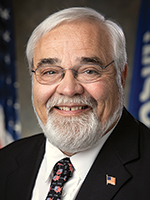
Jeff Mursau
70% support rate
Top opponent
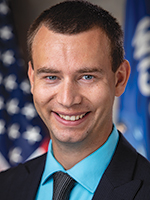
Ryan Clancy
32% support rate
Ranked legislators
10
5 support · 5 oppose
Key legislators

Who's moving criminal justice in Wisconsin

Legislators moving criminal justice in Wisconsin
Legislator Party Stance Support rate Votes
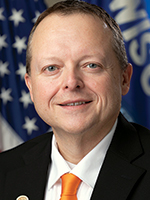
Jeff Mursau
Jeff Mursau House · District 36
R
Support
70% 54
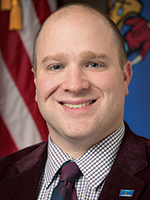
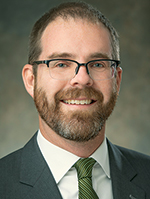
Will Penterman
Will Penterman House · District 38
R
Support
67% 48
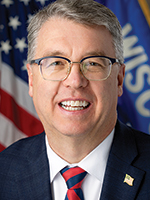
Brad Pfaff
Brad Pfaff Senate · District 32
D
Support
64% 36
Eric Wimberger
Eric Wimberger Senate · District 2
R
Support
64% 36
Scott Krug
Scott Krug House · District 72
R
Support
64% 58
Ryan Clancy
Ryan Clancy House · District 19
D
Oppose
32% 53
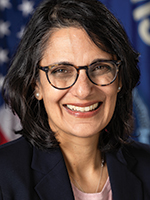
Renuka Mayadev
Renuka Mayadev House · District 77
D
Oppose
32% 58
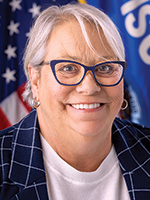
Christine Sinicki
Christine Sinicki House · District 20
D
Oppose
32% 58
Alex Joers
Alex Joers House · District 81
D
Oppose
32% 58
Christian Phelps
Christian Phelps House · District 93
D
Oppose
33% 57
Showing 131–140 of 250 bills

All criminal justice bills

failed · Wisconsin · Senate Mar 23, 2026

SB 671: Relating to: creating a crime of grooming a child for sexual activity and providing a penalty.

SB 671 creates a new criminal offense for grooming a child for sexual activity and establishes penalties for this conduct. The bill amends multiple statutes to define "grooming" as a serious crime, specifically adding it to lists of offenses that bar individuals from certain homes (like relatives' homes or unlicensed childcare settings) if they have prior convictions or plea agreements related to child sexual abuse. It updates definitions of "serious crimes" for entities serving minors, ensuring that grooming violations trigger mandatory reporting and registration requirements under laws like 948.072. This directly affects children at risk of exploitation, individuals convicted of grooming-related offenses, and organizations that provide services to minors.
signed · Wisconsin · Assembly Mar 19, 2026

AB 136: Relating to: classification of the crime of impersonating law enforcement officers, fire fighters, and certain other emergency personnel and providing a penalty.

AB 136 makes it a Class A misdemeanor to intentionally impersonate a peace officer, firefighter, emergency medical services practitioner, or emergency medical responder with the intent to mislead others into believing the person is actually an emergency personnel member. The bill directly affects individuals who falsely claim these roles to deceive others, such as by wearing uniforms or using official equipment. Key provisions define specific penalties for each type of impersonation, clarifying that the offense applies when someone acts with deceptive intent. This legislation updates Wisconsin law to explicitly classify these impersonations as criminal acts with standardized misdemeanor penalties.
Sub-Topics Law Enforcement
failed · Wisconsin · Senate Mar 23, 2026

SB 100: Relating to: the requirement that first class cities and first class city school districts place school resource officers in schools. (FE)

SB 100 requires first-class cities and their school districts to place at least 25 school resource officers (SROs) in schools during normal hours, before/after school, and at events starting January 1, 2024. It mandates SROs complete a 40-hour training course and requires school districts to use specific safety statistics when assigning officers. The bill establishes a cost-sharing agreement where school districts cover 75% of SRO costs and cities cover 25%, with new certification deadlines for both parties to the joint committee on finance. Failure to meet these requirements risks withholding up to 20% of school district aid or 10% of municipal payments under related statutes. The bill directly affects first-class cities and their school districts through these staffing, training, and financial obligations.
failed · Wisconsin · Assembly Mar 23, 2026

AB 293: Relating to: sunset of the community-oriented policing-house grant program.

AB 293 extends the expiration date of Wisconsin's community-oriented policing grant program from July 1, 2025, to July 1, 2027. This bill directly affects local law enforcement agencies that receive these grants, ensuring continued eligibility for funding through 2027. The key provision amends Wisconsin Act 19 to update the sunset date in the relevant statute. The change delays the program's termination by two years without altering its structure or funding levels.
Sub-Topics Law Enforcement
signed · Wisconsin · Senate Mar 9, 2026

SB 459: Relating to: admissibility of expert witness testimony.

SB 459 clarifies the standard courts must use to admit expert witness testimony in legal cases. It requires judges to determine, before testimony is presented, that it is "more likely than not" based on sufficient facts, reliable methods, and properly applied to the case details. This change directly affects courts, lawyers, and expert witnesses in civil and criminal trials by strengthening the judge's role in reviewing testimony quality. The bill does not create new laws but refines existing rules for evaluating expert evidence, applying to cases filed after its effective date.
Sub-Topics Judges
passed · Wisconsin · Assembly Mar 23, 2026

AB 66: Relating to: dismissing or amending certain criminal charges and deferred prosecution agreements for certain crimes.

AB 66 restricts prosecutors from dismissing or amending certain criminal charges without court approval. It applies to specific "covered crimes," including domestic abuse violations, certain violent offenses (like those under s. 940.198 or 941.29), and crimes listed in Chapter 948. Prosecutors must seek court approval for any dismissal or amendment, and courts can only approve if the action aligns with deterring these crimes. The bill also prohibits deferred prosecution agreements for individuals charged with covered crimes. This policy change directly affects prosecutors, courts, and defendants facing charges for the listed offenses.
failed · Wisconsin · Senate Mar 23, 2026

SB 332: Relating to: prohibition against undetectable firearms, possessing a frame or receiver of a firearm without a serial number, and providing a penalty.

SB 332 prohibits the possession, sale, or manufacture of undetectable firearms (those not detectable by standard metal detectors or security scanners) and unmarked firearm frames/receivers (the core components of a gun). It creates new felony penalties: Class G for possessing undetectable firearms, Class H for sharing manufacturing plans, and Class I for possessing unmarked frames/receivers. The law applies to the general public but includes exemptions for law enforcement officers, military personnel, and licensed manufacturers acting within their official duties. This directly affects individuals who own or attempt to build such firearms, aiming to enhance public safety through stricter firearm tracking and detection requirements.
signed · Wisconsin · Assembly Oct 31, 2025

AB 65: Relating to: entering certain places with intent to commit battery and providing a penalty.

AB 65, now Wisconsin Act 44, makes it a Class F felony to intentionally enter a place without the owner's consent when intending to commit battery (as defined in Wisconsin law), theft, or another felony. This law directly affects individuals who unlawfully enter premises with such criminal intent. The key provision increases penalties for entering buildings or properties without permission to commit specific offenses, raising the charge from a misdemeanor to a felony. The bill does not change existing battery or theft laws but specifically targets unlawful entry with those intentions. This law took effect on November 1, 2025, after Governor approval on October 31, 2025.
failed · Wisconsin · Senate Mar 23, 2026

SB 266: Relating to: human trafficking and trafficking of a child and providing a penalty.

SB 266 amends Wisconsin law to create a new criminal penalty for individuals who knowingly profit from human trafficking. Specifically, it makes it a Class F felony to receive compensation from the earnings of victims subjected to debt bondage, prostitution, or commercial sex acts. This law directly affects traffickers or others who financially benefit from exploiting victims, with penalties applying to offenses committed on or after the law's effective date. The bill also clarifies that the new penalty applies to cases where prosecution time limits had not yet expired as of the effective date.
Sub-Topics Human Trafficking
failed · Wisconsin · Senate Mar 23, 2026

SB 329: Relating to: extreme risk protection temporary restraining orders and injunctions, making an appropriation, and providing a penalty. (FE)

SB 329 creates a $700,000 annual grant program to train law enforcement on filing extreme risk protection orders (ERPOs), which temporarily restrict firearm access for individuals deemed a risk to themselves or others. The bill amends background check requirements to include searches for active ERPOs under Section 813.124, ensuring courts and law enforcement verify if applicants are subject to such orders before firearm purchases. It also clarifies court procedures for ERPO cases, including venue rules and extensions of temporary orders when judges are reassigned. This bill directly affects law enforcement agencies (through training grants), courts (via updated procedures), and individuals subject to ERPOs.
Showing 131 to 140 of 250 bills
Previous 1 13 14 15 25 Next