Issue · Criminal Justice

Criminal Justice

Every criminal justice bill, vote, and legislator stance in Wisconsin, automatically classified by Maddy, our AI policy reader.

Total bills
250
2025-2026 Regular Session
Top supporter
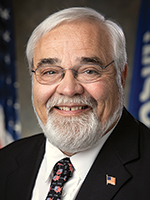
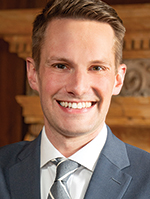
Jeff Mursau
70% support rate
Top opponent
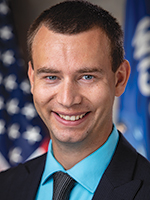
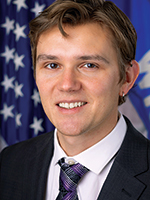
Ryan Clancy
32% support rate
Ranked legislators
10
5 support · 5 oppose
Key legislators

Who's moving criminal justice in Wisconsin

Legislators moving criminal justice in Wisconsin
Legislator Party Stance Support rate Votes
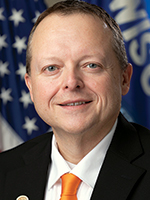
Jeff Mursau
Jeff Mursau House · District 36
R
Support
70% 54
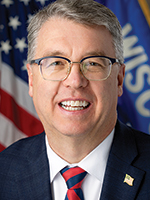
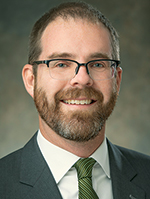
Will Penterman
Will Penterman House · District 38
R
Support
67% 48
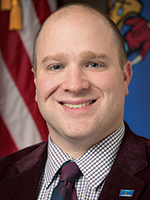
Brad Pfaff
Brad Pfaff Senate · District 32
D
Support
64% 36
Eric Wimberger
Eric Wimberger Senate · District 2
R
Support
64% 36
Scott Krug
Scott Krug House · District 72
R
Support
64% 58
Ryan Clancy
Ryan Clancy House · District 19
D
Oppose
32% 53
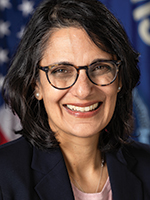
Renuka Mayadev
Renuka Mayadev House · District 77
D
Oppose
32% 58
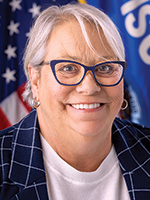
Christine Sinicki
Christine Sinicki House · District 20
D
Oppose
32% 58
Alex Joers
Alex Joers House · District 81
D
Oppose
32% 58
Christian Phelps
Christian Phelps House · District 93
D
Oppose
33% 57
Showing 101–110 of 250 bills

All criminal justice bills

signed · Wisconsin · Senate Apr 9, 2026

SB 782: Relating to: intentionally sending false text messages to 911 and providing a penalty.

SB 782 amends Wisconsin statute 256.35(10)(a) to penalize intentionally sending false text messages to 911 reporting a non-existent emergency. It imposes fines of $100-$600 or up to 90 days in jail for a first offense, and classifies subsequent offenses within four years as a Class H felony. The law directly affects individuals who deliberately mislead emergency services via text, such as falsely reporting crimes or medical crises. Key provisions clarify that the penalty applies specifically when the sender knows the reported emergency is fabricated. This bill creates concrete legal consequences for misuse of 911 text services, aiming to deter non-emergency false reports.
Sub-Topics Corrections
failed · Wisconsin · Senate Mar 23, 2026

SB 716: Relating to: considering post-traumatic stress disorder as a mitigating factor in sentencing certain criminal offenders. (FE)

SB 716 adds a new provision (973.017(8m)) to sentencing guidelines, allowing courts to consider post-traumatic stress disorder (PTSD) diagnosed from military service as a mitigating factor during sentencing for veterans. It specifically applies to individuals who served in the U.S. armed forces and have a documented PTSD diagnosis linked to their military service. The bill does not change sentencing ranges but gives judges discretion to weigh this factor when determining penalties for eligible veterans convicted of crimes. This affects veterans with service-connected PTSD who are facing sentencing in criminal cases. The bill takes effect for offenses committed on its effective date.
failed · Wisconsin · Assembly Mar 23, 2026

AB 725: Relating to: reporting of and notifications about restricted movement and solitary confinement in state correctional institutions and county jails and making an appropriation. (FE)

AB 725 requires state prisons and county jails to notify designated family members within 24 hours when an inmate faces restrictions affecting visits or communication (like solitary confinement). It also mandates an online public dashboard updated every 48 hours, showing current restrictions (with reasons and duration), solitary confinement numbers broken down by reason, and total inmate counts. The bill funds these systems with $780,000 for fiscal year 2025-26 and $275,000 for 2026-27, plus temporary staff to implement them. These changes directly affect inmates, their families, and correctional facilities by increasing transparency around restrictive practices.
vetoed · Wisconsin · Assembly May 13, 2026

AB 750: Relating to: admission of students to technical college programs.

AB 750 amends state rules for admitting students to technical college programs. It establishes new admission priority rules for in-state residents versus non-residents (Section 38.22(5)(a)) and creates two new options for community college districts (Section 38.22(5)(b)). Districts may now reserve program spaces for students facing hardship or participating in school-to-work programs, or for protective services training like law enforcement, firefighting, or emergency medical services. These changes give colleges flexibility to address specific student needs and workforce preparation goals within existing admission frameworks.
failed · Wisconsin · Senate Mar 23, 2026

SB 744: Relating to: reporting of and notifications about restricted movement and solitary confinement in state correctional institutions and county jails and making an appropriation. (FE)

SB 744 requires state correctional facilities and county jails to create two new systems: (1) a notification system allowing inmates to designate up to three family members to receive automatic alerts within 24 hours if they face restrictions affecting visits or communication; and (2) a public website reporting system updated every 48 hours, detailing current restrictions, solitary confinement numbers, reasons for solitary confinement, and total inmate populations at all facilities. The bill mandates that sheriffs submit weekly data to the state department to populate the public reporting system, with the system becoming operational by the 7th month after enactment. It appropriates $780,000 for the notification system in fiscal year 2025-26 and $94,200 for staff to support implementation. This directly affects inmates, their families, and the public by increasing transparency around facility restrictions and solitary confinement practices.
Sub-Topics Corrections
failed · Wisconsin · Senate Mar 23, 2026

SB 743: Relating to: minimum wage for all inmates and residents of state correctional institutions and county jails and making an appropriation. (FE)

SB 743 establishes a minimum wage for inmates working in state correctional institutions and county jails, requiring facilities to pay at least the state's minimum hourly wage rate (currently $10.47/hour) for labor performed. The bill directly affects all inmates engaged in work programs within these facilities, including those in county jails under sheriff oversight. Key provisions include a $2.33/hour wage increase for existing rates and new state funding: $58.9 million for 2025-26 and $88.4 million for 2026-27 for state prison wages, plus $873,000 and $1.31 million for correctional enterprise programs. All wages must be held in trust accounts for inmates and cannot be garnished during their incarceration.
failed · Wisconsin · Assembly Mar 23, 2026

AB 730: Relating to: in-person visiting periods for inmates of state correctional institutions and county jails or houses of correction. (FE)

AB 730 mandates that inmates in state correctional facilities and county jails must be allowed at least two in-person visiting periods per week, with limited exceptions for lockdowns (up to 10 days). It requires facilities to allow inmates to designate up to 25 visitors, permits physical embraces for 20 seconds at the start and end of visits, and provides visitors with paper and writing supplies upon request. Inmates may keep original artwork or notes created during visits using facility-provided materials. The bill directly affects incarcerated individuals and their visitors, while setting clear operational requirements for correctional departments and sheriffs.
Sub-Topics Corrections
failed · Wisconsin · Senate Mar 23, 2026

SB 730: Relating to: decertification of law enforcement, jail, or juvenile detention officers and tactical emergency medical services professionals and the use of force by law enforcement officers. (FE)

SB 730 requires law enforcement, jail, juvenile detention, and tactical EMS officers to be decertified within 30 days if they resign to avoid termination, are terminated for just cause, or violate board rules regarding training or conduct. It also mandates decertification for officers terminated while under investigation for misconduct, barring future certification without a waiver. The bill creates a new requirement for the board to develop and update best practices for use-of-force policies, specifically addressing interactions with vulnerable populations like those with mental health conditions, disabilities, or limited English proficiency. These changes apply to all affected officers and agencies, with the decertification rules taking effect upon the bill's enactment.
failed · Wisconsin · Assembly Mar 23, 2026

AB 733: Relating to: recreational opportunities and structured programming for inmates in state correctional institutions and county jails and houses of correction. (FE)

AB 733 requires state prisons and county jails to provide inmates with minimum weekly hours of recreational activities and structured programming. State facilities must offer 21-35 hours weekly (depending on staffing levels), prioritizing education, job training, reentry planning, and wellness programs. County jails must provide at least 10 hours weekly starting 31 days into confinement, increasing to 21-35 hours after 90 days if staffing meets thresholds. Exceptions allow temporary reductions during lockdowns or solitary confinement, limited to 10 consecutive days.
failed · Wisconsin · Senate Mar 23, 2026

SB 712: Relating to: inmate access to the outdoors. (FE)

SB 712 requires state correctional institutions and county jails to provide inmates with 3 hours of outdoor access per week, beginning after a 30-day (county) or 91-day (state) period of incarceration. It applies to all inmates except those in lockdown, solitary confinement, or subject to specific state facility restrictions under Section 302.01(1)(i) during their first 90 days. The bill mandates this access for facilities like Milwaukee Secure Detention Facility starting January 1, 2028, with exceptions for safety-related restrictions. This policy directly affects incarcerated individuals in Wisconsin's state prisons and county detention centers.
Sub-Topics Corrections
Showing 101 to 110 of 250 bills
Previous 1 10 11 12 25 Next