Issue · Criminal Justice

Criminal Justice

Every criminal justice bill, vote, and legislator stance in Wisconsin, automatically classified by Maddy, our AI policy reader.

Total bills
250
2025-2026 Regular Session
Top supporter
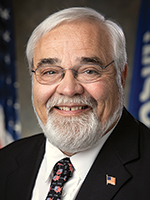
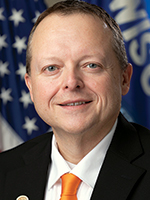
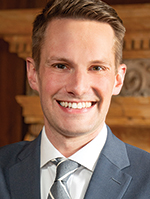
Jeff Mursau
70% support rate
Top opponent
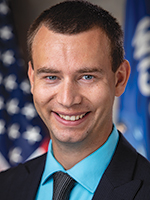
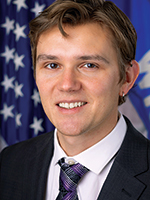
Ryan Clancy
32% support rate
Ranked legislators
10
5 support · 5 oppose
Key legislators

Who's moving criminal justice in Wisconsin

Legislators moving criminal justice in Wisconsin
Legislator Party Stance Support rate Votes
Jeff Mursau
Jeff Mursau House · District 36
R
Support
70% 54
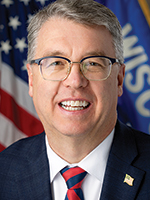
Will Penterman
Will Penterman House · District 38
R
Support
67% 48
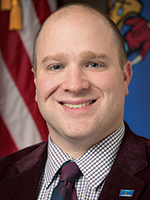
Brad Pfaff
Brad Pfaff Senate · District 32
D
Support
64% 36
Eric Wimberger
Eric Wimberger Senate · District 2
R
Support
64% 36
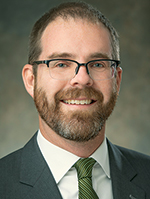
Scott Krug
Scott Krug House · District 72
R
Support
64% 58
Ryan Clancy
Ryan Clancy House · District 19
D
Oppose
32% 53
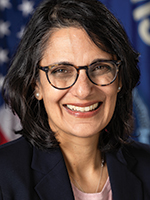
Renuka Mayadev
Renuka Mayadev House · District 77
D
Oppose
32% 58
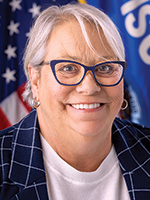
Christine Sinicki
Christine Sinicki House · District 20
D
Oppose
32% 58
Alex Joers
Alex Joers House · District 81
D
Oppose
32% 58
Christian Phelps
Christian Phelps House · District 93
D
Oppose
33% 57
Showing 91–100 of 250 bills

All criminal justice bills

failed · Wisconsin · Assembly Mar 23, 2026

AB 723: Relating to: bathing periods for inmates of state correctional institutions and county jails or houses of correction. (FE)

AB 723 establishes minimum bathing requirements for inmates in state correctional facilities and county jails. It mandates that state facilities provide at least four 15-minute bathing periods weekly, including 10 minutes of heated running water, while county jails must meet the same standard. The bill directly affects all inmates in these facilities by setting concrete, measurable hygiene standards. It requires the state department of corrections and county sheriffs to implement these provisions, with no additional exemptions or cost details specified in the current text.
Sub-Topics Corrections
failed · Wisconsin · Assembly Mar 23, 2026

AB 740: Relating to: solitary confinement. (FE)

AB 740 limits solitary confinement to a maximum of 10 days per instance and requires a 60-day waiting period between solitary periods for inmates in state prisons and county jails. It mandates that prison and jail staff provide inmates in solitary with specific items (like books, hygiene products, and paper), access to prenatal care for pregnant individuals, three weekly 25-minute video visitation sessions, and at least 15 hours per week of structured programming - including in-person visits from case managers and department staff (like health or education). The bill directly affects all inmates placed in solitary confinement under current rules, ensuring minimum standards for their well-being during confinement. The legislation is pending in the Corrections Committee after being introduced on December 3, 2025.
Sub-Topics Corrections
failed · Wisconsin · Assembly Mar 23, 2026

AB 736: Relating to: free menstrual products for inmates of state correctional institutions or county jails or houses of correction. (FE)

AB 736 requires state correctional facilities and county jails to provide free, nontoxic menstrual products to all inmates with active menstrual cycles. It mandates facilities to offer at least three verified brands each of tampons (with plastic applicator), pads, and reusable menstrual cups from a published list of nontoxic products. The bill defines "nontoxic" as free from harmful chemicals and requires facilities to sanitize reusable cups as needed. This directly affects incarcerated people who menstruate, ensuring access to essential hygiene products without cost. The law applies to all state prisons, county jails, and houses of correction in the state.
Sub-Topics Corrections
failed · Wisconsin · Assembly Mar 23, 2026

AB 773: Relating to: the treatment of a pregnant or postpartum person in prison or jail. (FE)

AB 773 requires correctional facilities to provide specific care for incarcerated pregnant and postpartum individuals (within 6 weeks of birth). It prohibits unnecessary restraints on these individuals except in extreme safety circumstances, mandating written documentation and staff training. Facilities must offer pregnancy testing, STI/HIV screening, continuing medication, doula/lactation support (if available at no cost), mental health assessments, and breastfeeding supplies. The bill directly affects all pregnant or postpartum people held in state prisons or jails, ensuring access to healthcare and support services during incarceration.
failed · Wisconsin · Assembly Mar 23, 2026

AB 809: Relating to: investigation of any pregnancy outcome and civil and criminal liability exemptions relating to pregnancy outcome.

AB 809 prohibits state and local government funding for investigations into pregnancy outcomes (like miscarriage or stillbirth) when treating the person as a crime suspect. It bans law enforcement from investigating individuals as suspects solely due to their own pregnancy outcomes, requiring consent before investigating cases involving others' pregnancy outcomes. The bill exempts women from civil or criminal liability for pregnancy outcomes (including miscarriage, abortion, or stillbirth) and amends statutes to clarify that abortion-related legal protections apply. It directly affects women experiencing pregnancy outcomes, law enforcement agencies, and health services (with limited exceptions for health investigations). The bill creates new legal protections by restricting investigations and eliminating liability for pregnancy-related events.
failed · Wisconsin · Assembly Mar 23, 2026

AB 743: Relating to: considering post-traumatic stress disorder as a mitigating factor in sentencing certain criminal offenders. (FE)

AB 743 adds post-traumatic stress disorder (PTSD) diagnosed from military service as a potential mitigating factor in sentencing for veterans convicted of crimes. It specifically applies to veterans (defined as those who served in U.S. armed forces) who have a documented PTSD diagnosis linked to their military service. Courts may now consider this PTSD diagnosis when determining sentences, potentially leading to reduced penalties. The bill takes effect for offenses committed after it becomes law.
failed · Wisconsin · Senate Mar 23, 2026

SB 726: Relating to: Department of Corrections reporting of complaints in state correctional institutions and making an appropriation. (FE)

SB 726 requires the Department of Corrections to create an interactive website system that updates complaint data from state correctional facilities every 72 hours. The system must show the total number of annual complaints per facility and display all complaint details broken down by type (without personal information), making it searchable by category. The bill appropriates $70,000 for fiscal year 2025-26 and $30,000 for 2026-27 to establish and operate this reporting system. This directly affects state correctional institutions by mandating transparent, real-time public reporting of inmate and staff complaints.
failed · Wisconsin · Senate Mar 23, 2026

SB 742: Relating to: inmate access to transparent windows and making an appropriation. (FE)

SB 742 requires all state correctional institutions and county jails to install transparent windows in inmate cells by October 2030. These windows must be at least 1.5 square feet and provide a clear view (92% visibility) of the outdoors. The bill also mandates that inmates have access to view outdoors through such windows for at least 3 hours daily, unless in lockdown or solitary confinement, with specific alternatives if cell windows are unavailable. The legislation appropriates $3.5 million ($500,000 for 2025-26 and $3 million for 2026-27) to cover window installation costs in state facilities.
failed · Wisconsin · Assembly Mar 23, 2026

AB 728: Relating to: access to prisons and jails for oversight purposes. (FE)

AB 728 creates a new statute (302.47) requiring immediate access (less than 24 hours' notice) for specific oversight personnel to visit correctional facilities. It directly affects state legislators on relevant committees and county employees overseeing jail operations, granting them access to residential areas, cells, dining areas, and prisoner discussions. Facilities may deny immediate access only between 9 p.m. and 6 a.m. (with daytime access within 72 hours) or if the requester has exceeded 12 annual visits. The bill aims to enhance transparency by enabling regular oversight visits without unnecessary delays.
Sub-Topics Corrections
failed · Wisconsin · Assembly Mar 23, 2026

AB 731: Relating to: telecommunications service access by inmates and juveniles and making an appropriation. (FE)

AB 731 requires state and county correctional facilities to provide inmates and juveniles with minimum weekly telecommunications access at no cost, including 180 minutes of phone calls, 60 minutes of video calls, and 100 text messages. It directly affects individuals in state prisons, juvenile correctional facilities, and county jails by mandating these service levels, which must be maintained or improved from existing access levels. The bill establishes funding through specific appropriations ($4.46 million for adult inmates, $517,500 for juveniles) and requires counties to join a state telecommunications contract or report why they don’t, with the state reimbursing counties for costs if they opt out. It also prohibits using telecom services to replace in-person visitation and bans charging inmates for services beyond the minimums.
Showing 91 to 100 of 250 bills
Previous 1 9 10 11 25 Next