

Maddy summarySB 541 requires West Virginia circuit courts to include specific findings of fact and conclusions of law in all orders related to juvenile child abuse and neglect cases. This applies to every court order issued under the state's child abuse and neglect procedures, directly affecting judges, legal representatives, and families involved in these cases. The bill mandates that courts document their reasoning in writing, increasing transparency in decision-making without altering substantive legal standards. It does not change existing rights or procedures but adds a procedural requirement for court orders.
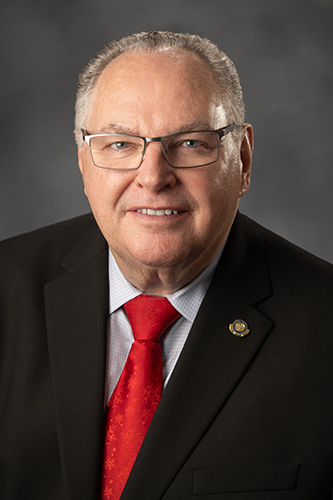
Sen. Rollan Roberts
Sponsored bills
Maddy summarySB 1081 creates a temporary School Finance Transparency Commission to study how West Virginia allocates and spends state education funds at the county level. The commission, including state officials, legislators, and local school representatives, will review spending data on personnel, operations, and instructional services across counties to identify trends and gaps between funding formulas and actual expenditures. It must submit findings and recommendations to the Governor and legislature by December 1, 2026, before terminating on December 31, 2026. This bill directly affects county school districts by examining their funding mechanisms and reporting on potential improvements to financial transparency.
Maddy summarySB 935 repeals a tax exemption for certain coal-fired power plants in West Virginia, directly affecting owners/operators of coal plants operational before January 1, 1995. The bill reduces the taxable generating capacity for these plants to 45% of their official capability (instead of 100%) for tax years starting July 1, 2021, but requires plants to remain operational until at least July 1, 2025, to qualify. If such plants close before July 1, 2025, owners must repay tax savings through a recapture tax, though federal mandates exempting closures avoid this requirement. The law applies specifically to "merchant power plants" (independent generators) and modifies existing tax calculation rules under West Virginia Code §11-13-2o.
Maddy summaryThis bill requires West Virginia's Bureau for Social Services to officially file its entire policy manual - including all rules on Child Protective Services, foster care, youth services, licensing, and casework - as a legislative rule by July 1, 2026. Future updates to these policies must also be filed as amendments to this rule under state procedures. The law aims to make bureau policies transparent and subject to standard rulemaking processes, directly affecting how the agency operates. It does not change program eligibility or funding but ensures policies are formally documented and accessible.
Maddy summarySenate Resolution 48 memorializes the late Sarah Abigail (Mullennex) Minear, a former West Virginia State Senator (1994-2006) and community leader, by formally honoring her life and public service. The resolution recognizes her roles as a philanthropist, founding president of the Tucker Community Foundation and West Virginia Grantmakers Association, and her decades of volunteer work across West Virginia. It extends the Senate’s condolences to her family and directs the Clerk to send a copy of the resolution to her loved ones. This is a ceremonial resolution with no policy or financial impact, solely commemorating her legacy.
Maddy summarySB 1080 requires West Virginia to redirect any reduction in state education funding from the previous fiscal year to support specific school districts. It targets the 10 lowest-enrollment county school districts with maximum local tax levies (excess levies), plus extremely remote schools within those districts. Funding is distributed proportionally based on kindergarten through fifth-grade student enrollment, with students counted twice in certain cases to ensure adequate support. This policy change ensures that state aid cuts directly benefit the most vulnerable school districts rather than reducing overall funding.
Maddy summarySenate Bill 23 (SB 23) clarifies that wind power projects in West Virginia are not classified as "pollution control facilities" for tax purposes and instead must be taxed as real property. This change directly affects wind energy developers and local tax assessors, as it removes the previous allowance for wind turbines and towers to be treated as personal property with reduced valuation. The bill specifies that wind turbines and their towers (including foundations) will be taxed as real property if permanently affixed to the ground, ending prior tax treatment that allowed them to be considered pollution control facilities. This adjustment aligns wind power projects with standard real property taxation, eliminating a prior distinction that impacted how these facilities were valued for local taxes.
Maddy summarySB 1014 increases Medicaid dental reimbursement rates for providers in West Virginia to address rising costs, as noted in a 2024 state report showing current rates fail to cover service expenses. It expands dental coverage for adults 21+ to include diagnostic, preventative, and restorative services (excluding cosmetic procedures), with a $2,000 annual spending limit per beneficiary. The bill requires the state to implement a dental care system with quality oversight and submit annual cost reports to legislators starting in 2027. A 20% fee increase for dental services must be enacted by December 2028 to align with federal matching requirements.
Maddy summaryThis Senate Resolution (SR 32) expresses the West Virginia Senate's commitment to protecting coal-dependent communities and energy infrastructure. It specifically requires coal-fired power plants to operate at a minimum 69% annual capacity factor to maintain grid reliability and protect over 10,000 coal jobs, while opposing actions that threaten mine closures or job losses. The resolution also pledges to prioritize local coal jobs over "out-of-state contracting" and prevent ratepayers from bearing higher costs due to reduced coal generation. As a non-binding resolution (adopted February 18, 2026), it does not create new law but formally commits the Senate to supporting coal through policy advocacy and oversight.
Maddy summarySB 662 creates a pilot program to provide free colorectal cancer screening and treatment in West Virginia for "unserved populations" - individuals with inadequate access to care due to financial constraints. The program, administered by the Bureau for Public Health, awards grants to approved organizations (like clinics or hospitals) to deliver screenings, diagnostic colonoscopies, and treatment at no cost to patients. Covered services include pre-visit consultations, colonoscopy procedures, polyp removal, and pathology, with treatment initiated if cancer is detected. Organizations must meet quality standards, and the program requires annual reporting on metrics like screenings performed, costs, and outcomes to the Legislative Oversight Commission.