

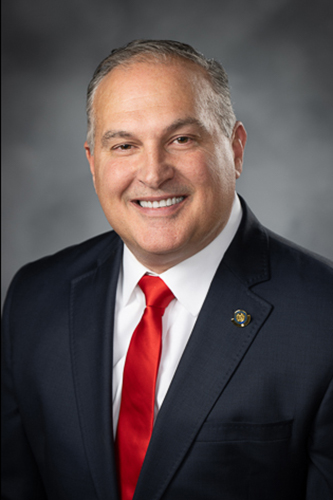
Maddy summarySB 629 increases payments by 25 percent for therapists and other professionals who provide early intervention services to West Virginia's Birth-to-Three program but are not employed by the state. This change applies to all contracted service providers under the program, effective July 1, 2025. The additional payments will be funded through the existing West Virginia Birth-to-Three Fund, which supports services for children with developmental delays. The bill does not affect salaries of state employees, as it specifically targets non-state agency contractors.
Sponsored bills
Maddy summaryThis bill requires state health insurers (including the Public Employees Insurance Agency and Bureau for Medical Services) to cover non-opioid pain medications at the lowest cost tier - typically reserved for generic drugs - instead of making them more expensive than opioid alternatives. It prohibits insurers from discouraging or disadvantaging non-opioid medications in coverage decisions, ensuring equal access for patients seeking pain treatment. The law applies to all insurers offering plans in West Virginia and mandates that non-opioid drugs be treated as competitively as generic opioids in formulary structures. It does not alter physician requirements for discussing pain treatment options, which are addressed in separate sections of the bill.
Maddy summaryWest Virginia's SB 633, the "Protecting Kids from Porn Act," requires commercial adult websites (those offering over 25% explicit content) to implement strict age verification before allowing access to minors. This includes mandatory biometric facial recognition, government ID, and credit card authentication for users, with re-verification every 24 hours. Websites failing to comply face $1 million per violation, permanent state blocking, and civil liability up to $10,000 per minor exposed. The law prohibits circumvention via VPNs or proxies and establishes an Attorney General enforcement unit to audit compliance. It directly affects adult content platforms operating in West Virginia, not general internet users.
Maddy summaryThis Senate Resolution (SR 13) memorializes Wanda Porterfield Casto, a 34-year part-time Senate Secretary/Administrative Assistant who served the West Virginia Senate and dedicated her life to public service. The resolution formally honors her legacy as a wife, mother, grandmother, and public servant, extending the Senate's deepest sympathies to her family following her passing on May 20, 2024. It directs the Senate Clerk to send a copy of the resolution to her family. As a commemorative resolution, it has no policy impact and serves solely to recognize her contributions.
Maddy summarySB 136 increases penalties for second-degree murder and voluntary manslaughter in West Virginia. It raises the minimum prison term for second-degree murder from 10 to 15 years (maximum from 40 to 60 years) and for voluntary manslaughter from 3 to 5 years (maximum from 15 to 25 years). The bill also requires inmates convicted of these crimes to serve at least 15 years before becoming eligible for parole (previously 10 years), and increases parole eligibility requirements for life sentences. These changes directly affect individuals convicted of second-degree murder or voluntary manslaughter under West Virginia law.
Maddy summaryThis bill requires West Virginia public schools to implement wearable panic alert systems for all school employees by December 2025. It mandates that each employee receives a device enabling immediate emergency contact and campus-wide lockdown notifications, with annual training required before each school year. The law also requires county school boards to share security data (like camera feeds and facility maps) with local law enforcement and establish access protocols. The system must integrate with 9-1-1 services, directly affecting school staff, administrators, and local emergency responders.
Maddy summaryThis Senate Resolution (SR 3) creates a Select Committee on Substance Use Disorder and Mental Health for the Eighty-Seventh Legislature. The committee, appointed by the Senate Presiding Officer (up to 17 members), will gather information on prevention, treatment, research, policies, access to care, and funding related to substance use disorders and mental health. It may meet during legislative interims and has jurisdiction over related legislative proposals, operating under Senate committee rules. This is a procedural resolution establishing a committee, not a law changing policy.
Maddy summarySenate Bill 574 prohibits state agencies and entities receiving state funds from implementing diversity, equity, and inclusion (DEI) policies that grant preferential treatment based on race, color, sex, ethnicity, or national origin. The bill bans state-funded DEI staff positions, mandatory DEI training, DEI statements in hiring, pronoun disclosure requirements, and any activities promoting preferential treatment. It requires all state departments to review existing DEI programs within 30 days and submit elimination plans within 90 days. This directly affects West Virginia state agencies, boards, and organizations receiving state funding. The law aims to align state practices with constitutional equal protection guarantees.
Maddy summarySenate Bill 583, titled the "West Virginia-Powered Data Center Incentive Act," provides property tax exemptions for new data centers meeting specific eligibility criteria and a tax credit for coal-fired electric utilities supplying them. Data centers must apply for these incentives and maintain compliance to continue receiving benefits. The bill aims to attract data center investments to West Virginia, which the state expects will create jobs and boost economic growth while supporting coal-powered electricity infrastructure. It establishes clear application processes, eligibility rules, and compliance requirements for both data centers and utilities.
Maddy summarySB 580 increases penalties for distributing Schedule I or II controlled substances classified as narcotics or methamphetamine. For these drugs, the bill raises the maximum prison sentence from 15 to 40 years if fentanyl is involved (with a minimum of 3 years), and adds a 5-year parole ineligibility period for convictions. It also adjusts penalties for counterfeit versions of these high-risk substances. The bill directly affects individuals distributing these specific drugs, particularly in cases involving fentanyl. These changes apply to both actual and counterfeit drugs classified in Schedules I, II, or III.