

Maddy summaryThis bill establishes new rules for vape and smoke shops in West Virginia, requiring them to comply with specific location restrictions (such as not operating near schools or parks), banning advertising that targets minors (like candy flavors or cartoon characters), and mandating county health department permits with regular inspections. It directly affects businesses selling electronic cigarettes, tobacco products, or nicotine products, requiring them to meet these standards to operate legally. Key provisions include creating a permit system administered by local health departments, setting fines for violations, and allowing appeals for permit denials. The law aims to protect public health by reducing youth access to vaping products, based on findings about youth-targeted marketing and health concerns.
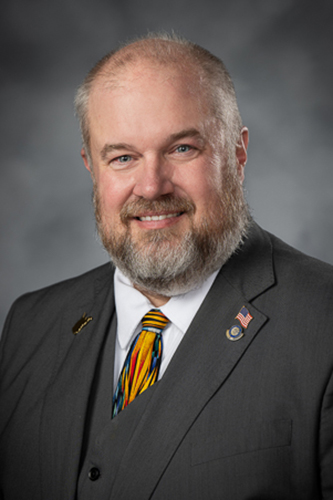
Sen. Jay Taylor
Sponsored bills
Maddy summarySB 234, the West Virginia Secondary School Activities Commission Reform Act, gives public charter schools direct authority over their own extracurricular activities (like athletics and band), while allowing them to delegate this control to the West Virginia Secondary School Activities Commission (WVSSAC). The bill restructures WVSSAC, making it a state agency (not a nonprofit) starting July 1, 2026, and requires its rules to include a competitive school classification system based on factors like student transfers. It also establishes an executive director appointed by the governor to handle rule violations and disputes, with appeals limited to the Intermediate Court of Appeals. The reform affects public charter schools, WVSSAC, and modifies eligibility rules for homeschoolers, Hope Scholarship participants, and microschool students regarding extracurricular participation.
Maddy summaryThis bill modifies the maximum child-to-caregiver ratio for family child care facilities in West Virginia, directly affecting providers operating these homes. The legislation updates the standards under which family day-care homes must operate, requiring them to maintain care standards comparable to licensed facilities. The bill also mandates that all child-care services maintain and annually update written evacuation plans for emergencies, which must be shared with parents and local emergency officials. These changes aim to enhance safety and oversight for children in family-based care settings while clarifying existing regulatory requirements.
Maddy summaryThis bill clarifies trespassing rules for college campuses in West Virginia by defining specific areas and authorized access. It creates clear categories for "residence halls" (student housing) and "student facilities" (like campus bars serving alcohol to students), specifying who may enter - students, their guests, parents, employees, or delivery personnel with legitimate business. Unauthorized individuals can be asked to leave immediately, even without causing disturbance, and remaining after being asked is a misdemeanor punishable by a $15 fine for first offenses or up to $100 for repeat violations within a year. The law directly affects campus visitors, students, and institutions by standardizing enforcement of access rules on higher education properties.
Maddy summarySB 175 makes it a misdemeanor to camp in public spaces like sidewalks, parks, or under bridges without permission from the managing authority. It prohibits intentional camping (defined as temporary residence with shelter) and sets penalties of up to $1,000 fines, 30 days in jail, or 40 hours of community service for violations. First-time offenders receive a warning citation instead of penalties, and officers must try to direct people to alternative camping options before issuing citations. The bill explicitly allows local governments to maintain stricter camping rules and does not override existing ordinances that meet specific standards.
Maddy summarySB 237 prohibits state and local government entities from mandating vaccines for any purpose. The bill adds a new section (§16-3-4d) to West Virginia law, explicitly stating that no state or local official, department, or agency may require vaccinations. This directly affects all government bodies, including public health departments and schools operating under state authority. The law prevents mandates by entities defined under §16-1-2 of the West Virginia Code, covering all vaccine requirements imposed by government. It does not address private sector mandates or vaccine recommendations.
Maddy summarySB 240 would allow West Virginia public school teachers to earn overtime pay for work performed on weekends (Saturdays/Sundays) or beyond standard work hours, but only with prior approval from both the State Board of Education and their school principal. The bill requires the State Board to set the overtime rate based on the existing teacher salary schedule, with weekend work guaranteed to pay at least half the daily regular rate. This policy directly affects public school teachers in West Virginia who perform additional work outside typical hours. The bill does not automatically grant overtime but establishes a framework for its approval and calculation.
Maddy summarySB 914 requires private, parochial, and church schools in the state to implement standardized testing and maintain specific attendance records for students. It directly affects these schools by establishing uniform testing requirements and attendance tracking standards previously not mandated for them. The bill amends existing education codes to ensure these institutions comply with the same testing and attendance reporting rules as public schools, effective August 8, 2025.
Maddy summarySB 942 modifies state regulations governing diesel-powered equipment used in mining operations. It directly affects mining companies and operators who use such equipment at mine sites. The bill changes specific requirements related to emissions standards, maintenance, or equipment specifications for diesel machinery in mines (though the exact technical modifications are not detailed in the provided context). The legislation was enacted into law as Chapter 182 of the 2025 Regular Session Acts on April 25, 2025. Without additional bill text, the precise nature of the "modifications" cannot be specified.
Maddy summarySB 280 requires all public schools in the state to display the official U.S. motto, "In God We Trust," in a prominent location within each school building. This policy directly affects every public K-12 school in the state, mandating the physical display of the motto as part of school decor. The key provision specifies that the motto must be visible in a location easily accessible to students and staff, without requiring specific formatting or additional signage. The bill became law on April 29, 2025, after approval by the Governor.