

Maddy summarySB 741 authorizes West Virginia's State Auditor (acting as Commissioner under the Uniform Securities Act) to conduct fairness hearings for corporate reorganizations involving the exchange of securities, claims, or property interests. It directly affects West Virginia-based companies or those with principal operations in the state seeking to restructure through security exchanges, as well as the security holders participating in these transactions. The bill requires the Commissioner to hold a hearing within 30 days of an application, approve terms as "fair" to participating holders, and issue approval within 10 business days - enabling such exchanges to qualify for exemption from state securities registration. This process streamlines compliance for companies seeking to reorganize under federal securities law (15 U.S.C. § 77c(a)(10)).
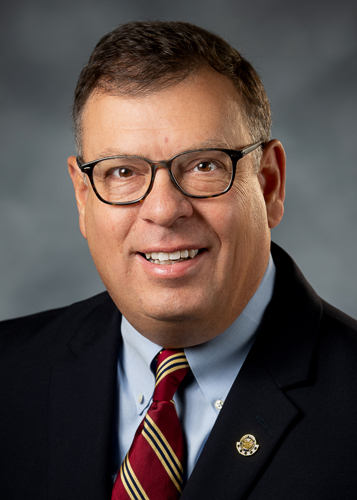
Sen. Mike Oliverio
Sponsored bills
Maddy summarySB 740, the Stop Squatters Act, establishes a new process for property owners to quickly remove unauthorized occupants (squatters) from residential or commercial properties. It allows owners or their agents to request immediate police removal if conditions are met (e.g., occupant isn’t a tenant/family member, owner previously demanded they leave, and no court case is pending). The bill also creates criminal penalties: misdemeanors for damaging property under $1,000 during unlawful occupation, felonies for greater damage, and felonies for falsely listing property for sale/rent without legal title. Property owners must submit a verified complaint, and the law includes a civil remedy if removal is wrongful.
Maddy summarySB 742 increases the civil jurisdiction limit for West Virginia magistrate courts from $10,000 to $20,000 for claims like small debts, landlord-tenant disputes, or property detainer cases. It clarifies that corporations may be represented by agents (non-lawyers) or attorneys when pursuing their own legal claims, but not third-party rights. The bill also explicitly prohibits magistrates from representing any party in their own court. This affects individuals and businesses filing civil cases under $20,000 in magistrate court.
Maddy summarySB 552 modifies West Virginia's Certified Business Expansion Development Program by removing specific requirements for designated "high impact business development districts." It eliminates the need for renewable energy generation in these districts, removes restrictions on district locations (including land previously used for coal mining), and removes acreage limits. The bill also clarifies that regulated utility customers won't bear costs for utilities within certified districts. This change primarily affects businesses seeking to locate or expand new industrial facilities in designated districts by simplifying program eligibility and operational rules.
Maddy summaryThis resolution designates March 5, 2025, as "West Virginia University Day" at the West Virginia Legislature. It recognizes West Virginia University as the state's first land-grant institution and highlights its academic programs, extension services, and youth initiatives like 4-H. The resolution directs the Senate Clerk to send a copy to the university president and Extension office. As a ceremonial resolution with no funding or policy changes, it serves only to honor the university's role in West Virginia.
Maddy summarySB 566 provides tuition coverage for certified law enforcement officers in West Virginia pursuing education. It covers tuition and fees for one certificate, one undergraduate degree, one master's degree, and up to two doctorate degrees annually per officer, capped at the highest public university tuition rate. Officers must serve one year for every year of tuition covered or repay the costs. The program requires the Secretary of Homeland Security to set eligibility rules and administer payments, with reductions if officers receive other grants. It directly affects certified officers seeking education while serving in West Virginia.
Maddy summarySB 703 would allow West Virginia's Supreme Court of Appeals to establish uniform pay scales for magistrate court clerks, assistants, and deputy clerks instead of relying on fixed statutory salaries. Currently, these positions have set annual salaries ($54,596 for clerks, $49,232 for assistants as of 2023), but the bill would transfer authority to the Administrative Director of the Supreme Court to create standardized pay structures. The change would let these judicial support staff receive general state employee salary increases (e.g., percentage-based raises) after July 1, 2023, rather than requiring separate legislative action. This bill directly affects all magistrate court support staff across West Virginia’s counties. It focuses on streamlining compensation processes without altering their duties or current job classifications.
Maddy summarySB 489 establishes a standardized process for filing and handling election law violation complaints in West Virginia. It requires complaints to be written, notarized, sworn under penalty of perjury, and include specific details like the incident description, location, timing, and supporting evidence. The Secretary of State must review complaints for completeness, notify filers of deficiencies, and forward valid complaints to the State Election Commission for review. The Commission then decides whether to investigate formally, refer the case, or dismiss it if no probable cause exists, with all proceedings conducted confidentially until public announcement of the outcome.
Maddy summaryWest Virginia's SB 484 prohibits political campaigns from distributing AI-generated election content that falsely depicts individuals without consent within 90 days of an election, unless a clear disclaimer is included. The required disclaimer must be prominently displayed (matching font size for text, clearly spoken for audio), include technical metadata about the media's creation, and remain permanently visible. Exemptions cover bona fide news coverage that discloses authenticity concerns and paid broadcasts by media outlets. The law targets deceptive election tactics while preserving journalistic protections and platform responsibilities under federal law.
Maddy summarySB 5 establishes West Virginia's Adopt-A-Road program, allowing individuals, groups, counties, or municipalities to volunteer for road maintenance projects under the Division of Highways. Participants must apply online, sign an agreement, and follow safety rules - covering tasks like litter cleanup, pothole repairs, or trail maintenance - while the state may provide up to 30% of project costs (or 100% for litter control using a specific fund). The program requires participants to cover signage costs and indemnify the state against liability from their work. It mirrors existing Adopt-A-Highway programs but expands participation to broader road infrastructure maintenance.