

Maddy summarySB 429 creates the Child Care Workforce Scholarship Act, providing full child care subsidies for the children of West Virginia child care workers regardless of household income. Eligible workers (those employed 20+ hours weekly at licensed child care centers or homes) automatically qualify for subsidies covering 100% of costs ($0 co-pay) through the existing subsidy program, with benefits renewable annually. The bill appropriates $5.2 million from the General Revenue Fund for Fiscal Year 2026 to cover these subsidies and supplement federal funds, directly aiming to stabilize the child care workforce and increase available child care capacity statewide.
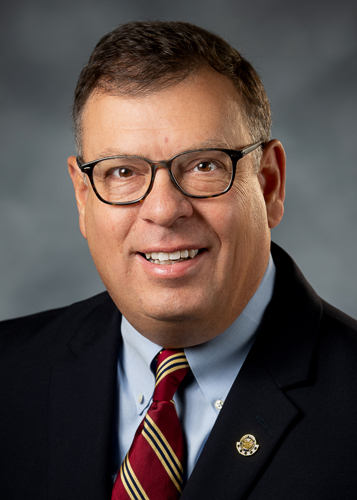
Sen. Mike Oliverio
Sponsored bills
Maddy summaryThis bill requires businesses planning certain mergers to electronically submit federal pre-merger notification forms to West Virginia's Attorney General if the business is based in West Virginia or if 20% of the transaction's sales occur within the state. It mandates confidentiality for all submitted documents (except in court cases involving the merger), prohibits fees for filing, and allows the Attorney General to share confidential information with other states that have similar antitrust notification laws. The law applies only to mergers filed on or after its effective date and aligns with existing federal Hart-Scott-Rodino requirements.
Maddy summarySB 150 would exempt passenger cars that are 25 years old or older from West Virginia's personal property tax. The bill amends the state tax code to add these vintage vehicles to the list of property already exempt from taxation. This change directly affects owners of older vehicles meeting the age requirement by eliminating their annual property tax obligation for qualifying cars. The exemption applies to all qualifying passenger cars without regard to their value, condition, or whether they are used for personal or collector purposes.
Maddy summarySB 12 establishes a program requiring West Virginia state agencies to set aside 25% of their contract spending for small businesses starting in 2027. It defines a "small business" as having 250 or fewer employees or $10 million in average annual revenue, excluding businesses controlled by larger entities. Agencies must reserve contracts under $150,000 exclusively for small businesses (if competitively bid at fair value) and require two small business bids for contracts between $150,000 and $700,000. Additionally, small businesses awarded contracts must perform at least 30% of work themselves and ensure 50% is done by eligible small businesses, with restrictions on subcontracting with affiliated entities.
Maddy summaryThis bill requires individuals to hold a state license to use the titles "dietitian," "licensed dietitian," or "nutritionist" and to provide medical nutrition therapy in West Virginia after June 30, 2026. It restricts the use of these titles without a license, while exempting certain activities like marketing food products without those titles, existing licensed health professionals providing nutrition care within their scope, students under supervision, military personnel, and WIC program staff. The bill also defines "qualified supervisor" requirements and clarifies that federally trademarked nutrition credentials do not replace state licensing. It directly affects professionals seeking to use these titles or provide medical nutrition therapy services.
Maddy summarySenate Joint Resolution 1 proposes a constitutional amendment requiring West Virginia's Legislature to review county boundaries every 100 years starting in 2031. The review would assess population, demographics, and transportation needs, allowing the Legislature to redraw or combine counties if changes would benefit residents. Any proposed boundary adjustments would then require voter approval in the affected counties during the next general election. This amendment must be ratified by voters in the 2026 general election to take effect.
Maddy summarySB 148 imposes a 1% tax on fire and casualty insurance premiums in West Virginia. The funds collected are allocated as follows: 10% now goes to the Municipal Pensions Security Fund (previously directed to the Teachers Retirement System), 25% supports volunteer fire companies, and 65% funds municipal police/firefighter pension systems. The bill requires municipalities to report pension fund compliance annually and allows the Municipal Pensions Oversight Board to redirect funds to pension systems with actuarial deficiencies. It also shortens the timeframe for pension funds to comply with investment rules before losing tax-funded support. This affects municipal pension funds, volunteer fire departments, and the Teachers Retirement System.
Maddy summaryThis bill requires West Virginia's Commissioner of Highways to create a formula for distributing state and federal road funds among the state's 10 road districts by 2027. The formula must consider specific factors like county population (from census data), road mileage, traffic volume, heavy truck usage, and bridge conditions to ensure funds are allocated based on actual needs. Before finalizing the formula, the Commissioner must gather public input through a six-week comment period and publish all feedback online. The proposed formula must be submitted to the Legislature for approval as a rule, guaranteeing districts cannot receive less funding than their highest previous five-year allocation unless the overall highway budget decreases.
Maddy summaryWest Virginia's SB 14 creates a Securities Restitution Operating Fund to provide financial assistance to victims of securities fraud. The bill authorizes the state Auditor to transfer 3% of collected securities fees into this fund, which will be used to pay restitution directly to victims after violations are confirmed. Victims can apply for assistance through the Auditor's office, and the fund is exempt from attachment or interception. This program applies to individuals or entities in West Virginia who suffered financial harm due to securities violations, such as fraudulent investment schemes or mismanagement by brokers or advisers. The law also establishes procedures for determining restitution amounts and prohibits restitution in certain circumstances.
Maddy summarySB 10 prohibits West Virginia public schools from starting the school day before 7:45 a.m. The bill directly affects all public schools in the state by establishing 7:45 a.m. as the mandatory earliest start time for instruction. It overrides any existing law allowing earlier start times through a new code section requiring this minimum. The policy change applies immediately to all public school districts without exception.