

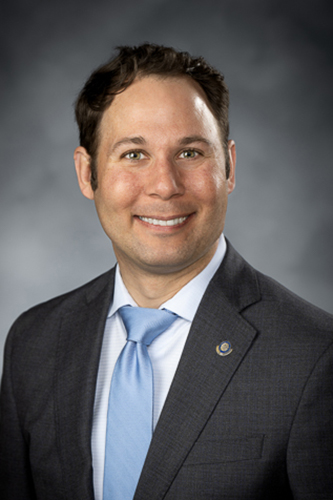
Maddy summarySB 987 amends West Virginia's Human Rights Act to explicitly prohibit discrimination based on gender identity and sexual orientation in employment, public accommodations, and housing. The bill adds these categories to existing protected characteristics like race, religion, and disability, defining "sexual orientation" and "gender identity" for clarity. It directly affects employers (with 12+ employees), businesses serving the public, and housing providers across the state. The legislation expands the scope of the Human Rights Act to cover these new protected classes under the same legal framework. The bill is currently pending in the Senate Judiciary Committee after its February 18, 2026, introduction.
Sponsored bills
Maddy summarySB 662 creates a pilot program to provide free colorectal cancer screening and treatment in West Virginia for "unserved populations" - individuals with inadequate access to care due to financial constraints. The program, administered by the Bureau for Public Health, awards grants to approved organizations (like clinics or hospitals) to deliver screenings, diagnostic colonoscopies, and treatment at no cost to patients. Covered services include pre-visit consultations, colonoscopy procedures, polyp removal, and pathology, with treatment initiated if cancer is detected. Organizations must meet quality standards, and the program requires annual reporting on metrics like screenings performed, costs, and outcomes to the Legislative Oversight Commission.
Maddy summarySR 42 is a ceremonial Senate resolution honoring the late Walter Dolph Helmick, a former West Virginia state legislator and public servant. It memorializes his life and career, noting his service as a coal miner, teacher, businessman, Mason, West Virginia House of Delegates member, Senate member (1989-2013), and Commissioner of Agriculture. The resolution formally recognizes his contributions to West Virginia and extends condolences to his family following his death in 2025. As a non-binding memorial resolution, it has no policy impact or effect on legislation.
Maddy summarySB 766 creates a nonrefundable tax credit for West Virginia family caregivers of eligible elderly relatives. It allows caregivers to claim a 50% credit on qualifying out-of-pocket expenses (up to $2,000 annually, or $3,000 for veteran caregivers), including home modifications, medical equipment, hiring care aides, respite care, and adult day care. The credit applies to expenses directly related to assisting an eligible family member (62+ years old, living at home, requiring help with daily activities like bathing or dressing, and certified by a healthcare provider). The credit begins for tax years starting January 1, 2028, with a $5 million annual cap on total credits, adjusted annually based on the consumer price index.
Maddy summarySB 940 establishes a state-funded pilot program offering free, comprehensive cancer screenings to all active and retired permanent firefighters in West Virginia. The program provides blood tests, organ ultrasounds (including heart and abdominal scans), lung CTs if needed, and skin cancer screenings, with a maximum cost of $1,300 per participant. Firefighters may self-fund screenings before July 2026 and seek reimbursement up to the $1,300 limit during the program’s 24-month duration (extendable with approval). The state covers all costs, requires vendors to meet specific screening standards, and mandates annual reports on participation and results to the Governor and legislature. Participation is voluntary, and the program begins July 1, 2026.
Maddy summarySB 437 replaces West Virginia's current school funding formula with a new system that allocates state aid to county school districts based on student needs and local resources. It directly affects all county boards of education by adding weighted factors for low-income students (+0.30), special education (+0.80), and rural schools meeting specific criteria (e.g., population density under 50/sq mi or bus routes over 15 miles). The formula calculates aid as (base per-pupil amount × weighted enrollment) minus local revenue capacity, plus rural adjustments of $250-$600 per pupil. This aims to reduce funding gaps for high-need and rural districts while requiring annual transparency reports and capping annual aid changes at 3% during implementation.
Maddy summaryThis bill creates tax credits for West Virginia manufacturers that transform locally harvested wood into finished "value-added" products like plywood, wood pellets, or engineered lumber. It provides tiered credits ($1.25-$3 per ton) based on the volume of West Virginia-sourced wood processed, with higher rates for new facilities or expansions ($2.50-$6 per ton) for five years. To qualify, manufacturers must meet a "minimum transformation standard" (e.g., altering wood’s structure), avoid basic handling like debarking, and self-report production data. Credits are capped at $1.25 million annually per facility and apply to corporate or personal income tax. The law aims to incentivize local processing of forest resources while preventing credits for raw log handling.
Maddy summarySB 708 requires the West Virginia Division of Highways to evaluate and potentially create public river access facilities during bridge projects over navigable waterways. It prohibits using eminent domain for access points but allows voluntary property acquisition (through purchase or donation) to improve safety for recreational users like fishermen and boaters. The law mandates that any new access facilities must prioritize public safety, avoid interfering with traffic, and be limited in size to address documented hazards. It applies directly to the Division of Highways, recreational users, and property owners near river crossings.
Maddy summarySB 801 increases state funding for West Virginia school districts by raising the required ratios of professional educators and support staff per 1,000 students. Specifically, it adjusts the calculation for the "basic foundation program" to require higher ratios (e.g., increasing professional educators from 72.75 to 72.75+ per 1,000 students and support staff from 43.97 to 56.79 per 1,000 students by 2026-2027). The bill directly affects all public school districts, with different ratios based on county density (high, medium, low, sparse). For the 2026-2027 school year only, districts will not face penalties for not meeting the new ratios immediately, providing a transition period for implementation.
Maddy summaryThis bill creates a structured support system for West Virginia youth aging out of foster care (typically 18-21 years old). It requires the Department of Human Services to develop a three-phase living arrangement system (supervised independent living, scattered-site housing, and supportive independent living) plus mandatory life skills training in housing, employment, and education. Funding will use per diem rates designed to maximize federal reimbursement, include annual cost-of-living adjustments, and provide monthly stipends to youth for basic living costs. The system must incorporate input from former foster youth, providers, and community partners, with annual reporting on outcomes like housing stability and employment.