

Maddy summarySB 549 would increase the daily payment for jurors in West Virginia from a current range of $15 to $40 per day to a new range of $40 to $100 per day. This change applies to both trial jurors (petit jurors) and grand jurors serving on court cases. The bill replaces the previous minimum of $15 with a new minimum of $40 and raises the maximum from $40 to $100. The reimbursement remains determined by the court and paid from the state treasury, but ensures jurors receive at least $40 per day.
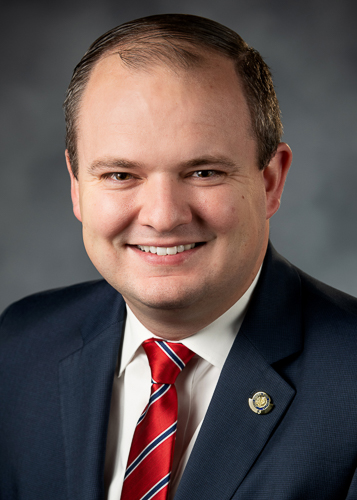
Sen. Ben Queen
Sponsored bills
Maddy summarySB 887 updates West Virginia's licensing rules for money transmission services to include virtual currency kiosks. It requires businesses operating these kiosks to obtain a money transmission license, sets disclosure requirements for customers using them, and clarifies that kiosks operate as delegates of licensed money transmitters. The bill directly affects businesses offering virtual currency services through kiosks in the state. Key provisions define "virtual currency kiosks" under money transmission regulations, establish a licensure start date for kiosks, and address conflicts between state and federal law on money transmission.
Maddy summarySB 662 creates a pilot program to provide free colorectal cancer screening and treatment in West Virginia for "unserved populations" - individuals with inadequate access to care due to financial constraints. The program, administered by the Bureau for Public Health, awards grants to approved organizations (like clinics or hospitals) to deliver screenings, diagnostic colonoscopies, and treatment at no cost to patients. Covered services include pre-visit consultations, colonoscopy procedures, polyp removal, and pathology, with treatment initiated if cancer is detected. Organizations must meet quality standards, and the program requires annual reporting on metrics like screenings performed, costs, and outcomes to the Legislative Oversight Commission.
Maddy summarySR 42 is a ceremonial Senate resolution honoring the late Walter Dolph Helmick, a former West Virginia state legislator and public servant. It memorializes his life and career, noting his service as a coal miner, teacher, businessman, Mason, West Virginia House of Delegates member, Senate member (1989-2013), and Commissioner of Agriculture. The resolution formally recognizes his contributions to West Virginia and extends condolences to his family following his death in 2025. As a non-binding memorial resolution, it has no policy impact or effect on legislation.
Maddy summaryThis Senate Resolution (SR 40) designates February 16, 2026, as "Child Advocacy Center Day" in West Virginia. It formally recognizes the work of the state's 21 Child Advocacy Centers, which support child abuse victims and families through coordinated services across 48 counties. The resolution has no policy impact - it is a symbolic observance inviting legislators and citizens to acknowledge these centers' role in child safety and healing.
Maddy summarySB 766 creates a nonrefundable tax credit for West Virginia family caregivers of eligible elderly relatives. It allows caregivers to claim a 50% credit on qualifying out-of-pocket expenses (up to $2,000 annually, or $3,000 for veteran caregivers), including home modifications, medical equipment, hiring care aides, respite care, and adult day care. The credit applies to expenses directly related to assisting an eligible family member (62+ years old, living at home, requiring help with daily activities like bathing or dressing, and certified by a healthcare provider). The credit begins for tax years starting January 1, 2028, with a $5 million annual cap on total credits, adjusted annually based on the consumer price index.
Maddy summarySB 911 creates a pilot program to help West Virginia residents aged 18-30 who are first-time vehicle buyers entering the workforce. It provides up to $1,500 for down payments, $450 for temporary insurance, and loan guarantees covering 50% of a vehicle loan (max $5,000), totaling $6,950 per participant. Eligible vehicles must cost under $20,000, be under 10 years old, and pass safety inspections, with participants required to use the vehicle primarily for work commutes. The program is capped at $5 million annually or 750 participants, requires annual reporting to the legislature, and prohibits vehicle sales for 24 months without approval.
Maddy summaryThis bill removes a 10-absence limit for students participating in approved extracurricular and educational activities, such as SkillsUSA, FBLA, 4-H, or FFA programs. To qualify, activities must be pre-approved by a school principal, have parental consent, and be verified as educational by a teacher or sponsor. Students may miss school for these activities without the absence counting toward the yearly 10-absence cap, though they must still make up missed work without grade penalties. It directly affects students in recognized programs, parents, and school administrators who manage attendance policies.
Maddy summaryThis Senate Resolution (SR 15) formally recognizes the 154th anniversary of Glenville State University, established in 1872 as a West Virginia state normal school. It acknowledges the university's historical role in teacher training and its current expansion into diverse academic programs (including business, health sciences, and criminal justice). The resolution expresses the Senate's appreciation for the university's contributions to West Virginia's education and economy and directs a copy to the university president. As a ceremonial resolution, it has no policy or financial impact.
Maddy summarySB 892 would allow medical cannabis to be dispensed in edible forms (like gummies or lozenges) in West Virginia, expanding current options for patients. It directly affects patients, caregivers, and dispensaries by adding edibles to permitted forms, while requiring strict safety rules: edibles must be specific shapes (e.g., square, circle), limited to 10mg THC per serving with a 15% variance, and produced only as lozenges or gelatins. Processors must get bureau approval for each edible product, including submitting packaging images with a universal symbol. The bill also bans color additives in edibles and mandates new reporting to the state’s cannabis monitoring database. This would be the first time edibles are permitted under West Virginia’s medical cannabis program.