

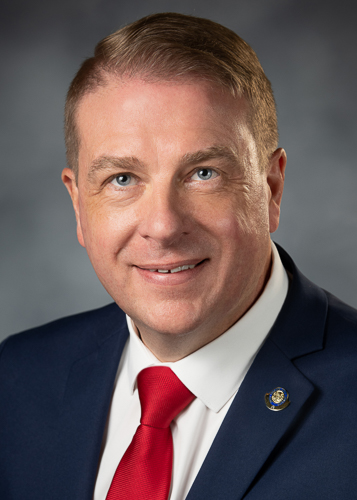
Photo of Vince Deeds
R West Virginia Senate · District 10 On the 2026 ballot

Sen. Vince Deeds

Compare
Total votes
1,930
all sessions
Attendance
100%
1 missed
Higher than 80% of chamber peers
With party
97%
of cast votes
Near the chamber average
Bipartisan score
1%
crosses aisle rarely
Near the chamber average
Sponsored
740
bills & resolutions
Higher than 91% of chamber peers
Committees
16
assignments
740 bills and resolutions

Sponsored bills

Total
740
Primary
129
Co-sponsor
611
This page
740
matching current filters
Co-sponsor SB 860
In committee · West Virginia Senate · Co-sponsor
Relating to payment of funeral expenses for first responders

Maddy summarySB 860 creates a state fund to cover funeral expenses for certain first responders who die while performing official duties. It authorizes up to $8,000 in payments for reasonable funeral and burial costs for law enforcement officers (including public facility security staff), firefighters (paid and volunteer), emergency medical personnel, correctional employees, and probation officers. The fund complements existing benefits but ensures at least $8,000 is available if other sources provide less. Payments require written certification that the death occurred "as a proximate result of official duties" and do not duplicate benefits under other state laws.

In committee Feb 20, 2026 1 co-sponsor
Co-sponsor SB 206
Passed · West Virginia Senate · Co-sponsor
Updating retirement eligibility for certain sheriffs

Maddy summarySB 206 would allow sheriffs who are members of West Virginia's public retirement system to retire at age 62 with eight or more years of service as an elected sheriff. Currently, new members (joining after July 1, 2015) require 10 years of service for retirement at 62, but this bill creates a specific exception for sheriffs. The change applies only to sheriffs not participating in another retirement system and directly affects elected sheriffs seeking retirement under the state's public retirement program. This policy adjustment lowers the required service years for sheriffs from 10 to 8, making retirement eligibility more accessible for this group.

Passed Feb 20, 2026 1 co-sponsor
Co-sponsor SB 613
In committee · West Virginia Senate · Co-sponsor
Extending interest rate cap to all obligations incurred during military service

Maddy summarySB 613 caps interest rates on debts for active-duty West Virginia military members and their spouses at 6% per annum during deployment periods. It applies to all debts incurred on or after July 1, 2026, including mortgages, credit cards, and loans. Military members must provide creditors written notice with military orders within 180 days of ending duty, triggering a reduction in payments for forgiven interest above 6%. The bill extends existing protections to cover all debt types, not just specific loans.

In committee Feb 20, 2026 1 co-sponsor
Co-sponsor SB 549
Passed · West Virginia Senate · Co-sponsor
Phasing in increase in daily rate of juror pay

Maddy summarySB 549 would increase the daily payment for jurors in West Virginia from a current range of $15 to $40 per day to a new range of $40 to $100 per day. This change applies to both trial jurors (petit jurors) and grand jurors serving on court cases. The bill replaces the previous minimum of $15 with a new minimum of $40 and raises the maximum from $40 to $100. The reimbursement remains determined by the court and paid from the state treasury, but ensures jurors receive at least $40 per day.

Passed Feb 20, 2026 1 co-sponsor
Co-sponsor SB 995
In committee · West Virginia Senate · Co-sponsor
Conducting oversight of Rural Health Transformation program

Maddy summarySB 995 requires West Virginia's Secretary of Health to submit monthly reports to the Legislature detailing how state funds from the federal Rural Health Transformation (RHT) Program are spent. The reports must include itemized budgets, vendor lists, programs developed with RHT funds, tracked data variables, and outcomes achieved. This oversight applies to West Virginia's $200 million RHT allocation (2026-2030), which aims to improve rural healthcare access and outcomes. The bill directly affects the Secretary of Health and legislative oversight bodies, mandating transparency without altering the RHT Program's operations.

In committee Feb 19, 2026 1 co-sponsor
Co-sponsor SB 1009
In committee · West Virginia Senate · Co-sponsor
Providing immunity for those who work for Child Advocacy Centers while performing duties

Maddy summarySB 1009 provides legal immunity from civil lawsuits for staff, volunteers, and board members of West Virginia Child Advocacy Centers (CACs) who make recommendations or render opinions in good faith while performing their official duties. This bill amends West Virginia Code §49-3-101 to explicitly state that such individuals cannot be held liable for civil damages based on their actions within their scope of work. The immunity applies specifically to those acting as part of multidisciplinary teams responding to child abuse allegations, covering activities like forensic interviews, medical evaluations, and victim advocacy coordinated through CACs. It directly affects CAC workers by protecting them from civil claims related to their professional duties, without altering the centers' required services or operational standards.

In committee Feb 19, 2026 1 co-sponsor
Primary SB 990
In committee · West Virginia Senate · Lead sponsor
Creating WV ALS Care Services Act

Maddy summarySB 990 establishes the West Virginia ALS Care Services Act to provide targeted support for residents living with ALS and their caregivers. The bill requires the Department of Human Services to fund three key programs: (1) care coordination and support services to help navigate medical systems, (2) loans for reusable ramps and essential medical equipment (like mobility aids), and (3) access to specialized multidisciplinary ALS clinics. These provisions aim to help individuals remain safely in their homes longer, reducing reliance on costly hospital visits and institutional care. The program directly affects West Virginia residents diagnosed with ALS and their primary caregivers by addressing critical financial and medical barriers.

In committee Feb 18, 2026 0 co-sponsors
Co-sponsor SB 662
In committee · West Virginia Senate · Co-sponsor
Relating to colorectal cancer prevention

Maddy summarySB 662 creates a pilot program to provide free colorectal cancer screening and treatment in West Virginia for "unserved populations" - individuals with inadequate access to care due to financial constraints. The program, administered by the Bureau for Public Health, awards grants to approved organizations (like clinics or hospitals) to deliver screenings, diagnostic colonoscopies, and treatment at no cost to patients. Covered services include pre-visit consultations, colonoscopy procedures, polyp removal, and pathology, with treatment initiated if cancer is detected. Organizations must meet quality standards, and the program requires annual reporting on metrics like screenings performed, costs, and outcomes to the Legislative Oversight Commission.

In committee Feb 18, 2026 1 co-sponsor
Co-sponsor SR 42
Passed · West Virginia Senate · Co-sponsor
Memorializing life of Honorable Walter Dolph Helmick

Maddy summarySR 42 is a ceremonial Senate resolution honoring the late Walter Dolph Helmick, a former West Virginia state legislator and public servant. It memorializes his life and career, noting his service as a coal miner, teacher, businessman, Mason, West Virginia House of Delegates member, Senate member (1989-2013), and Commissioner of Agriculture. The resolution formally recognizes his contributions to West Virginia and extends condolences to his family following his death in 2025. As a non-binding memorial resolution, it has no policy impact or effect on legislation.

Passed Feb 16, 2026 1 co-sponsor
Primary SB 766
In committee · West Virginia Senate · Lead sponsor
Creating Caregiver Tax Credit Act

Maddy summarySB 766 creates a nonrefundable tax credit for West Virginia family caregivers of eligible elderly relatives. It allows caregivers to claim a 50% credit on qualifying out-of-pocket expenses (up to $2,000 annually, or $3,000 for veteran caregivers), including home modifications, medical equipment, hiring care aides, respite care, and adult day care. The credit applies to expenses directly related to assisting an eligible family member (62+ years old, living at home, requiring help with daily activities like bathing or dressing, and certified by a healthcare provider). The credit begins for tax years starting January 1, 2028, with a $5 million annual cap on total credits, adjusted annually based on the consumer price index.

In committee Feb 13, 2026 0 co-sponsors
Showing 81 to 90 of 740 bills
Previous 1 … 8 9 10 … 74 Next