

Maddy summarySB 880, titled "Recognizing Judea and Samaria," requires West Virginia state agencies to replace the term "West Bank" with "Judea and Samaria" in all official government materials, including rules, press releases, and communications. The bill defines "official government material" broadly and prohibits using state funds to create such materials referencing the territory as the "West Bank." It allows limited waivers for agency heads who provide written justification to the Legislature or Governor. This is a procedural naming change affecting only state communications, not land policy or citizen rights.
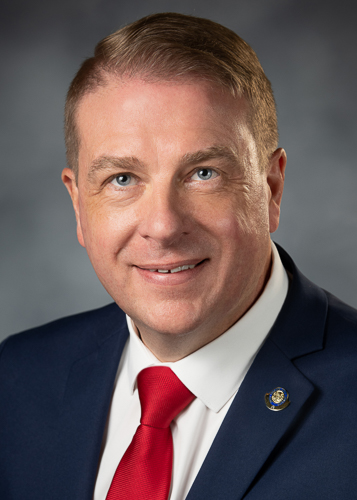
Sen. Vince Deeds
Sponsored bills
Maddy summaryThis bill requires West Virginia's Bureau for Social Services to officially file its entire policy manual - including all rules on Child Protective Services, foster care, youth services, licensing, and casework - as a legislative rule by July 1, 2026. Future updates to these policies must also be filed as amendments to this rule under state procedures. The law aims to make bureau policies transparent and subject to standard rulemaking processes, directly affecting how the agency operates. It does not change program eligibility or funding but ensures policies are formally documented and accessible.
Maddy summarySenate Resolution 48 memorializes the late Sarah Abigail (Mullennex) Minear, a former West Virginia State Senator (1994-2006) and community leader, by formally honoring her life and public service. The resolution recognizes her roles as a philanthropist, founding president of the Tucker Community Foundation and West Virginia Grantmakers Association, and her decades of volunteer work across West Virginia. It extends the Senate’s condolences to her family and directs the Clerk to send a copy of the resolution to her loved ones. This is a ceremonial resolution with no policy or financial impact, solely commemorating her legacy.
Maddy summarySB 718 increases the annual salary for magistrates in West Virginia to $70,000, effective July 1, 2026. This bill amends West Virginia Code §50-1-3, which sets magistrate compensation, building on previous increases from $60,375 (2021) to $63,250 (2022). The measure directly affects all magistrates serving in West Virginia courts. The change is a straightforward salary adjustment with no additional mechanisms or eligibility requirements specified in the bill text.
Maddy summarySB 1080 requires West Virginia to redirect any reduction in state education funding from the previous fiscal year to support specific school districts. It targets the 10 lowest-enrollment county school districts with maximum local tax levies (excess levies), plus extremely remote schools within those districts. Funding is distributed proportionally based on kindergarten through fifth-grade student enrollment, with students counted twice in certain cases to ensure adequate support. This policy change ensures that state aid cuts directly benefit the most vulnerable school districts rather than reducing overall funding.
Maddy summarySB 619, the Stop the Bleed Act, requires West Virginia public schools to implement bleeding control programs starting in the 2026-2027 school year. It mandates schools to place bleeding control kits (containing tourniquets, bandages, gauze, gloves, and DHS/ACS instructional materials) in accessible locations, train staff every other year on wound control techniques, and integrate bleeding control education into high school curricula for grades 9-12. The bill also requires annual kit inspections, post-use restocking, and provides civil immunity for school personnel using kits unless gross negligence occurs. Funding may come from private donations or legislative appropriations. This law directly affects all West Virginia county school districts and their students and staff.
Maddy summaryThis is a ceremonial resolution (SR 45), not a substantive bill. It designates February 23, 2026, as "West Virginia American Academy of Pediatrics Child Health Advocacy Day" at the state legislature. The resolution recognizes the West Virginia Chapter of the American Academy of Pediatrics (a group of 267 pediatric providers) for their work promoting children's health. It does not create new laws or affect any policies; it simply honors the organization's advocacy efforts. The resolution was adopted by the Senate on February 23, 2026, via voice vote.
Maddy summarySB 1062 creates TEAM-WV, a new nonprofit corporation to advance West Virginia's economic development by focusing on job creation, retention, training, and business recruitment. The Governor must establish the corporation by filing articles of incorporation, with a 9-member board of directors appointed by the Governor (subject to Senate approval) to oversee operations. The board must set strategic goals, approve the chief executive officer's compensation and major contracts, conduct annual financial audits by independent auditors, and adopt a conflicts of interest policy. This structure requires regular board meetings and financial transparency to ensure accountability in executing the corporation's economic development mission.
Maddy summarySenate Bill 1019 requires health insurance plans in West Virginia to cover medically necessary treatment for cleft lip and cleft palate. This applies directly to individuals with these congenital conditions, particularly children, who rely on insurance for surgical and medical care. The bill mandates coverage for all necessary treatments without excluding specific procedures, ensuring plans cover the full range of care deemed medically appropriate by a physician. It sets eligibility and defines coverage terms but does not specify cost-sharing details or financial limits.
Maddy summarySB 738 creates a West Virginia National Guard TRICARE premium reimbursement program for eligible members. It allows the state military department to reimburse National Guard members who pay premiums for TRICARE Reserve Select or TRICARE Dental coverage, subject to state-established application rules. The program stops reimbursing any portion later covered by federal government payments. This requires separate state funding approval and does not create new spending authority.