

Maddy summarySB 155 creates a framework for West Virginia counties to expand access to nutritious meals for students during school breaks, including summers. It requires each county public school system to conduct annual surveys of students about their food access when schools are closed, map community food resources (like local charities), and share this information with all students. Counties must also provide training for organizations running meal sites and share survey results with the state’s Child Nutrition Office. The bill removes prior requirements for schools to include specific food delivery plans in crisis response plans, instead encouraging voluntary, community-driven solutions. This affects all public school students in West Virginia counties and aims to reduce food insecurity during non-school periods.
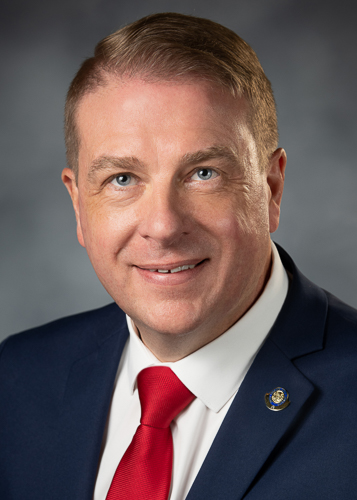
Sen. Vince Deeds
Sponsored bills
Maddy summarySB 67 allows the West Virginia Department of Transportation (WV DOT) to issue permits for sanctioned motor vehicle racing events on public roads, municipal streets, or airports under specific conditions. It directly affects motorsports sanctioning bodies (like recognized race organizers) seeking to host events, requiring them to obtain permits, provide insurance, and secure written permission from local authorities (counties, municipalities, or airports). Key provisions include a permit fee deposited into the State Road Fund to cover administrative costs, strict safety and traffic control requirements, and exemptions from standard road obstruction and speed laws for authorized events. The bill also clarifies that the state and WV DOT are not liable for event-related injuries or damage, shifting responsibility to permittees through indemnification agreements.
Maddy summaryThis bill requires West Virginia's Medicaid program and the Public Employees Insurance Agency (PEIA) to cover doula services for eligible individuals. It defines a doula as a non-medical professional providing continuous physical, emotional, and informational support during pregnancy, birth, and the postpartum period (from confirmed conception through 365 days after delivery). The law mandates minimum visit requirements for prenatal and postpartum care, establishes specific billing protocols, and requires the Department of Human Services to submit a state plan amendment by a set deadline to implement this coverage. It directly affects low-income pregnant individuals enrolled in Medicaid or PEIA who would now have access to doula support as part of their maternity benefits.
Maddy summaryThis Senate Concurrent Resolution (SCR 6) requests the West Virginia Division of Highways rename bridge number 10-077/00-062.66 (I-77 over Skitter Creek/Coal Haul Road in Fayette County) as the "U.S. Army Major Jerome Lee Workman Memorial Bridge." It directly affects the Division of Highways, which would implement the name change and install signage. The resolution commemorates Major Workman's military service (including the Silver Star and Purple Hearts) and civilian engineering career but does not create new laws or alter policies.
Maddy summaryThis is a ceremonial Senate Resolution (SR 44) honoring basketball legend Jerry West, a native of West Virginia. It memorializes his life and legacy, recognizing his birth in Chelyan, West Virginia; his high school and college career at West Virginia University; his NBA playing career with the Los Angeles Lakers; and his contributions to basketball as a player, coach, and executive. The resolution also acknowledges his philanthropy, including the Jerry West Scholarship for WVU students. It does not create new laws or affect any policies - it is a formal tribute expressing the Senate's respect and extending sympathy to his family.
Maddy summarySB 197 modifies West Virginia's teacher certification rules by exempting certain candidates from basic skills and subject matter tests. Specifically, it removes the testing requirement for individuals who completed standard teacher education programs (including those with less than a 3.0 GPA in such programs) and for those with alternative certification pathways. The bill maintains other requirements like bachelor's degrees, background checks, and pedagogical training. This change directly affects new teachers seeking standard teaching certificates through traditional education pathways. The bill does not alter requirements for alternative certification programs, administrative credentials, or paraprofessional roles.
Maddy summarySB 54 requires all West Virginia public schools to provide age-appropriate Holocaust education starting in the sixth grade. The bill mandates instruction on the systematic annihilation of European Jews and other groups by Nazi Germany, as a "watershed event in human history," using guidance from the West Virginia Commission on Holocaust Education. Schools must teach this topic in a way that examines human behavior and promotes responsible, respectful citizenship. The instruction cannot be provided before sixth grade, applying directly to all public schools within the state.
Maddy summaryThis Senate Joint Resolution proposes a constitutional amendment to change West Virginia's constitution, removing the prohibition on incorporating churches or religious denominations. If approved by voters, it would allow religious groups to form legal entities (incorporate) if they choose, while maintaining existing laws governing church property ownership, sale, and transfer. The amendment specifically revises Article VI, Section 47 of the state constitution to state that "incorporation of religious denominations is permitted" rather than prohibited. It does not create new requirements but clarifies that churches may opt to incorporate under general laws, with no direct impact on existing unincorporated religious organizations.
Maddy summarySJR 8 proposes a constitutional amendment requiring all voters in West Virginia elections to be U.S. citizens. The amendment would add language to the state constitution stating: "Only citizens of the state who are citizens of the United States shall be entitled to vote at all elections." This would codify the existing requirement that voters must be U.S. citizens, which is already enforced under current law. The proposal must be approved by voters in the 2026 general election to take effect.
Maddy summaryThis bill reclassifies forestry equipment (such as skidders, feller-bunchers, and processors) as agricultural property for tax purposes, exempting its sales from West Virginia's consumer sales tax. It directly affects forestry businesses, equipment sellers, and the state's agricultural sector by reducing tax burdens on essential industry operations. Key provisions define forestry equipment broadly, explicitly include forestry within agriculture for tax classification, and align its treatment with existing agricultural equipment rules. The policy change takes effect July 1, 2025, supporting forestry as a key economic component of West Virginia.