

Maddy summarySenate Resolution 50 is a non-binding request to the federal government to study and implement waterway restoration projects in West Virginia. The resolution specifically asks federal agencies to evaluate and act on debris removal, river bed stabilization, and restoration of natural water flow patterns to address existing flooding damage and prevent future flooding. It was prompted by historic flooding in West Virginia during winter and spring 2025, which left streams and rivers filled with debris that continues to damage property and infrastructure. The resolution requests federal action to mitigate these issues and reduce future recovery costs. This resolution is addressed to President Donald J. Trump and Elon Musk, in his alleged capacity as a special government employee.
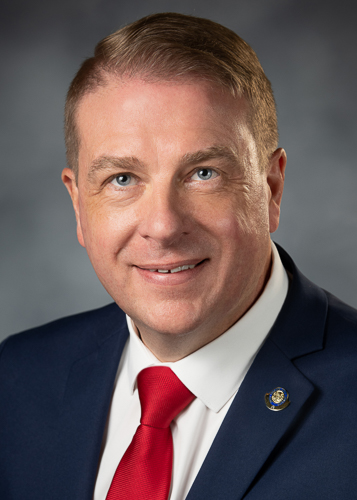
Sen. Vince Deeds
Sponsored bills
Maddy summarySCR 27 is a request for the Joint Committee on Government and Finance to study West Virginia's alcohol sales regulations. The bill asks the committee to examine current rules (many dating to the 1930s) that govern alcohol sales, distribution, and consumption. The study will assess whether these regulations are efficient, modern, and effective, considering input from businesses, consumers, health professionals, and law enforcement. The committee must report its findings and recommendations to the 2026 legislative session.
Maddy summarySenate Concurrent Resolution 26 directs the Joint Committee on Government and Finance to study smoke shops in West Virginia, focusing on products they sell, health risks, and sales to minors. The resolution specifically asks the committee to examine both legal and illegal tobacco, nicotine, CBD, kratom, and cannabis products, including their compliance with federal safety guidelines. The committee will assess how illegal products enter the state and their sources, with a report due to the 2026 legislative session. This study aims to inform potential regulatory changes regarding these products without proposing new laws. The resolution does not make policy changes but requests a comprehensive examination to address safety concerns.
Maddy summarySB 939 requires medication-assisted treatment (MAT) facilities in West Virginia to implement a specific drug testing schedule for patients with substance use disorder. Upon admission, patients must undergo a comprehensive drug test, followed by direct observation tests every two weeks for six weeks, then every 45 days for one year, and every six months after that. Facilities must also allow providers to request tests at any time to assess treatment compliance. This bill directly affects patients in MAT programs and the facilities providing these services, establishing clear, time-based testing protocols to monitor treatment adherence.
Maddy summaryThis bill clarifies the powers, duties, and responsibilities of the Secretary of the Department of Health, the Commissioner of the Bureau for Public Health, and the State Health Officer in West Virginia. It amends numerous existing state laws to provide clearer definitions of these officials' roles and authority across various health-related areas. The changes aim to resolve ambiguities in current statutes without adding new powers or responsibilities to these positions. The legislation affects state health administration and the officials who oversee public health programs and emergency response coordination.
Maddy summarySB 864 clarifies that in burglary prosecutions under West Virginia law, a person unlawfully entering or remaining in a dwelling may be legally inferred to have intended to commit a crime against a person or property. The bill specifically amends Section 61-3-11 of the West Virginia Code to define this inference clearly, directly affecting prosecutors and courts handling burglary cases. It does not change penalties (1-15 years imprisonment) or expand who can be charged, but streamlines how intent is proven. The key change replaces vague language with explicit wording that unlawful entry alone can support an intent inference. This provides clearer guidance for judges and juries during burglary trials.
Maddy summarySB 585, the Cohen Craddock Student Athlete Safety Act, requires all West Virginia high school and middle school student athletes participating in football practices to use impact-reducing soft-shell helmet covers starting July 1, 2026 (Section 18-36-4). The bill establishes a Student Athlete Safety Advisory Committee (composed of education, health, and sports medicine experts) to evaluate safety protocols, equipment, and injury data, and make recommendations to improve athlete safety (Section 18-36-3). It also creates the Cohen Craddock Memorial Grant Program to provide funding for schools to purchase required or additional safety equipment, administered through a dedicated grant fund (Sections 18-36-6 and 18-36-7). The law directly affects all student athletes in West Virginia interscholastic sports, with immediate focus on football safety equipment standards.
Maddy summarySB 761, the Joel Archer Substance Abuse Intervention Act, establishes a legal process for court-ordered, involuntary treatment of adults with substance use disorders who pose an imminent danger to themselves or others. It requires a petition from a spouse or a dependent (as defined by federal tax law) to initiate proceedings, with the court verifying the petitioner’s relationship and the respondent’s danger to self/family. The bill mandates a 14-day hearing timeline, a 24-hour pre-hearing medical exam by two professionals, and guarantees payment for treatment through the petitioner or state/federal programs. It specifically prohibits involuntary treatment unless the person meets all criteria: suffering from substance use disorder, presenting imminent danger, and reasonably benefiting from treatment.
Maddy summarySB 944 creates the West Virginia Child First Advisory Committee to evaluate and improve the state's child welfare system. The committee, composed of DHS officials, child welfare experts appointed by the governor, legislative members, and court representatives, will assess child abuse/neglect cases, foster care, adoption processes, and system efficiency. It must issue annual reports by January 1st with recommendations for reducing child removal rates, improving family reunification, and enhancing system transparency. The bill also establishes a dedicated fund (administered by DHS) to support these improvements, funded by state appropriations and federal resources.
Maddy summarySB 124 reduces the time limits for filing lawsuits to recover money owed under contracts in West Virginia. It shortens the deadline for written contracts from 10 years to 5 years and for oral contracts from 5 years to 2 years. The bill also clarifies that the "discovery rule" applies, meaning the time limit starts when a person discovers or should have discovered the issue, not when the contract was breached. This directly affects individuals and businesses seeking to sue for unpaid services or goods under written or oral agreements. The changes apply to contracts, certain bonds, and recognizances as specified in the bill's provisions.