

Maddy summaryHB 4555 would remove the sales tax on tax preparation services in West Virginia. This bill directly affects individuals and small businesses that pay for tax preparation assistance, as it eliminates the state sales tax currently applied to these services. The key mechanism is amending West Virginia’s tax code (§11-15-9) to explicitly exempt tax preparation services from the consumer sales and service tax, aligning them with existing exemptions for services like nonprofit educational materials. The policy change simplifies the tax burden for those seeking tax help, without altering tax rates or creating new administrative requirements.
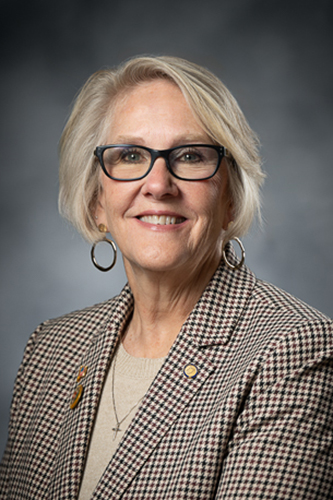
Del. Lisa White
Sponsored bills
Maddy summaryHCR 7 is a symbolic concurrent resolution designating October 14 as "Charlie Kirk Remembrance Day" in West Virginia. It commemorates Charlie Kirk, founder of Turning Point USA and a conservative youth leader who died in a 2025 campus shooting. The resolution has no policy or financial impact, as it only establishes a day of remembrance and directs a copy to Turning Point USA. This is purely a commemorative measure with no legislative mechanism or direct effect on residents.
Maddy summaryHJR 22 proposes a constitutional amendment to give the West Virginia Legislature authority to reduce or eliminate ad valorem taxes on business inventory and other tangible personal property. The amendment would allow the Legislature to set different tax rates for various property types (like vehicles or business equipment), exempt specific items from taxation, or classify property as real or personal for tax purposes. It does not change current tax rates but creates a legal framework for future legislative action. The amendment requires voter approval in the 2026 general election and must comply with existing constitutional tax rate limits.
Maddy summaryHB 4063 requires West Virginia's State Board of Education to create and deploy an online portal called the "School Choice Portal" by August 2026. The portal will allow families using non-public school options (such as homeschooling) to electronically submit required notices and reports, including a Notice of Intent, with features like secure access, dashboards for families and school boards, and submission acknowledgments. It must work across all 55 counties, include input from stakeholders like homeschoolers and microschools, and clearly label optional information. The bill mandates the portal be operational for the 2026-2027 school year and requires the Board to report child listings to the relevant county.
Maddy summaryHB 4122 requires all West Virginia public schools to install cameras in hallways, stairwells, classrooms, and every other room where students are present, excluding bathroom stalls, showers, and locker rooms. The bill mandates that recorded footage must be retained for a full year. This directly affects West Virginia schools and their students by implementing a uniform camera system in all student-accessible areas. The key provision focuses on the physical placement of cameras and the one-year retention period for video evidence.
Maddy summaryHB 4071 requires all West Virginia public K-12 schools to post their annual report cards on their official websites. County school boards must use the state's existing WV Education Information System for collecting and reporting data to meet federal accountability standards under the Every Student Succeeds Act. This bill directly affects every public school in the state by mandating transparent, online access to performance data for parents and the public. It does not alter school funding or academic standards but ensures consistent reporting through the state’s established electronic platform.
Maddy summaryHB 4090 allows West Virginia county school boards to hire or accept as volunteers certified chaplains to provide support services for students, staff, and parents. The bill requires chaplains to undergo background checks like child care workers but exempts them from needing state certification or licensing. School boards must also prohibit sex offenders or child predators from serving. Chaplains are granted liability protection for actions taken in their role, unless those actions were maliciously intended to harass or intimidate. The bill directly affects public school districts across West Virginia by expanding their ability to provide spiritual support services.
Maddy summaryHB 4515 would establish rules for religious organizations leaving a denomination while keeping property. It requires a local church to get a two-thirds vote from its members to disaffiliate and mandates that the parent denomination provide a detailed financial accounting within 60 days. Property is divided into three classes: real estate (Class A) can be kept if over 50% of its costs were raised locally, movable items (Class B) go to the buyer, and financial assets (Class C) are split based on funding sources over two years. The bill aims to clarify property division during disaffiliation disputes without favoring either side.
Maddy summaryHB 4146 requires all public school employees in West Virginia - including teachers, administrators, bus drivers, and custodians - to receive all childhood vaccines (such as flu shots, measles, and HPV) following the pediatric schedule, with no religious or philosophical exemptions allowed. It mandates a 21-day quarantine for school staff traveling to states that permit vaccine exemptions for students, and requires visitors (like parents or contractors) to show proof of vaccination before entering public school buildings. The bill applies directly to school staff and visitors, not students, and specifies exact vaccine requirements without allowing exemptions for personnel.
Maddy summaryHB 4448 removes exemptions that currently protect bona fide schools, public libraries, and museums from criminal charges when distributing or displaying obscene material to minors. The bill amends West Virginia law to eliminate these specific protections, meaning these institutions would no longer be shielded from prosecution under the existing obscenity statute (§61-8A-3). Previously, schools were exempt when showing material as part of approved curriculum, and libraries/museums were exempt if minors were accompanied by parents. This change directly affects how these public institutions handle materials accessible to minors. The bill does not alter other existing exemptions, such as those for medical professionals or internet service providers.