

Maddy summaryHB 2650 would allow individuals aged 21 or older with a valid concealed handgun permit to carry a concealed firearm in public school property and buildings in West Virginia. The bill creates an exception to the existing ban on firearms in schools, specifically permitting licensed permit holders to carry concealed handguns while adhering to strict storage rules: firearms must be stored out of view when in a vehicle, or locked in a glove compartment, trunk, or secured container when the vehicle is unoccupied. This change directly affects licensed concealed carry permit holders who are not students and applies to public primary and secondary schools (not private schools with their own policies). The bill does not alter existing restrictions for students or other prohibited individuals.
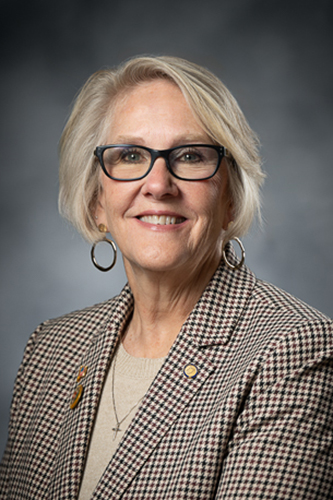
Del. Lisa White
Sponsored bills
Maddy summaryHB 2601 would exempt motor vehicles (such as cars and trucks) from West Virginia's personal property tax, a tax currently levied on most vehicles owned by residents. This change would directly affect vehicle owners who currently pay this annual tax, removing it from their financial obligation. The bill amends West Virginia Code §11-3-9 to add motor vehicles to the existing list of property exempt from personal property tax. This is a policy change that alters the tax base for vehicles, not a procedural or commemorative measure.
Maddy summaryHB 2600 would exempt active and volunteer firefighters in West Virginia from paying state income taxes and real and personal property taxes. The bill amends existing tax exemption laws (§11-3-9) to add firefighters to the list of groups already exempt from these taxes, such as churches, schools, and fire department equipment. This change would directly affect all eligible firefighters by reducing their personal tax burden. The bill does not specify implementation details but would require legislative approval to take effect. (Note: Bill introduced February 19, 2025, currently in the House Finance Committee.)
Maddy summaryHB 2599 would abolish West Virginia's personal income tax for tax years beginning in 2026 and later. This bill removes the tax requirement on individual income, estates, and trusts for all taxpayers subject to the current tax under state law. The change is implemented by amending the state tax code to eliminate the tax provision entirely, meaning residents and nonresidents who currently pay the tax would no longer owe it starting in 2026. The bill does not specify how the state would replace the lost revenue from this tax.
Maddy summaryThis bill requires independent candidates for West Virginia state offices to file their candidacy documents between the second Monday and last Saturday in January of the election year. It applies to all independent candidates running for positions like state legislature, judicial offices, or county-level seats. The filing must be submitted to the Secretary of State (for multi-county offices) or county clerk (for local offices) by the deadline, aligning with existing timelines for partisan candidates. This clarifies that independents must follow the same January filing window as other candidates, rather than later deadlines.
Maddy summaryHB 2386 requires law enforcement to obtain a warrant before entering private lands for searches or seizures, directly affecting landowners and law enforcement officers. The bill prohibits warrantless entry onto posted private property, bans surveillance cameras on private land, and clarifies that using drones to gather information from private land constitutes a search requiring a warrant. It abolishes the common law "open fields" doctrine, which previously allowed warrantless searches in unoccupied areas, and sets specific procedures for lawful entry. These changes aim to strengthen privacy protections for private property owners across West Virginia.
Maddy summaryHB 2578 amends West Virginia law to increase the maximum number of children allowed in informal family child care homes from 12 to 13 per home. This change directly affects unlicensed family child care providers operating in their residences, who previously could care for no more than 12 children. The bill modifies the definition of "child care" under §49-1-206 to reflect this updated limit, without altering licensing requirements or safety standards for these homes. The policy change specifically applies to informal family child care settings, not licensed child care centers (which already allow 13+ children).
Maddy summaryHB 2406 requires all West Virginia state offices, departments, boards, and commissions to replace specific terms in government communications with gender-specific alternatives. It mandates replacing phrases like "pregnant people" with "pregnant women" and "chestfeeding" with "breastfeeding" in official documents, websites, literature, and in-person interactions. The bill targets language it deems "exclusionary" or "sexist," listing nine specific term replacements to be implemented by June 1, 2025. This directly affects all state government entities responsible for public communications.
Maddy summaryHB 2577 modifies West Virginia's unemployment benefit disqualification rules to shorten periods when workers lose benefits. It specifically allows individuals who return to their previous employer within 14 days after a layoff (due to lack of work) to avoid disqualification for benefits. The bill affects unemployed workers who leave jobs voluntarily or face discharge, clarifying that re-employment with a prior employer under these conditions prevents benefit loss. It does not change maximum benefit amounts but adjusts eligibility rules for specific job separation scenarios. The bill is currently in the House Finance Committee.
Maddy summaryHB 2592 declares all current and future federal, state, and local laws restricting firearms, ammunition, or related activities (like possession, carrying, or manufacturing) invalid within West Virginia. It prohibits state officials from enforcing such laws and makes attempting to enforce them a felony punishable by up to two years in prison or a $10,000 fine. The bill also requires the state Attorney General to defend West Virginians prosecuted under federal gun laws. It applies broadly to all levels of government and covers all firearm-related activities protected under the Second Amendment and West Virginia's state constitution.