

Maddy summaryHCR 78 is a non-binding resolution urging West Virginia's Division of Highways to prioritize completing I-73 (the "King Coal Highway") across Wayne, Mingo, McDowell, Mercer, and Wyoming counties. It requests the highway agency treat the project as a high priority to improve economic development and emergency access, especially after recent flooding exposed transportation challenges in the region. The resolution asks the state to provide necessary funding and executive support to expedite the highway's completion but does not allocate new funds or create new law. It directly affects the Division of Highways and residents of the five specified counties by formally advocating for this infrastructure project.
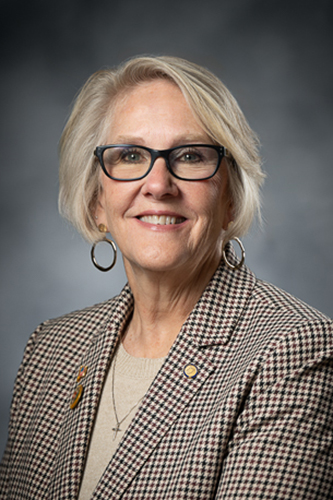
Del. Lisa White
Sponsored bills
Maddy summaryHCR 70 is a concurrent resolution requesting the West Virginia Division of Highways name Reedy Bridge (WV 14 over Reedy Creek in Roane County, coordinates 38.90043, -81.42299) the "U.S. Revolutionary War Patriot Private Patrick Board Memorial Bridge." It directly affects the bridge's official designation and signage, commemorating Patrick Board, a Revolutionary War soldier who farmed land granted for his service. The resolution asks the Division of Highways to implement the name change and install identifying signs. This is a commemorative measure with no substantive policy changes beyond the bridge's naming.
Maddy summaryHCR 93 is a concurrent resolution requesting the West Virginia Division of Highways name a 4.3-mile bypass segment on US 33 in Roane County the "Scott Miller Bypass Road." It specifically asks the Division to install signs at both ends of the bypass to identify the road, honoring W. Scott Miller (for whom the area was named) and his grandson Scott W. Miller, a WWII soldier killed at Normandy who received a Purple Heart. This resolution has no policy or funding impact - it solely requests a ceremonial road name change. The resolution was adopted by the House on March 27, 2025, and referred to the Senate Transportation Committee.
Maddy summaryHCR 71 is a concurrent resolution requesting the West Virginia Division of Highways name a specific bridge in Roane County the "U.S. Army Technician Fifth Grade Leonard N. Miller Memorial Bridge." It directly affects bridge number 44-010/00-001.09 (locally known as MT Olive Bridge), which carries Reedyville Road over Left Fork Reedy Creek. The resolution cites Leonard N. Miller's military service in World War II (including his 11th Airborne Division service and awards) and post-war life in West Virginia as the reason for the memorial. The request asks the Division of Highways to install signage identifying the bridge with this new name.
Maddy summaryHCR 72 designates March 20, 2025 as "Black Lung Awareness Day" in West Virginia. It honors coal miners affected by black lung disease (coal worker's pneumoconiosis), a preventable occupational lung condition caused by coal dust exposure. The resolution does not create new laws, funding, or policy changes - it serves as a ceremonial observance recognizing the disease's impact and existing protections like the Black Lung Benefits Act. It follows the Federal Coal Mine Health and Safety Act's emphasis on miner safety without altering current regulations.
Maddy summaryThis concurrent resolution (HCR 47) requests that West Virginia's Division of Highways rename the Etam Bridge (Bridge Number 39-072/00-001.85) in Preston County as the "Clinton 'Randy' Dean 101st Airborne Vietnam Veterans Memorial Bridge." It honors Clinton "Randy" Dean, a West Virginia native and Vietnam War veteran who served with the 101st Airborne Division, received a Purple Heart, and later died from Agent Orange-related illness. The resolution specifically directs the Division of Highways to name the bridge and install prominent signage identifying it with this commemorative name. This is a ceremonial resolution, not a policy change affecting legislation or funding.
Maddy summaryHB 2651 changes employment terms for certain education administrators in West Virginia counties. It mandates that general and special supervisors or directors of instruction employed by county boards of education serve "at the will and pleasure" of the board, meaning they can be terminated without cause at any time. This directly affects these specific administrative roles, shifting their status from potentially protected positions to at-will employment. The bill amends Section 18-5-32 of the state code to explicitly state this employment condition, while maintaining existing requirements for teaching certificates and substitute teaching duties.
Maddy summaryHB 3295 establishes a "Troops-to-Teachers" program to recruit veterans into teaching positions in West Virginia public schools. The bill requires the state superintendent to create this program specifically targeting veterans, including retirees, for teaching roles. Veterans will receive a hiring preference in public school employment, as outlined in existing law (§6-13-1). This program is integrated into West Virginia’s teacher certification framework under revised education code sections (§18A-3-1 and §18A-3-2a).
Maddy summaryHB 2618 would automatically restore firearm rights to West Virginia residents who complete sentences for nonviolent felonies, eliminating the need for separate court petitions. It specifically applies to individuals convicted of nonviolent crimes but excludes those convicted of violent felonies, certain drug offenses (like Schedule I-III controlled substances except marijuana), or domestic violence misdemeanors. The bill amends West Virginia law to remove automatic firearm prohibitions once sentences and court-ordered penalties like fines are fully served. This changes current practice where individuals must seek judicial restoration of rights after completing their sentence. The bill is currently pending in the House Judiciary Committee after being introduced on February 19, 2025.
Maddy summaryHJR 40 proposes a constitutional amendment to change how members of the West Virginia State Board of Education are selected. It would replace the current system of nine appointed members with a hybrid model: five members elected on a partisan basis from five geographic regions (serving staggered four-year terms), and four members appointed by the Governor with Senate consent. The amendment would require the Board to submit any rules or policies they create to the Legislature for review, approval, amendment, or rejection. If approved by voters in the 2026 general election, these changes would take effect with the 2028 general election, modifying the current appointment system for the Board.