

Maddy summaryHB 4685 allows licensed concealed handgun permit holders to carry concealed firearms on West Virginia Capitol grounds and inside the Capitol building. It requires permit holders to show their permit and firearm upon entry if requested, while prohibiting concealed carry in the Governor's office, Supreme Court chambers, and specific areas of the Capitol complex. The bill maintains existing restrictions on open carry, pepper spray over one ounce, and willful damage to Capitol property. It directly affects licensed concealed carry permit holders visiting the Capitol, without changing open carry rules or general firearm laws.
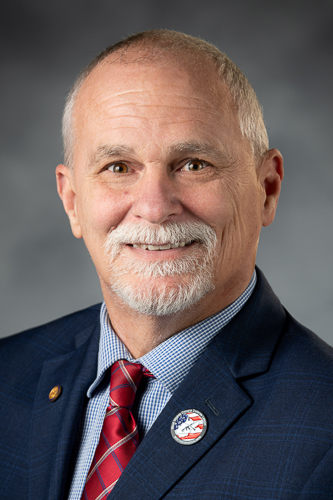
Del. Chuck Horst
Sponsored bills
Maddy summaryHB 4679 prohibits West Virginia counties, towns, and municipalities from using taxpayer funds to hire lobbyists who represent them at the state level. The bill adds new sections to state law (§7-28-1, §7A-9-1, and §8-40-1) explicitly banning local governments from paying for lobbying services using tax revenue. It directly affects all county commissions, consolidated local governments, and municipal corporations across the state. The key provision prevents local entities from using public money to influence state legislation through lobbying efforts. This is a direct policy change limiting how local governments may engage with state lawmakers.
Maddy summaryHB 4628, the PEEPS Act, requires West Virginia law enforcement agencies to obtain a warrant before accessing historical location data (such as license plate records, cell tower logs, or traffic camera footage) about people or vehicles. Exceptions include when a vehicle owner reports a theft, for traffic enforcement, toll collection, or in immediate emergencies where a warrant cannot be secured. The bill mandates that agencies encrypt this data, prohibit sharing or selling it to private companies, and maintain detailed records of all access requests with supervisor approval. This law directly affects police departments and government entities that collect location information, aiming to limit unwarranted surveillance while allowing specific public safety uses.
Maddy summaryHB 4674 prohibits the use or sale of "abortifacients" (defined as drugs requiring an FDA prescription or primarily used to cause abortion) in West Virginia. It directly affects healthcare providers, pharmacies, and individuals who mail or prescribe such drugs within the state, with criminal penalties for violations. The bill creates a private right to sue for damages if someone violates the prohibition and defines "medical emergency" narrowly to exclude psychological conditions. Key mechanisms include strict definitions of terms like "abortifacient" and "abortion," and it explicitly excludes exceptions for miscarriage, stillbirth, or ectopic pregnancies.
Maddy summaryHB 4677 would amend West Virginia law (§20-7-4) to require natural resources police officers to obtain either a landowner's consent or a warrant before entering private property for enforcement purposes. This change directly affects landowners and DNR officers, altering current authority to enter private lands. Key provisions include adding this requirement to the officer's duties while maintaining exceptions for emergencies involving imminent threats to public safety or accidents. The bill does not change officers' existing authority to enter state-owned lands or enforce laws on public waters.
Maddy summaryHB 4665 expands West Virginia's tax deduction for retirement income to include retired law enforcement officers and first responders who worked out-of-state but performed roles equivalent to in-state positions. It modifies the state's tax code to allow these retirees to subtract up to $2,000 annually from their federal adjusted gross income, similar to existing deductions for in-state retirees. The bill requires the Tax Division to verify eligibility and establish a process for storing applicant information. This change directly affects retired police, firefighters, and other first responders who served outside West Virginia but qualify under the bill's defined roles.
Maddy summaryHCR 11 is a West Virginia state resolution urging Congress to call an Article V constitutional convention. It seeks to propose amendments requiring that U.S. Representatives, Senators, federal judges (Article III), and Cabinet Secretaries be natural-born U.S. citizens with sole U.S. citizenship. The resolution does not change existing law but applies to Congress under Article V of the Constitution to initiate a convention focused solely on this citizenship requirement for those federal positions. This is a procedural step by West Virginia to join other states in seeking a constitutional amendment, not a legislative bill with immediate effect.
Maddy summaryHCR 10 is a West Virginia legislative resolution urging Congress to call a constitutional convention under Article V of the U.S. Constitution. It specifically requests a convention limited to proposing an amendment to repeal the 16th Amendment, which authorizes federal income taxes. The resolution states West Virginia’s application will be aggregated with similar applications from other states to reach the required two-thirds threshold for Congress to act. This is a procedural step - West Virginia cannot repeal the 16th Amendment itself, but seeks to initiate the process for states to propose such a repeal. The resolution also notes plans for potential legal action if Congress fails to convene the convention.
Maddy summaryWest Virginia's HCR 9 is a resolution urging Congress to call a constitutional convention under Article V of the U.S. Constitution to propose repealing the 17th Amendment. This amendment, ratified in 1913, established the direct election of U.S. senators by voters instead of state legislatures. The resolution requests Congress convene a limited convention focused solely on this amendment, joining similar requests from other states to reach the required two-thirds state support. It does not change current law but seeks to initiate the process for a potential constitutional amendment, which would restore state legislatures' role in selecting senators.
Maddy summaryHB 4560 redirects the gas tax collected from fuel sold at marinas and boat docks in West Virginia to the West Virginia Division of Natural Resources (DNR) Law Enforcement Division. The bill amends state law to require that these specific tax proceeds - currently part of the motor fuel excise tax - must now be allocated solely to the DNR Law Enforcement Division. This change does not create a new tax but shifts existing revenue from its current allocation to fund natural resource enforcement activities. The primary effect is providing the DNR Law Enforcement Division with a dedicated funding source from marina and boat dock fuel sales.