

Maddy summaryHB 2386 requires law enforcement to obtain a warrant before entering private lands for searches or seizures, directly affecting landowners and law enforcement officers. The bill prohibits warrantless entry onto posted private property, bans surveillance cameras on private land, and clarifies that using drones to gather information from private land constitutes a search requiring a warrant. It abolishes the common law "open fields" doctrine, which previously allowed warrantless searches in unoccupied areas, and sets specific procedures for lawful entry. These changes aim to strengthen privacy protections for private property owners across West Virginia.
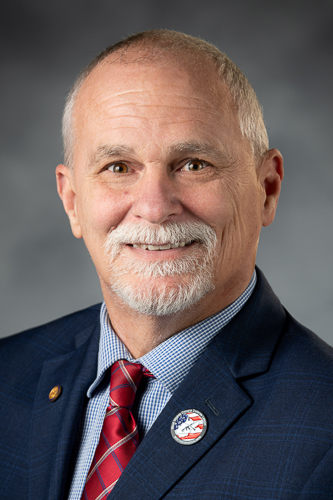
Del. Chuck Horst
Sponsored bills
Maddy summaryHJR 13 proposes amending the West Virginia Constitution to prohibit non-U.S. citizens from voting in any state election. It directly affects non-citizen residents who currently participate in West Virginia elections. The bill would add a new provision to Article IV of the state constitution explicitly stating that "no person who is not a citizen of the United States shall be entitled to vote at any election held within this state." This is a constitutional amendment requiring voter approval at the next general election, not an immediate law.
Maddy summaryHB 2408 prohibits the use of ranked choice voting (RCV) in all West Virginia elections. It bans RCV - which allows voters to rank candidates by preference and transfers votes in rounds - from being used for any local, state, or federal election by state, county, or local election offices. The bill defines RCV explicitly and declares any local government ordinance supporting it void. This directly affects all elections in the state and prevents future adoption of RCV methods. The bill is a direct legislative prohibition with no exceptions for specific offices or jurisdictions.
Maddy summaryHB 2564, titled "The Business and Public Area Liability Protection Act," removes restrictions on carrying firearms in state or municipal buildings and public areas when adequate security measures (like metal detectors or armed personnel at entrances) are not present. It directly affects legally qualified individuals (those not prohibited by law from carrying firearms) who enter public buildings without such security. The bill requires public employers to allow firearm carrying in public areas and throughout buildings if security is inadequate, but prohibits such carrying only where adequate security measures are in place. This amendment changes existing rules by shifting the burden to public buildings to implement security before banning firearms.
Maddy summaryHB 2407 would exempt overtime pay from West Virginia's personal income tax for full-time hourly employees. Specifically, it modifies the tax code to exclude income earned for work exceeding 40 hours per week from taxable gross income. This directly affects hourly workers who receive overtime compensation, reducing their state tax burden on that additional earnings. The bill amends West Virginia Code §11-21-12 to exclude overtime income from adjusted gross income calculations for tax purposes. It is currently in the House Finance Committee following its introduction on February 17, 2025.
Maddy summaryHB 2510 allows hunters to use drones equipped with thermal imaging to locate and recover legally harvested big game (black bear, deer, elk, and turkey) after a legal kill during open season. The bill requires drone operators to get landowner permission before flying, prohibits carrying weapons while drones are in use (except concealed firearms), and bans disturbing wildlife with drones. It exempts drone operators from hunting license requirements (as long as they didn’t kill the animal) and clarifies that drone-assisted recovery doesn’t count as "pursuing" wildlife under existing laws. This directly affects hunters using drones for recovery and landowners who control access to their property for drone operations.
Maddy summaryThis House Concurrent Resolution (HCR 38) is a West Virginia legislative resolution supporting the federal passage of the PRIME Act. The PRIME Act would amend federal law to allow farmers to sell custom-slaughtered meat (like beef, pork, or lamb) directly to consumers, restaurants, and stores within their state, without requiring processing at a federally inspected facility. This change would directly affect farmers seeking to sell locally and consumers wanting access to locally sourced meat. The resolution itself does not change any laws but urges the federal government to adopt this policy.
Maddy summaryHB 2436 requires judicial officers to conduct mental health evaluations before setting bonds for individuals charged with specific misdemeanors in West Virginia. It directly affects people accused of crimes like violent misdemeanors, offenses against minors, drug violations under the Uniform Controlled Substances Act, sexual abuse, serious traffic offenses, or property crimes exceeding $250 in value. The bill mandates that for these offenses, judges must consider mental health evaluations when determining bond conditions, potentially requiring home incarceration, electronic monitoring, or other restrictions to ensure court appearance and community safety. It amends existing bond procedures to add this evaluation step as a standard consideration for the listed misdemeanor charges. The bill is currently pending in the House Judiciary Committee after its introduction on February 17, 2025.
Maddy summaryHB 2454 clarifies protections for small-scale urban farming operations in West Virginia. It defines "agricultural residential land" as residential property used for limited urban agriculture, including keeping up to six chickens or maintaining apiaries for personal use or selling non-hazardous food. The bill prevents lawsuits against these operations unless the complainant already occupied adjacent land before the farming began. It also preempts local ordinances that conflict with agricultural activities on such land, ensuring state law supersedes conflicting municipal rules. This directly affects homeowners in towns and cities who engage in small-scale food production on their residential property.
Maddy summaryHB 2459 expands eligibility for West Virginia secondary school athletic and extracurricular activities to home-schooled students, Hope Scholarship participants, and microschool learners. It requires the West Virginia Secondary School Activities Commission to create rules allowing these students to join public school activities if they meet academic standards (fourth stanine test results), are under 19 by August 1, participate as amateurs, and comply with commission rules. Private school students may also join public school activities if their private school doesn't offer the same activity. The bill mandates that all participants pay reasonable fees and adhere to the same requirements as public school students. This policy directly affects non-public school students seeking athletic and extracurricular participation.