

Maddy summaryHB 2453 allows West Virginia public school teachers to carry over unused sick or personal leave days to the next academic year. The bill adds a new provision (§18A-2-16) to the education code, enabling teachers to bank these days without losing them at year-end. This directly affects all public school instructors in West Virginia who have unused leave balances. The policy change is straightforward, requiring no additional approval or application process for teachers to retain their accrued leave.
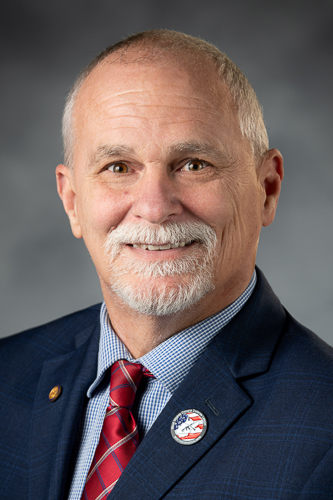
Del. Chuck Horst
Sponsored bills
Maddy summaryHB 3141 requires private or government entities taking property through eminent domain to pay an additional 15% fee based on the court-ordered value paid to landowners. This fee must be paid to the county where the property is located and is in addition to all other costs. The funds collected can only be used by counties for acquiring or improving public forests, parks, recreation facilities, and related infrastructure. The bill does not reduce the amount paid to landowners and applies to all eminent domain proceedings under West Virginia law. It is currently in the House Finance Committee for review.
Maddy summaryThis House Resolution (HR 8) is a symbolic request from the West Virginia House of Delegates asking Congress to pass the federal National Concealed Carry Reciprocity Act (HR 38). It states that West Virginia residents with valid concealed carry permits should be able to carry concealed weapons in any state that allows concealed carry, without needing to verify if that state recognizes their West Virginia permit. The resolution does not change any laws itself but urges Congress to enact HR 38, which would require all states to honor out-of-state concealed carry permits, similar to how driver's licenses are recognized across state lines. It directly affects West Virginia permit holders traveling to other states.
Maddy summaryHCR 73 is a West Virginia state resolution urging Congress to call a constitutional convention under Article V of the U.S. Constitution. It seeks to propose amendments requiring that U.S. Representatives, Senators, federal judges (Article III), and Cabinet Secretaries be natural-born U.S. citizens with sole U.S. citizenship. The resolution does not change current law but requests Congress initiate a convention to amend the Constitution on these specific eligibility requirements. This is a procedural state-level application, not a direct legislative change, and would require support from two-thirds of state legislatures to proceed.
Maddy summaryHB 2383 replaces West Virginia's West Virginia Contraband Forfeiture Act with a new Criminal Forfeiture Process Act. It applies specifically to property used in or derived directly from felony violations of controlled substance laws (e.g., drug crimes), shifting forfeiture procedures from separate civil processes to the criminal court handling the underlying case. Key provisions define terms like "contraband" (unlawful items like drugs), "innocent owner" (someone unaware their property was used in a crime), prohibit civil forfeiture, and ban transferring seized property to federal agencies for federal forfeiture. This directly affects law enforcement agencies and individuals whose property is linked to drug-related felony convictions.
Maddy summaryHB 2704 revises transportation and reimbursement rules for individuals involuntarily committed to mental health facilities in West Virginia. It allows counties to use multiple deputies during transport and permits counties to contract with closer out-of-state facilities if available. The bill amends existing law (§27-5-4) to give counties flexibility in managing transportation logistics after commitment. This directly affects individuals under involuntary commitment orders and local county mental health authorities. The changes aim to improve efficiency in the post-commitment transportation process.
Maddy summaryHB 3069 creates a salary adjustment for West Virginia teachers based on regional housing costs. It provides a "market pay enhancement" to certified teachers in counties where base salaries fall below competitive levels relative to neighboring areas, calculated using median home prices from the National Association of Realtors. The enhancement amount is determined annually by comparing the median home price in a teacher’s county and adjacent counties (including border states) to West Virginia’s statewide median, then applying a percentage-based multiplier to the county’s average teacher salary. This adjustment applies only to teachers in counties where base pay is deemed insufficiently competitive, with the first calculation effective July 15, 2025, and updated every five years thereafter. The policy directly affects public school teachers in West Virginia counties facing regional pay disparities.
Maddy summaryHB 3079 exempts child care programs serving only military dependents and located on military bases or certified by the U.S. military from West Virginia's state licensing requirements. These programs will no longer need state licensure, as military installation commanders will determine eligibility and which children are served. The bill amends existing law to explicitly include these military-connected programs under an exemption, removing redundant state oversight. This change directly affects military family child care providers operating on bases or under military certification.
Maddy summaryHB 2065 would allow Gold Star parents (mothers or fathers of veterans killed in combat) to receive one free Gold Star Family license plate for personal use, exempting them from standard vehicle registration fees. The bill defines a "Gold Star parent" as a parent of a veteran eligible for a gold star lapel pin under federal law (10 U.S.C. § 1126). This extends the existing fee exemption for Gold Star spouses (widows/widowers) to include parents, applying to a single vehicle registered in the parent's name.
Maddy summaryHB 2870 amends West Virginia's DUI statute to clarify that fleeing the scene after driving while impaired is treated as part of the DUI offense itself, not a separate violation. This change directly affects drivers who flee after being stopped for DUI, as it will subject them to enhanced penalties under existing DUI sentencing structures. The key mechanism adds fleeing while impaired to the definition of the offense, ensuring it triggers the same license revocation periods (up to life) and jail terms (e.g., 2+ years for bodily injury) as a standard DUI. The bill does not create new penalties but corrects a legal gap where fleeing was previously not counted toward DUI sentencing.