

Maddy summaryHB 2122 would exempt specific infant and hygiene products from West Virginia's sales tax. It defines "diapers" as disposable absorbent products for infants/toddlers or people with incontinence, "feminine hygiene products" as items like tampons and menstrual cups for biological women, and "infant products" as baby bottles, formula, and car seats. The bill removes sales tax liability for these items at the point of purchase. This directly affects consumers who buy these products, reducing their out-of-pocket costs. The policy change is limited to the defined products and does not alter other tax obligations.
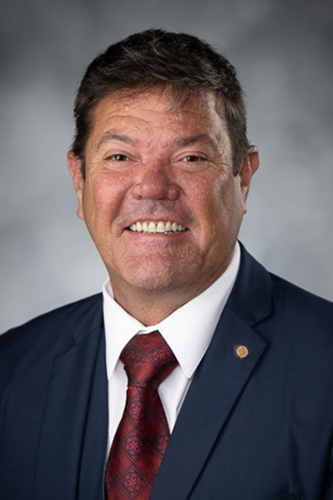
Del. Mike Hornby
Sponsored bills
Maddy summaryHB 2460 requires state permitting agencies, counties, and municipalities to treat private and parochial schools the same as public schools for all construction-related requirements. This includes building permits, fees, safety standards, wastewater management, septic systems, and the speed of permit approvals. The bill directly affects private and parochial schools (non-public, often religiously affiliated institutions) and the government entities that regulate construction processes. It mandates equal application of these rules to end current disparities where private schools faced stricter or different requirements than public schools.
Maddy summaryHB 2433 requires magistrates to order mental health evaluations for defendants charged with violating protective orders, personal safety orders, or making threats of terroristic acts before setting bail. The evaluation, conducted by a state-licensed provider, must occur within 10 days and result in a report to the magistrate within 48 hours. Magistrates must then hold a bond hearing within 5 days of receiving the report. This policy change aims to determine if mental health treatment is needed as a condition of bond for these specific cases.
Maddy summaryHB 2497 mandates that West Virginia's executive branch agencies, State Police, and county school boards implement a "Locality Pay" adjustment for eligible employees starting July 1, 2027. This adjustment uses the U.S. federal government's "Locality Pay Tables" to determine regional pay increases based on specific counties listed in those tables. The bill applies to all state employee positions (excluding elected or appointed officers) and requires annual updates to match federal adjustments. It explicitly states no employee can file a grievance or lawsuit over this pay policy.
Maddy summaryHB 2454 clarifies protections for small-scale urban farming operations in West Virginia. It defines "agricultural residential land" as residential property used for limited urban agriculture, including keeping up to six chickens or maintaining apiaries for personal use or selling non-hazardous food. The bill prevents lawsuits against these operations unless the complainant already occupied adjacent land before the farming began. It also preempts local ordinances that conflict with agricultural activities on such land, ensuring state law supersedes conflicting municipal rules. This directly affects homeowners in towns and cities who engage in small-scale food production on their residential property.
Maddy summaryHB 2404 creates a tax credit for West Virginia businesses that donate to local pregnancy or birth centers. Businesses can claim a credit equal to their donation amount (nonrefundable), provided they submit proof of the contribution to the Tax Commissioner. The credit directly affects businesses operating in West Virginia that choose to support these specific health centers. The bill requires no new state funding, as it offsets existing tax revenue based on private donations. This policy change aims to incentivize private financial support for facilities offering pregnancy-related services.
Maddy summaryHB 2459 expands eligibility for West Virginia secondary school athletic and extracurricular activities to home-schooled students, Hope Scholarship participants, and microschool learners. It requires the West Virginia Secondary School Activities Commission to create rules allowing these students to join public school activities if they meet academic standards (fourth stanine test results), are under 19 by August 1, participate as amateurs, and comply with commission rules. Private school students may also join public school activities if their private school doesn't offer the same activity. The bill mandates that all participants pay reasonable fees and adhere to the same requirements as public school students. This policy directly affects non-public school students seeking athletic and extracurricular participation.
Maddy summaryHB 2403 prohibits the use of hormone blockers for transgender minors under 18 in West Virginia. The bill amends existing law to remove all exceptions that previously allowed hormone blockers (referred to as "pubertal modulating and hormonal therapy") for minors with severe gender dysphoria, even under strict medical oversight. It explicitly states that "hormonal therapy, otherwise known as 'hormone blockers,' may not be provided in any circumstance" for minors. This directly affects transgender youth seeking medically supervised care for gender dysphoria, eliminating a previously permitted treatment pathway. The change takes effect January 1, 2024, as noted in the bill's current provisions.
Maddy summaryHB 2435 repeals a West Virginia law (§55-2-1) that set a time limit for lawsuits involving entry onto or recovery of land. This change removes a specific statute of limitations, meaning property owners or others involved in land disputes would no longer face a fixed deadline to file such legal actions. The bill directly affects individuals or entities pursuing or defending claims related to land ownership or access. As a repeal bill, it eliminates an existing legal restriction without adding new provisions.
Maddy summaryHB 2457 requires hospitals and county/city governments in West Virginia to report costs related to undocumented immigrants. Hospitals must collect immigration status during patient registration (with privacy safeguards) and submit quarterly reports on admissions by status to the Department of Health. Counties must report quarterly expenses for undocumented residents receiving public resources like housing or education. The Department of Health will compile annual reports for the Governor and Legislature on these costs and their impact on healthcare funding, without sharing personal patient data. This bill focuses on data collection, not policy changes or cost recovery.