

Maddy summaryHB 2408 prohibits the use of ranked choice voting (RCV) in all West Virginia elections. It bans RCV - which allows voters to rank candidates by preference and transfers votes in rounds - from being used for any local, state, or federal election by state, county, or local election offices. The bill defines RCV explicitly and declares any local government ordinance supporting it void. This directly affects all elections in the state and prevents future adoption of RCV methods. The bill is a direct legislative prohibition with no exceptions for specific offices or jurisdictions.
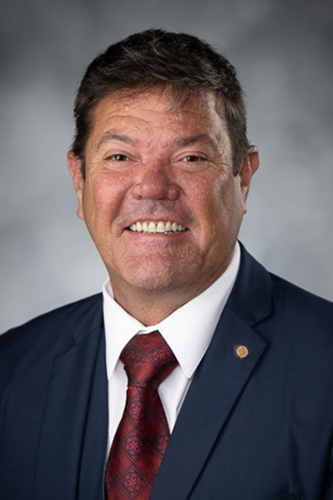
Del. Mike Hornby
Sponsored bills
Maddy summaryHB 2406 requires all West Virginia state offices, departments, boards, and commissions to replace specific terms in government communications with gender-specific alternatives. It mandates replacing phrases like "pregnant people" with "pregnant women" and "chestfeeding" with "breastfeeding" in official documents, websites, literature, and in-person interactions. The bill targets language it deems "exclusionary" or "sexist," listing nine specific term replacements to be implemented by June 1, 2025. This directly affects all state government entities responsible for public communications.
Maddy summaryHB 2593 requires West Virginia state government agencies and public entities to obtain written certification from companies before entering contracts for goods or services. This certification must confirm the company has no financial ties to specific foreign nations deemed to hold values "antithetical" to West Virginia, including state sponsors of terrorism (like Iran and Saudi Arabia) and nations aligned with communist ideology (like China, North Korea, Cuba, and Vietnam). Companies must provide documented proof of their ownership structure, tracing to individual natural persons, to verify compliance. Contracts failing this requirement are void under public policy, directly affecting all state procurement processes involving private vendors.
Maddy summaryHB 2544 would remove the requirement for direct physician supervision for physician assistants and certified nurse practitioners in West Virginia. The bill repeals specific sections of state law (§30-3E-10a and §30-3E-11) that previously mandated in-person supervision and amends other provisions to prevent future rules requiring it. This change would allow these healthcare providers to practice more independently, as long as they maintain collaboration with a physician via telecommunication. The bill directly affects physician assistants and nurse practitioners by expanding their scope of practice under current collaborative frameworks.
Maddy summaryHB 2440 would change West Virginia's presidential primary election date from the third Tuesday in February (starting in 2028) to the second Tuesday in May. This affects only the presidential primary election for voters selecting candidates for President of the United States, not other primary elections for state or local offices. The bill amends existing law to move the presidential primary to align with the general election timing, as currently set for the second Tuesday in May for non-presidential primaries. The change would apply every four years for presidential elections beginning in 2028. This is a procedural adjustment to election scheduling with no direct impact on voter registration or ballot access.
Maddy summaryHB 2407 would exempt overtime pay from West Virginia's personal income tax for full-time hourly employees. Specifically, it modifies the tax code to exclude income earned for work exceeding 40 hours per week from taxable gross income. This directly affects hourly workers who receive overtime compensation, reducing their state tax burden on that additional earnings. The bill amends West Virginia Code §11-21-12 to exclude overtime income from adjusted gross income calculations for tax purposes. It is currently in the House Finance Committee following its introduction on February 17, 2025.
Maddy summaryHB 2510 allows hunters to use drones equipped with thermal imaging to locate and recover legally harvested big game (black bear, deer, elk, and turkey) after a legal kill during open season. The bill requires drone operators to get landowner permission before flying, prohibits carrying weapons while drones are in use (except concealed firearms), and bans disturbing wildlife with drones. It exempts drone operators from hunting license requirements (as long as they didn’t kill the animal) and clarifies that drone-assisted recovery doesn’t count as "pursuing" wildlife under existing laws. This directly affects hunters using drones for recovery and landowners who control access to their property for drone operations.
Maddy summaryHB 2442 repeals a West Virginia law (§55-2-1) that set a specific time limit for filing lawsuits to enter upon or recover lands. This change removes the existing deadline for property disputes involving land access or ownership, affecting individuals and entities involved in such legal actions. The bill does not create new rules but eliminates the current limitation period governing these cases. As a procedural repeal, it directly impacts how land-related lawsuits are filed in West Virginia courts.
Maddy summaryThis House Concurrent Resolution (HCR 38) is a West Virginia legislative resolution supporting the federal passage of the PRIME Act. The PRIME Act would amend federal law to allow farmers to sell custom-slaughtered meat (like beef, pork, or lamb) directly to consumers, restaurants, and stores within their state, without requiring processing at a federally inspected facility. This change would directly affect farmers seeking to sell locally and consumers wanting access to locally sourced meat. The resolution itself does not change any laws but urges the federal government to adopt this policy.
Maddy summaryHR 5 is a non-binding resolution designating October as "Military Toxic Exposure Awareness Month" in West Virginia. It recognizes the health impacts of toxic exposures on military personnel, veterans (including Agent Orange veterans), workers, and their families, particularly those linked to West Virginia military sites. The resolution encourages public awareness campaigns, educational initiatives, and community outreach to support affected individuals, directing copies to state agencies and congressional leaders. It does not create new laws or funding but aims to raise visibility for ongoing health and environmental concerns.