

Maddy summaryHCR 88 is a ceremonial resolution honoring two West Virginia first responders nominated for the Medal of Valor. It specifically recognizes Captain Donald Lawson (New Martinsville Police) for rescuing two people from carbon monoxide poisoning despite his own hospitalization, and Darrell Lambert (Lake Volunteer Firefighter) for entering a burning building without protective gear to save a trapped resident, sustaining burns in the process. The resolution formally confirms the Legislature's approval of their award and directs the House Clerk to send a copy to Governor Morrisey. This is a symbolic honor with no new policy or funding changes, directly affecting only these two nominees. It passed unanimously in both chambers on April 3, 2025.
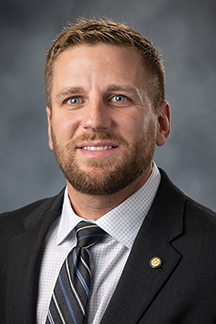
Rep. David Cannon
Sponsored bills
Maddy summaryHB 2777 simplifies documentation requirements for home-schooled children in West Virginia by establishing a digital "School Choice Portal" and email option for parents to submit required notices of intent. It replaces previous paper-based submission methods with these electronic alternatives, while still requiring parents to provide details about instruction subjects and annual assessments. The bill directly affects families homeschooling children who qualify for exemption under West Virginia's compulsory attendance laws. The portal must be operational by the 2025-2026 school year and will meet security and accessibility standards.
Maddy summaryHCR 78 is a non-binding resolution urging West Virginia's Division of Highways to prioritize completing I-73 (the "King Coal Highway") across Wayne, Mingo, McDowell, Mercer, and Wyoming counties. It requests the highway agency treat the project as a high priority to improve economic development and emergency access, especially after recent flooding exposed transportation challenges in the region. The resolution asks the state to provide necessary funding and executive support to expedite the highway's completion but does not allocate new funds or create new law. It directly affects the Division of Highways and residents of the five specified counties by formally advocating for this infrastructure project.
Maddy summaryHCR 52 is a ceremonial resolution requesting the West Virginia Division of Highways name I-64 Nitro Interchange Bridge (Bridge Number 40-064/00-044.47) in Putnam County as the "Ronnie W. Matthews Memorial Bridge." It commemorates Ronnie W. Matthews, a local businessman, Putnam County Circuit Clerk (2008), U.S. Army veteran, and community leader who passed away in 2018. The resolution directs the agency to install signage identifying the bridge with this name. This is a non-binding memorial gesture with no policy or funding changes, solely honoring an individual's contributions to the Nitro community.
Maddy summaryHB 2543 requires state agencies to prepare and submit detailed economic impact statements for certain proposed legislative rules before they are finalized. These statements must analyze potential costs to the public, including regulatory expenses, effects on business competitiveness, job creation, private investment, and economic growth. The bill applies specifically to "legislative rules" (rules that have legal force, impose liability, or grant/deny specific benefits), excluding interpretive or exempt rules. This change aims to provide transparency about the economic consequences of new regulations before they take effect.
Maddy summaryHCR 72 designates March 20, 2025 as "Black Lung Awareness Day" in West Virginia. It honors coal miners affected by black lung disease (coal worker's pneumoconiosis), a preventable occupational lung condition caused by coal dust exposure. The resolution does not create new laws, funding, or policy changes - it serves as a ceremonial observance recognizing the disease's impact and existing protections like the Black Lung Benefits Act. It follows the Federal Coal Mine Health and Safety Act's emphasis on miner safety without altering current regulations.
Maddy summaryHB 3072 requires new two-lane highways in West Virginia to use a "Super Two" design, which adds alternating passing lanes on rural roads to allow safe passing in both directions. This applies to all new road construction projects that do not need full four-lane infrastructure, meeting existing safety standards for lane width and shoulders. The design improves immediate traffic safety by reducing hazardous passing attempts while enabling future upgrades to four lanes with minimal modifications. It follows Texas' approach to cost-effectively enhance safety on existing two-lane corridors.
Maddy summaryHB 3116 updates West Virginia's incest statute to clarify and expand the definition of family relationships covered under the law. It specifically adds "aunt" and "uncle" to include relatives by marriage (e.g., a person's wife of an uncle or husband of an aunt) and ensures the law applies equally to same-sex marriages. The bill directly affects individuals in familial relationships involving married aunts/uncles or same-sex spouses, making the legal definitions more inclusive. It does not change penalties (5-15 years imprisonment or fines) but ensures the statute applies to all qualifying familial relationships, including those formed through marriage.
Maddy summaryHB 2934 requires West Virginia's child welfare department to prioritize housing applications (like HUD or government-assisted housing) for youth aging out of foster care who have turned 18 and do not qualify for transitional living services. The bill amends §49-2-129 to mandate that housing search policies ensure dwellings are safe, affordable, and equipped for basic needs like cooking and emergency communication. It directly affects foster youth aged 18+ transitioning to independent living, who often face housing instability. The key mechanism is the new priority system for housing applications, replacing previous eligibility criteria for this vulnerable group.
Maddy summaryHB 3328 requires hospitals and healthcare facilities to provide effective communication tools for deaf or hard-of-hearing patients and their families when ASL interpreters aren't available on staff. Specifically, facilities must offer technology like hearing loops, captioning services, or video relay systems to enable communication. The bill also mandates that any ASL interpreters used must be approved by the West Virginia Commission for the Deaf and Hard of Hearing. This applies to all hospitals, ambulatory care facilities, and extended care centers under West Virginia law, aligning with the Americans with Disabilities Act.