

Maddy summaryHB 4714 creates a program allowing county jails and Regional Jail Authorities to involve inmates in voluntary litter cleanup on public lands like highways, roads, and parks. Inmates participating earn sentence reduction credits, with strict safety requirements including proper equipment, supervision ratios, and compliance with occupational regulations. The program is funded through the Litter Control Fund, and proceeds from recyclable materials collected during cleanups must be returned to that fund. The bill also mandates educational materials for schools about litter reduction and requires local governments to develop recycling plans for public facilities.
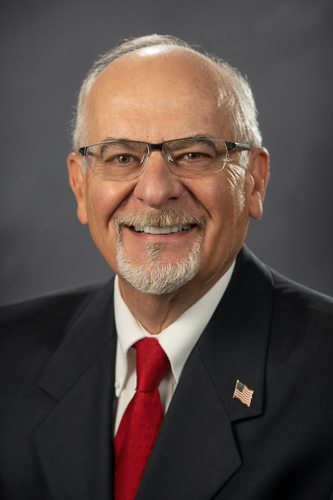
Del. Phil Mallow
Sponsored bills
Maddy summaryHB 4661 would allow the death penalty for individuals convicted of intentionally killing a law enforcement officer or first responder (including firefighters, EMTs, and correctional staff) while they are performing their duties. The bill amends West Virginia's murder sentencing code to add this scenario as an aggravating circumstance requiring physical evidence like DNA or a confession, rather than circumstantial proof. If this aggravating circumstance is proven beyond reasonable doubt and no mitigating factors outweigh it, a jury may impose the death penalty; otherwise, the sentence is life without parole. This directly affects defendants convicted of first-degree murder in these specific cases.
Maddy summaryHB 4566 increases penalties for drivers who flee the scene of a crash causing injury or death in West Virginia. It raises fines and prison terms based on severity: up to $1,000 or one year in jail for bodily injury, up to $2,500 or three years for serious injury, and up to $5,000 or 20 years for death (with death occurring within one year of the crash). The bill also mandates a one-year license revocation for convicted offenders. It defines "serious bodily injury" as injury creating substantial risk of death, disfigurement, or prolonged health impairment, and names the law "Erin’s Law."
Maddy summaryThis bill increases West Virginia's homestead property tax exemption from $20,000 to $40,000 for primary residences owned by residents who are 65 or older or permanently and totally disabled. To qualify, homeowners must have lived in West Virginia for two consecutive years before the tax year (with exceptions for returning military members or those reestablishing residency within five years). The exemption applies to the first $40,000 of a home's assessed value and becomes effective July 1 for the following tax year, though it terminates if the property is sold or transferred. Only one exemption is permitted per homestead, regardless of how many qualifying owners reside there.
Maddy summaryThis bill requires West Virginia's wildlife director to propose new rules for hunting antlered deer. The proposed rules would limit licensed hunters to harvesting two antlered deer per season, with the second deer needing at least three points on one antler. These rules would directly affect all hunters with valid deer hunting licenses in West Virginia.
Maddy summaryHouse Resolution 3 (HR 3), introduced by West Virginia delegates on January 20, 2026, requests Congress create a combined investigative task force to examine the origins and response to the COVID-19 pandemic. The resolution asks the task force to coordinate with existing investigations, investigate alleged issues like vaccine-related health impacts and business closures due to mandates, and recommend corrective actions. It specifically urges the task force to consider referring criminal charges where warranted and to address accountability for pandemic-related decisions. This procedural resolution does not create new laws but seeks a federal investigation into pandemic policies and their effects.
Maddy summaryHJR 19 proposes a constitutional amendment to allow local governments (counties, municipalities) to approve additional tax increases specifically for fire protection and emergency medical services (EMS) with a simple majority vote (50% plus one vote) instead of the current 60% requirement for all other tax increases. This change would apply only to levies limited exclusively to fire/EMS funding, with a three-year maximum duration and a cap preventing increases from exceeding 50% above existing tax rates. The amendment requires voter approval in the 2026 general election and leaves the 60% threshold unchanged for all other tax increases. It does not alter existing tax exemptions or revenue distribution rules.
Maddy summaryHB 4553 creates a tuition reimbursement program for West Virginia Division of Corrections and Rehabilitation employees. It provides 20% annual tuition coverage at state colleges for undergraduate studies, increasing to 100% after five years of continued employment. To qualify, employees must prove employment, apply for other financial aid (like Pell Grants) first, and maintain academic progress. The reimbursement only covers tuition after other aid sources are exhausted, and the state may set additional limits.
Maddy summaryHJR 20 proposes adding a new constitutional section recognizing the Holy Bible (66 books of Old and New Testaments) as "the divinely inspired, inerrant foundational document for our society and government" and requiring its "precepts" to be given "prominence and reverence" in West Virginia's public buildings, laws, policies, and schools. If approved by voters in 2026, this amendment would formally enshrine the Bible's role in state governance and public life. The bill is currently in the House Judiciary Committee, awaiting further legislative action before a voter referendum. It does not mandate Bible instruction in schools but seeks to establish the Bible as a foundational reference for state policy.
Maddy summaryHB 4502 authorizes West Virginia's Division of Motor Vehicles to issue a special license plate for autism awareness upon request. Vehicle owners who apply for this plate must pay a one-time $10 application fee and an annual $15 fee, in addition to standard registration costs. The fees collected ($10 initial + $15 yearly) are deposited into the State Road Fund. This voluntary plate option allows drivers to display autism awareness support without changing existing registration requirements.