

Maddy summaryHB 4523 would move the election of West Virginia Supreme Court justices from the primary election to the general election. The bill requires justices to be elected on a nonpartisan ballot during the general election, with multiple seats handled through numbered divisions on the ballot. Voters would select one candidate per division, and the candidate receiving the most votes in each division would win the seat. This change does not alter the current method of electing justices statewide (by all voters in the state) or the vote-counting process.
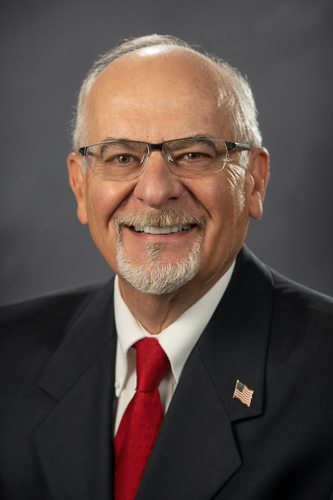
Del. Phil Mallow
Sponsored bills
Maddy summaryHB 4090 allows West Virginia county school boards to hire or accept as volunteers certified chaplains to provide support services for students, staff, and parents. The bill requires chaplains to undergo background checks like child care workers but exempts them from needing state certification or licensing. School boards must also prohibit sex offenders or child predators from serving. Chaplains are granted liability protection for actions taken in their role, unless those actions were maliciously intended to harass or intimidate. The bill directly affects public school districts across West Virginia by expanding their ability to provide spiritual support services.
Maddy summaryHB 4534 creates West Virginia's Title Protection Act to shield property owners from fraudulent title claims. It ensures rightful owners retain full title to their property - even if someone files fake deeds or takes loans using their property - without facing financial liability. The bill requires county clerks to mail notices to owners whenever property transfers occur or deeds are filed/modified, acting as an early warning system for potential fraud. This directly affects homeowners vulnerable to title theft, where criminals might forge documents online to steal equity or saddle owners with unauthorized loans.
Maddy summaryHB 4526 establishes rules for election observers in West Virginia, affecting political parties, candidates, and third-party organizations that may send up to two observers per election location. The bill requires observers to present a letter of appointment and wear a badge, while allowing them to observe most election activities - including ballot handling, tabulation, and equipment testing - except for individual vote casting or confidential ballot completion. It mandates election officials to provide full access to observation areas, prohibit obstructing observers, and ensure public access to ballot reviews and recounts. The law also permits observers to use recording devices and handwritten notes, with officials facing potential sanctions for noncompliance.
Maddy summaryHB 4496 requires creators and distributors of AI-generated media (such as videos, audio, or images) to include clear, visible disclosures identifying the content as artificial intelligence-generated. This applies to any public-facing media created or materially altered by AI, mandating specific disclosures like a 3-second on-screen label for videos or a spoken statement for audio content. Exceptions include internal research, basic AI-assisted editing (e.g., spell-check), and privately shared personal content. Violations could result in civil penalties of up to $100,000 per day for organizations or $1,000 per day for individuals.
Maddy summaryHB 4525 would change the election date for West Virginia's Intermediate Court of Appeals judges to coincide with the state's general election, rather than holding separate elections. This aligns judicial elections with the larger general election cycle, which typically sees higher voter turnout, as stated in the bill's findings. The election would use a nonpartisan ballot, meaning candidates' political party affiliations would not appear on the ballot. The bill directly affects voters in West Virginia who would cast ballots for these judges during general elections, and judicial candidates who would campaign under this new schedule.
Maddy summaryHB 4506 allows West Virginia State Police members who joined the retirement system on or after July 1, 2015, to convert their accrued annual or sick leave into additional retirement credit. The bill specifies that each day of leave will count as one day of credited service toward retirement, with remainders of 10 days or more counting as a full month and less than 10 days being disregarded. This provision does not apply to members who joined before July 1, 2015, and the additional credit will not count against the annual service limit of 12 months. The change clarifies that leave-based credit can now be used by newer members under a 1:1 conversion rate.
Maddy summaryHB 4503 requires drivers on multi-lane highways to stay in the rightmost lane unless specific exceptions apply. The bill lists nine exceptions allowing left-lane driving, including during snow or inclement weather, when preparing to exit, avoiding hazards in the right lane, or during traffic merging. Violating the rule is a misdemeanor punishable by fines up to $500, but enforcement can only occur as a secondary charge after another traffic violation is addressed. This bill directly affects all drivers operating vehicles on multi-lane roads in West Virginia.
Maddy summaryHB 4132 requires West Virginia to implement community education programs statewide, providing services like estate planning, healthcare information, and recreational activities. It directs the State Board of Education to establish these programs through local schools and community organizations, with counties authorized to coordinate them. The bill specifically aims to serve senior citizens, adults without high school diplomas, and low-income residents by offering accessible educational and health-related resources. Key provisions include using public facilities for community centers and aligning services with local community needs as outlined in the bill's definition.
Maddy summaryHB 4505 requires every West Virginia county school board to employ at least one full-time school nurse at each public school serving kindergarten through seventh grade. The requirement applies for every 1,500 students enrolled (or major fraction thereof), with counties able to contract with public health departments for equivalent services if approved. County boards may apply for state funds to cover costs exceeding the basic nurse requirement, particularly for students with specialized health needs. The bill also mandates that nurses be licensed registered professionals and outlines training standards for school employees who may assist with certain health procedures under supervision.