

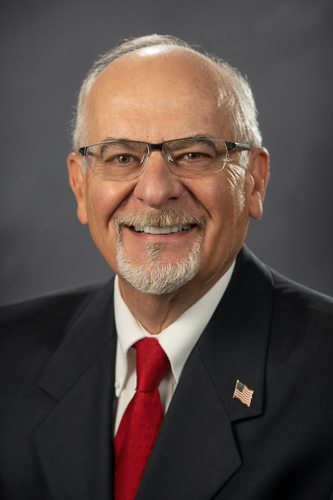
Photo of Phil Mallow
R West Virginia House of Delegates · District 75 On the 2026 ballot

Del. Phil Mallow

Compare
Total votes
2,380
all sessions
Attendance
99%
29 missed
Higher than 81% of chamber peers
With party
97%
of cast votes
Higher than 80% of chamber peers
Bipartisan score
2%
crosses aisle rarely
Lower than 76% of chamber peers
Sponsored
631
bills & resolutions
Higher than 90% of chamber peers
Committees
5
assignments
631 bills and resolutions

Sponsored bills

Total
631
Primary
194
Co-sponsor
437
This page
631
matching current filters
Primary HB 5596
In committee · West Virginia House of Delegates · Lead sponsor
Revising the statute to add costs for misdemeanor and felony convictions to be deposited into the West Virginia State Police Forensic Laboratory Fund

Maddy summaryHB 5596 amends West Virginia law to redirect certain court costs from criminal convictions into the West Virginia State Police Forensic Laboratory Fund. Specifically, it adds $20 for misdemeanor convictions and $20 for felony convictions to be deposited into the fund, plus an additional $50 for any conviction where the forensic lab's resources were used. These costs, which would otherwise go to other funds like courthouse improvements, are now directed to support the forensic lab's operations. The bill affects individuals convicted of misdemeanors or felonies in West Virginia court proceedings.

In committee Feb 16, 2026 0 co-sponsors
Co-sponsor HB 5600
In committee · West Virginia House of Delegates · Co-sponsor
Adding representation of the West Virginia Fire Marshal’s office to the LEPS committee.

Maddy summaryHB 5600 adds the West Virginia Fire Marshal's office as a formal representative to the Law-Enforcement Professional Standards Subcommittee (LEPS). This subcommittee oversees law enforcement officer training, certification, and inactive certification reinstatement. The bill amends existing law to include the Fire Marshal's office as the twelfth member on the committee, alongside current representatives from state police, sheriffs, police associations, and other entities. This change directly affects the LEPS committee's composition and ensures fire marshal input in professional standards decisions.

In committee Feb 16, 2026 1 co-sponsor
Co-sponsor HB 5632
In committee · West Virginia House of Delegates · Co-sponsor
Relating to local permitting deadlines

Maddy summaryHB 5632 sets a 60-day deadline for West Virginia municipalities and counties to approve or deny permit applications for property development. If a local government misses this deadline, the permit is automatically approved, unless the request requires prior state or federal agency approval (extending the deadline to 120 days total). The bill also requires local officials to provide written reasons for denials or claims that an application is incomplete. It aims to give applicants more time for review while aligning with existing legal notice requirements under Chapter 8A.

In committee Feb 16, 2026 1 co-sponsor
Co-sponsor HR 14
Passed · West Virginia House of Delegates · Co-sponsor
Honoring the life and public service of the Honorable Timothy P. Armstead.

Maddy summaryThis is a commemorative House resolution honoring former West Virginia House Speaker and Chief Justice Timothy P. Armstead following his passing. It memorializes his service, names a conference room in the House as the "Speaker Tim Armstead Memorial Conference Room," and extends condolences to his family. The resolution does not create new laws or affect policy - it formally recognizes his legacy and contributions to West Virginia.

Passed Feb 16, 2026 1 co-sponsor
Co-sponsor HB 5571
In committee · West Virginia House of Delegates · Co-sponsor
To provide a pay equity salary adjustment for non-uniformed employees of the Division of Corrections and Rehabilitation

Maddy summaryHB 5571 provides a $6,000 pay equity adjustment over three years ($2,000 annually) for non-uniformed administrative staff in West Virginia's Division of Corrections and Rehabilitation. The increases begin July 1, 2026, and apply to full-time equivalent employees not in uniformed roles, such as office or support positions. Funding comes from general revenue appropriations for state divisions, while regional jail staff receive funding from a special revenue fund. This bill directly affects non-uniformed correctional facility employees who face recruitment and retention challenges, without altering existing pay grade maximums.

In committee Feb 16, 2026 1 co-sponsor
Co-sponsor HB 4462
Passed · West Virginia House of Delegates · Co-sponsor
Prohibition on cell-cultured products

Maddy summaryHB 4462 bans the sale of cell-cultured food products (like lab-grown meat, eggs, fish, or poultry) for human consumption in West Virginia. It defines these products as those made by growing animal cells in a lab to mimic traditional food items, and removes any requirement for labeling them as "lab-grown" or similar. The bill specifically targets cell-cultured products, not plant-based alternatives (defined as "analogue products"). This is a direct sales prohibition with no new labeling rules for the banned products.

Passed Feb 16, 2026 1 co-sponsor
Co-sponsor HB 5455
In committee · West Virginia House of Delegates · Co-sponsor
Relating to special license plates

Maddy summaryHB 5455 directs all mandatory fees from special license plates in West Virginia to the State Road Fund for road maintenance. It adds a voluntary donation option at registration or renewal, allowing drivers to contribute to programs related to their plate's theme (e.g., military, education, or environmental causes). Donations must be clearly marked as optional, separate from fees, and distributed only to the designated program. The bill requires the DMV to disclose these details to applicants and report annual fee and donation totals to the legislature. This affects all drivers purchasing special license plates and ensures road funding remains primary while offering optional support for themed causes.

In committee Feb 11, 2026 1 co-sponsor
Co-sponsor HB 5025
In committee · West Virginia House of Delegates · Co-sponsor
Allowing the burning of obsolete farm structures.

Maddy summaryHB 5025 allows farm owners to burn obsolete, uninsured farm structures on agricultural land without facing second-degree arson penalties. It directly affects farmers who own outdated buildings (like barns or sheds) that are uninsured and no longer in use. To qualify, owners must submit a notarized letter to the county assessor and fire department seven days before burning, confirming the structure is uninsured and meets Department of Environmental Protection permitting requirements. The bill modifies existing arson law to create this specific exemption for eligible farm structures.

In committee Feb 11, 2026 1 co-sponsor
Co-sponsor HB 5456
In committee · West Virginia House of Delegates · Co-sponsor
Relating to disability pay for West Virginia State Troopers

Maddy summaryHB 5456 would amend West Virginia law to ensure West Virginia State Troopers permanently disabled in the line of duty receive disability pay that increases annually with the same raises they would have earned through seniority. Currently, their disability pay is calculated as 8.5% of a fixed salary amount (with a $15,000 annual minimum), but this bill would adjust that amount each year to reflect the trooper's potential future salary increases had they remained on active duty. This change directly affects troopers who become permanently and totally disabled while performing duty-related duties, ensuring their disability compensation grows alongside regular pay adjustments for active officers. The bill does not alter the base calculation method but mandates automatic annual adjustments based on seniority-based pay increases.

In committee Feb 11, 2026 1 co-sponsor
Co-sponsor HB 4769
In committee · West Virginia House of Delegates · Co-sponsor
Creating plans to protect West Virginia from major crises

Maddy summaryHB 4769 requires West Virginia's Governor to develop comprehensive crisis preparedness plans for five specific threats: nuclear attacks, major energy grid disruptions (including cyber or physical attacks), prolonged cyberattacks on communications, invasion, and insurrection. The plans must include preventative measures, immediate response strategies, and recovery steps for each crisis type. The Governor must submit initial plans by November 2026, with annual updates to the legislature. This bill affects state government operations by mandating structured planning for high-risk scenarios, not individual citizens.

In committee Feb 11, 2026 1 co-sponsor
Showing 31 to 40 of 631 bills
Previous 1 … 3 4 5 … 64 Next