

Maddy summaryThis bill asks the West Virginia Legislature to conduct a comprehensive study on how the state manages disaster recovery and flood resiliency funding, coordination, and case management. The study will examine whether the State Resiliency Office is effectively using available funds, coordinating with other agencies, and complying with state laws, while also analyzing how federal policy changes might impact West Virginia's ability to access disaster relief money. Additionally, the bill requests a feasibility study to determine if state emergency personnel should receive cross-training as disaster case managers to improve recovery efforts and reduce reliance on outside organizations. The findings will include recommendations for improving the state's disaster response system and may lead to changes in laws or budget allocations.
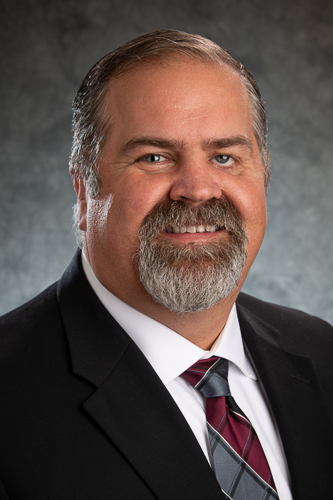
Del. Clay Riley
Sponsored bills
Maddy summaryThis House Resolution honors the life and legacy of the late West Virginia legislator Larry D. Kump, who passed away on February 28, 2026. The resolution formally expresses the House of Delegates' condolences to Kump's family and acknowledges his service as a representative for Berkeley County across three different terms. It recognizes his career in criminal justice and mediation, his commitment to limited government, and his role as a devoted family member and church leader. The document is a ceremonial tribute rather than a law that changes policy or affects public programs.
Maddy summaryHouse Resolution 13 is a West Virginia legislative resolution endorsing federal legislation (H.R. 5966), which would create the Ohio River Basin Restoration Program. If enacted, the program would fund projects to improve water quality, restore fish habitats, enhance flood resiliency, and expand recreational access across the Ohio River basin. It directly affects West Virginia residents who rely on the river for drinking water (700,000 people), economic activity, and recreation along its 277-mile border. The resolution clarifies the program would be non-regulatory, not creating new permits or legal claims, and aims to deliver clean water and economic benefits to communities in the Ohio River watershed.
Maddy summaryThis House Resolution urges the Capitol Building Commission and Department of Administration to assess and address hazardous trees along California Avenue and Kanawha Boulevard on the State Capitol Complex grounds. The resolution requests an immediate evaluation of trees that have caused property damage through falling limbs and broken trunks over the past two years. It specifically asks officials to trim trees back to the grass side of sidewalks or remove and replace hazardous trees to protect public safety and state property. This non-binding resolution directs state agencies to take preventative maintenance actions without mandating specific enforcement measures.
Maddy summaryHB 4537 requires West Virginia municipalities and public service districts to determine the cost of extending water or sewer service to new customers and apply for state infrastructure grants to cover these costs. If grants are approved, the municipality must extend service after customers pay required fees, and grant funds must reimburse customers for upfront costs like application fees and service extension contributions. This directly affects potential customers seeking new service connections and municipalities managing utility infrastructure. The bill streamlines access to state funding to reduce customer financial barriers for service extensions.
Maddy summaryHB 5478 establishes a statewide pilot program distributing free, internet-free learning touchpads to eligible preschoolers in West Virginia to improve kindergarten readiness. The program targets children aged 3-4 who qualify based on family income (at or below federal poverty level), participation in programs like WIC or Head Start, or other risk factors identified by the state. Each touchpad kit includes preloaded early-learning apps, headphones, a protective case, and parent guides with daily activity suggestions and text-message tips. The West Virginia Department of Education will administer the program, partner with community organizations, and evaluate its impact on readiness metrics annually, while ensuring compliance with child privacy laws.
Maddy summaryHB 5626 amends West Virginia law governing how public utilities set new rates and recover costs. It requires utilities to provide 30 days' notice before changing rates, with the Public Service Commission able to delay implementation for up to 270 days (shorter for smaller utilities with fewer than 5,000 customers). The bill also mandates that the Commission must use certain data submitted by utilities in rate cases and allows utilities to voluntarily submit future "test year" data for rate calculations. This directly affects electric, gas, water, and sewer utilities operating in West Virginia, particularly those with 2,500-7,500 customers.
Maddy summaryHCR 22 is a concurrent resolution requesting the Joint Committee on Government and Finance to study policy options that could accelerate the ordering and deployment of electric generation equipment in West Virginia. It specifically asks the committee to examine mechanisms like state-backed deposit guarantees, regulatory frameworks for cost recovery, and accelerated depreciation schedules to reduce delays in equipment procurement. The study aims to support grid reliability, economic growth, and West Virginia’s goal of reaching 50 gigawatts of generation capacity by 2050, while protecting ratepayers and taxpayers. It does not create new laws but seeks recommendations for potential legislative action based on the committee’s findings.
Maddy summaryThis is a commemorative House resolution honoring former West Virginia House Speaker and Chief Justice Timothy P. Armstead following his passing. It memorializes his service, names a conference room in the House as the "Speaker Tim Armstead Memorial Conference Room," and extends condolences to his family. The resolution does not create new laws or affect policy - it formally recognizes his legacy and contributions to West Virginia.
Maddy summaryHB 5390 establishes that fiscal notes (financial impact statements) submitted to the West Virginia Legislature by state agencies, political subdivisions, or public officials are legally considered sworn testimony. The bill imposes criminal penalties for knowingly submitting false or misleading fiscal notes, treating such acts as perjury, while creating a safe harbor for those who voluntarily correct errors made in good faith before a bill's final vote. Key provisions require corrected notes to clearly identify changes and explain the reason for corrections, and mandate referral to prosecutors if credible evidence of intentional falsification exists. This directly affects state agencies and officials preparing fiscal notes, ensuring accountability for financial impact assessments used in legislative decision-making.