

Maddy summaryHB 4010 establishes a state loan program to provide financial assistance for constructing airplane hangars at local airports in West Virginia. It directly affects counties, municipalities, and regional airport authorities that own or operate airports, allowing them to access state loans for hangar planning, construction, or improvements. The bill creates a pilot project with specific eligibility standards (considering site readiness, economic impact, and market demand) and requires the transportation division to set loan terms, limit participating airports based on funding, and report annually to the Joint Committee on Government and Finance. This program aims to support airport infrastructure development to enhance economic opportunities in local communities.
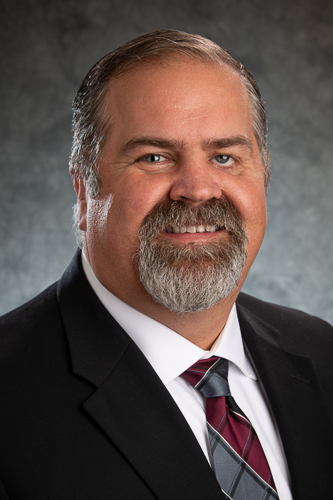
Del. Clay Riley
Sponsored bills
Maddy summaryThis bill reduces the severance tax rate on metallurgical coal produced in West Virginia, affecting coal mining companies that extract this type of coal. The new rates will take effect in stages starting July 1, 2026, lowering the tax from 5% to 4.5% for the first year, then to 4% the following year, and finally to 3.5% beginning July 1, 2028. Metallurgical coal is defined as coal used for making steel and other metals, distinct from thermal coal used for electricity generation. The tax reduction applies to the gross value of coal produced and includes additional local taxes that are normally part of the total severance tax.
Maddy summaryThis bill proposes a constitutional amendment to increase the homestead property tax exemption in West Virginia from $20,000 to $50,000. It directly affects homeowners and mobile home owners who are at least 65 years old or permanently disabled, as well as younger homeowners who would receive a phased-in exemption starting at a lower value. The amendment would allow the state legislature to set specific rules for how the exemption applies, including a five-year phase-in period for properties appraised before the law takes effect. Additionally, the bill grants the legislature authority to provide property tax relief to tenants of residential or farm property. The measure requires approval by voters at the 2026 general election to become part of the state constitution.
Maddy summaryThe WV Load Forecast Accountability Act (HB 4481) requires West Virginia's Public Service Commission to review and validate the electricity demand forecasts submitted by local utilities to PJM (the regional grid operator), ensuring accuracy and transparency. The Commission must assess utility data and assumptions within 12 months, verify that only likely-to-develop projects (e.g., data centers) are included based on financial commitments, and coordinate with PJM and neighboring states to prevent double-counting of new energy demands. This oversight aims to protect consumers from unnecessary costs by aligning forecasts with realistic grid planning needs.
Maddy summaryHB 4026 requires West Virginia electric utilities to include detailed analyses of advanced transmission technologies in their integrated resource plans filed with the Public Service Commission. This affects all utilities operating in the state that submit these plans, including major providers like American Electric Power and Dominion Energy. The bill mandates comprehensive assessments of technologies such as advanced conductors, dynamic line rating, and power flow controls, covering their economic feasibility, technical viability, potential benefits, and deployment schedules. These analyses must address how such technologies improve grid efficiency, reliability, and safety for customers. The requirement applies to all new or updated resource plans filed after July 1, 2026.
Maddy summaryHB 4001 creates TEAM-WV, a new nonprofit corporation to advance West Virginia's economic development. The bill requires the Governor to form this entity to promote job creation, retention, training, and business recruitment, with specific operational rules. Key provisions include requiring the Governor to file articles of incorporation, establishing a board of directors with appointment procedures, mandating board approval for CEO compensation and major contracts, and requiring annual strategic planning and conflict-of-interest policies. The corporation will operate under state code but must follow these defined governance structures. This is a procedural bill establishing the framework for a state economic development agency, not a direct policy affecting residents or businesses.
Maddy summaryHB 4772 requires West Virginia's Medicaid agency to verify enrollee status monthly by matching Medicaid records against state death records (from the Office of Vital Statistics) and the federal Social Security Death Master File. If a person has died, their Medicaid coverage must be terminated immediately, effective the date of death, stopping all future payments. The bill mandates data-sharing agreements with federal agencies, annual audits by the state Inspector General, and yearly reports to the legislature on the number of deceased enrollees removed and estimated cost savings. This directly affects deceased Medicaid recipients (whose records are automatically removed) and aims to prevent unnecessary payments, saving state funds.
Maddy summaryHB 4981 designates psychiatric hospitals treating exclusively civil and forensic patients (over 95% court-ordered civil/forensic cases from state custody) as "state-designated facilities" for Medicaid funding purposes. This change allows these specific hospitals to qualify for Medicaid reimbursement under federal rules, rather than being excluded as "state-designated" under current tax code. The bill amends tax provisions to ensure revenue collected from eligible hospitals (via a 0.75% tax on gross receipts) flows directly into a Medicaid funding account. It directly affects licensed psychiatric hospitals meeting the strict patient-mix criteria, enabling them to access Medicaid program funds they previously could not.
Maddy summaryHB 4360 allows West Virginia's Supreme Court of Appeals to establish uniform pay scales for judicial support staff instead of using fixed salary amounts. It directly affects magistrate court clerks, magistrate assistants, and deputy clerks - positions currently paid $54,596 and $49,232 annually under statute. The bill replaces specific salary figures with a flexible pay scale managed by the Supreme Court's Administrative Director, while still permitting these staff to receive general state employee salary increases. This change aims to streamline compensation adjustments across judicial offices without altering job duties or eligibility for broader state pay adjustments.
Maddy summaryThis House resolution formally recognizes President Donald J. Trump for various policies and actions that the West Virginia House of Delegates claims have benefited the state. The document highlights specific initiatives including regulatory reforms in the energy sector, tax relief measures, funding for rural healthcare, and programs aimed at reducing prescription drug costs and establishing investment accounts for newborns. It also cites border security improvements and drug control efforts as contributing factors to public safety and economic well-being. The resolution expresses appreciation for these actions and requests that the formal recognition be sent to the President.