

Maddy summaryHB 3298 prohibits West Virginia colleges and universities from requiring students to receive the COVID-19 vaccine or a booster shot to enroll in or attend in-person classes. This law directly affects students at these institutions by removing vaccination as a mandatory condition for in-person education. The key provision adds a new section to state law (§18B-14-12) that bans such requirements, making it illegal for any college or university in West Virginia to impose them. The bill does not change other health policies or apply to remote learning options.
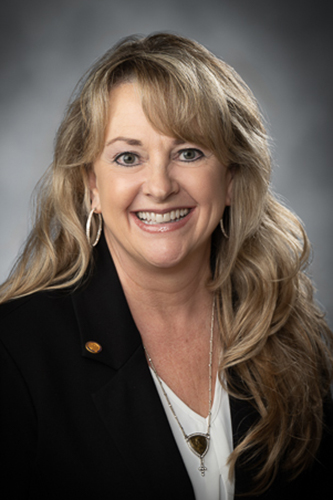
Del. Laura Kimble
Sponsored bills
Maddy summaryHB 3130 strengthens animal welfare protections in West Virginia by requiring pet owners to confine unspayed female dogs during heat cycles and increasing penalties for repeat animal cruelty offenses. The bill defines new criminal offenses like unlawful confinement and animal hoarding, with mandatory mental health treatment for hoarding cases, and updates humane officers' duties to include reporting suspected child abuse, elder neglect, or domestic violence linked to animal cruelty. It also mandates that animal facilities provide public access to stray and surrendered animals and establishes clear standards for temporary and primary enclosures. These changes directly affect pet owners, animal shelters, and law enforcement officers across the state.
Maddy summaryHB 3171, the "Citizen and State Accountability Act," requires state and local government agencies to seek the Governor's approval before accepting certain grants. For grants over $1 million (defined as "major grants"), agencies must submit a detailed 60-day analysis covering costs, policy impacts, and compliance requirements to the Governor and a fiscal office. For smaller grants ($1 million or less, "minor grants"), agencies must notify the Governor one week before applying. The bill mandates public reporting of all grant applications and requires the Governor to provide written consent for major grants or block minor grants entirely, with all grant details recorded in a public database.
Maddy summaryHB 3132 sets new requirements for commercial dog breeders in West Virginia, defined as those maintaining 11 or more unsterilized dogs over one year for breeding. It mandates annual permits with county-set fees (capped at $350 for smaller "Class I" operations and $750 for larger "Class II" operations), with funds directed to animal shelters and spay/neuter programs. Breeders must obtain annual vet certifications for breeding females, maintain rabies certificates for all dogs, include permit numbers in advertisements and on cages, and provide written buyer disclosures. The bill directly affects commercial breeders operating at scale, aiming to standardize care and transparency in dog sales.
Maddy summaryHB 3175 prohibits public utilities (such as gas, water, and electric companies) from using funds paid by ratepayers to make political contributions or charitable donations. The bill bans these contributions to political candidates, campaigns, political action committees, and charitable organizations. Violations would be classified as criminal offenses with penalties. This applies to all public utilities operating in West Virginia under the state's regulatory code.
Maddy summaryThis bill changes how election fraud cases are handled in West Virginia. Currently, the Secretary of State reports potential election fraud to local county prosecutors. Under this bill, if a county prosecutor declines to prosecute after 60 days, the Secretary of State must refer the case to the state Attorney General instead. This directly affects the Secretary of State, county prosecutors, and the Attorney General by shifting the referral pathway for election fraud investigations. The key change is the 60-day review period before cases can be escalated to the state level.
Maddy summaryHB 2683 prohibits the use of ranked choice voting for all local, state, and federal elections in West Virginia. The bill defines ranked choice voting as a system where voters rank candidates by preference, with votes redistributed in rounds if no candidate wins a majority. It declares any election using this method invalid and prevents officials from being sworn into office based on such results. The prohibition does not apply to internal political party processes like conventions or party officer elections.
Maddy summaryHB 3113 increases the percentage of precincts required to undergo manual ballot audits during election canvassing in West Virginia. The bill mandates that a higher random selection of precincts (beyond the current threshold) must have voter-verified paper ballots manually counted. If discrepancies exceed 1% or change the election outcome in an audited precinct, all ballots in that precinct must be manually recounted, with the manual count becoming the official record. This directly affects election officials conducting canvasses and candidates who may demand recounts. The bill amends existing election code sections to implement these audit requirements.
Maddy summaryHB 3114 prohibits lobbyists from receiving compensation for lobbying West Virginia state officials on behalf of designated "foreign adversaries," such as governments of China, Russia, Iran, Cuba, and other entities listed in the bill. It requires lobbyists representing these entities to self-identify as agents of foreign adversaries and creates penalties including civil fines, court-ordered return of payments ("disgorgement"), and injunctive relief for violations. The bill defines "foreign adversaries" broadly to include specific countries, terrorist organizations, and entities controlled by them, with the list updated annually by the Secretary of Homeland Security. It directly affects lobbyists and lobbying firms working with these designated foreign entities within West Virginia. The bill is currently in the introduction phase, having been filed with the House Judiciary Committee on March 4, 2025.
Maddy summaryHB 2383 replaces West Virginia's West Virginia Contraband Forfeiture Act with a new Criminal Forfeiture Process Act. It applies specifically to property used in or derived directly from felony violations of controlled substance laws (e.g., drug crimes), shifting forfeiture procedures from separate civil processes to the criminal court handling the underlying case. Key provisions define terms like "contraband" (unlawful items like drugs), "innocent owner" (someone unaware their property was used in a crime), prohibit civil forfeiture, and ban transferring seized property to federal agencies for federal forfeiture. This directly affects law enforcement agencies and individuals whose property is linked to drug-related felony convictions.