

Maddy summaryHB 5017 creates a one-time $10 million grant program administered by West Virginia's Department of Veterans Assistance to support active American Legion posts across the state. It requires the department to distribute equal amounts to all eligible posts (those maintaining good standing and operating as of January 1 of the fiscal year) without requiring applications or matching funds. Grant funds may cover building maintenance, equipment, utilities, or veteran services, but cannot be used for political activities or personal compensation. The program expires after funds are distributed and a final report is submitted to the legislature, with posts required to report fund usage within 12 months.
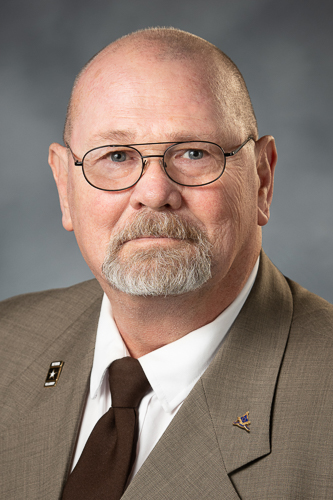
Rep. Chuck Sheedy
Sponsored bills
Maddy summaryHB 5020 prohibits individuals on the state sex offender registry, convicted of sexual assault, or convicted of juvenile abuse from entering public school property or attending school events. It directly affects these individuals and requires schools to hold parent-teacher conferences with them via phone or virtual meeting instead of on-site. Violating this ban is a misdemeanor for a first offense (up to six months in jail) and a felony for repeat offenses (one to five years in prison). The bill also allows the State Board of Education to create implementing rules.
Maddy summaryHB 5018 would stop the West Virginia Division of Highways (WVDOH) from maintaining certain low-traffic roads, including lanes, cul-de-sacs, dead ends, city streets, and non-through routes with fewer than 10 average daily vehicles per 0.1 mile. The bill specifies these roads would no longer receive physical maintenance (like repairs or snow removal), though legal rights-of-way would remain documented on paper. Crucially, the bill ensures county budgets allocated for road maintenance would not be reduced as a result of this change. This policy directly affects rural and residential roads with minimal traffic, shifting maintenance responsibility away from the state highway system.
Maddy summaryHB 4987 requires all West Virginia public schools serving students in grades K-12 to provide annual evidence-based social inclusion training (at least one hour per year), and schools serving grades 6-12 must also provide annual youth violence prevention training (at least one hour per year). The West Virginia Department of Education must develop and maintain publicly available lists of proven effective programs for both trainings, including no-cost options, with updates every 36 months. Schools may optionally form student-led violence prevention clubs focused on awareness and leadership, though public charter and nonpublic schools can opt out of the training requirements. The bill encourages seeking state or federal funding to cover implementation costs but does not mandate new state spending.
Maddy summaryHB 4998 increases the hourly pay rate for private investigators working with West Virginia public defender offices or court-appointed panel attorneys, raising it from $30 to $45 per hour. The bill amends existing law to directly affect these investigators by changing their compensation rate without altering application or payment processes. This is a straightforward pay adjustment targeting a specific group of public service workers who support indigent defense cases. The change applies to all such investigators employed under public defender services or court-appointed panels across the state.
Maddy summaryHB 5002 requires West Virginia coal mine operators to designate trained miners as first responders within mandatory mine safety programs. This applies to underground mines and directly affects coal mine operators, who must develop these programs within six months of final rules, and miners who will receive specific training. Key provisions mandate that designated first responders be trained in fire prevention/detection, emergency evacuation, communication, mine ventilation operations, and coordination with professional mine rescue teams. The bill does not create new penalties but integrates these requirements into existing safety program rules under §22A-1-36 of West Virginia law.
Maddy summaryHB 4979 would restore the right to file civil lawsuits in West Virginia for "alienation of affection" (when a third party causes a spouse to lose affection) and "criminal conversation" (adultery). It requires such lawsuits to be filed within three years of the last relevant act and prohibits claims based on events occurring after a permanent separation of the couple. The bill reverses a 1969 law that had banned these claims, making them available again for new cases. It applies to both individuals and organizations, but not to acts happening after a permanent separation.
Maddy summaryHB 4863, the West Virginia Refugee Absorptive Capacity Act, requires state and local officials to assess community capacity before resettling refugees or immigrants. The bill mandates that the state office within the Department of Human Services evaluate factors like healthcare access, housing availability, school capacity, job market impact, and law enforcement resources through a formal assessment. It also requires quarterly coordination meetings with local governments, 30 days of public notice for resettlement plans, and fiscal impact reports before new resettlements begin. This directly affects local governments (counties/cities), the Department of Human Services, refugee resettlement organizations, and the communities receiving refugees.
Maddy summaryHB 4880, "The Deployed Servicemembers Protection Act," protects West Virginia service members deployed for 30+ days (including National Guard on state duty) and their families. It prohibits spouses from selling property/vehicles over $10,000, closing joint accounts, withdrawing over 50% from accounts, or removing children without the service member’s written consent during deployment and for two months afterward. The bill also requires returning children to the home of record within one week of the service member’s return. Violations are misdemeanors punishable by up to 30 days in jail, $5,000 fines, or civil liability. The law incorporates existing federal Servicemembers Civil Relief Act protections.
Maddy summaryThis bill revises West Virginia's legal framework for the State Guard, establishing a formal structure to operate alongside the National Guard. It requires the Governor to create five regional regiments by September 2026, each with headquarters, battalions, medical units, and engineering teams staffed by volunteers aged 16+ (open to all genders). Members must complete 12 hours of monthly training, including at least one 8-hour block, with coordination allowed with local emergency services. Funding will be managed through a dedicated annual budget line item, with unused funds carrying over to future fiscal years.