

Maddy summaryHB 3218 creates a tax credit program to incentivize the rehabilitation of underutilized commercial, industrial, and residential properties across West Virginia. Businesses and property owners who invest at least $250,000 in renovation, increase property value by 30%, and create or sustain five full-time jobs within three years can claim a 25% tax credit (up to $2 million) on eligible costs for business and occupation or corporate income tax, plus a 50% property tax credit on increased value for up to five years. Additional credits of up to 15% are available for projects in rural or distressed areas (10%) or for brownfield/historic properties (5% each). The bill also establishes a fast-track permitting process for qualifying projects to streamline development approvals within 90 days.
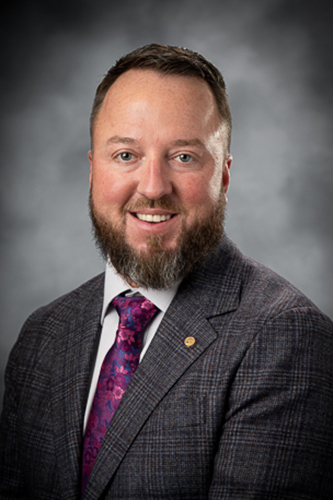
Rep. Jonathan Kyle
Sponsored bills
Maddy summaryHB 3217 requires the West Virginia Department of Environmental Protection (DEP) to notify the public within 24 hours of any hazardous spill into state waters - including rivers, wells, or groundwater - released by entities like industrial facilities or chemical handlers. The bill mandates notifications include the spill location, substance type and quantity, health/environmental risks (like drinking water impacts), public precautions (e.g., water use restrictions), and cleanup steps, delivered via DEP websites, media, and emergency alerts. It also requires spill-reporting entities to immediately notify the DEP and Emergency Management Division, with potential civil penalties for failures to report. The DEP must maintain a public online database tracking all spills and remediation efforts. This directly affects environmental agencies, spill-causing entities, and communities near affected waterways.
Maddy summaryHB 2437 clarifies enhanced penalties for crimes involving fentanyl, specifically targeting individuals convicted of possessing, delivering, or manufacturing fentanyl as a Schedule II substance. It increases penalties for these offenses: a $50,000 fine or 3-15 years in prison (instead of the standard $25,000 fine or 1-15 years), directly affecting those convicted of fentanyl-related crimes. The bill amends West Virginia law to explicitly state these higher penalties when fentanyl - alone or mixed with other substances - is the Schedule II controlled substance involved. It does not change penalties for other drugs or create new offenses, only clarifying existing sentencing for fentanyl cases. The bill passed the House on March 5, 2025, and is now pending in the Senate.
Maddy summaryHB 2542 requires Child Protective Services (CPS) workers to record audio during all investigation visits with individuals under investigation for child abuse or neglect allegations. This applies to every interaction between CPS staff and a person under investigation, with exceptions: audio recording must have the person's informed consent or a court order during home visits or private interviews. The bill mandates that CPS must conduct a face-to-face interview with the child within 14 days of receiving a report. This law directly affects CPS workers who must implement the recording requirement and families involved in active investigations.
Maddy summaryHB 3182 requires West Virginia's child welfare department to provide foster children with their own luggage (suitcase, backpack, or similar container) when moving between placements, rather than using trash bags. This applies to all children entering foster care or changing placements, with the luggage belonging to the child and not the department or foster family. The department must maintain a luggage supply, track instances where trash bags were used instead, and submit annual reports to the legislature detailing these cases and inventory practices. The law takes effect September 1, 2025, and formalizes a previously listed right (§49-2-126(22)) with specific operational requirements.
Maddy summaryHB 2453 allows West Virginia public school teachers to carry over unused sick or personal leave days to the next academic year. The bill adds a new provision (§18A-2-16) to the education code, enabling teachers to bank these days without losing them at year-end. This directly affects all public school instructors in West Virginia who have unused leave balances. The policy change is straightforward, requiring no additional approval or application process for teachers to retain their accrued leave.
Maddy summaryHB 2704 revises transportation and reimbursement rules for individuals involuntarily committed to mental health facilities in West Virginia. It allows counties to use multiple deputies during transport and permits counties to contract with closer out-of-state facilities if available. The bill amends existing law (§27-5-4) to give counties flexibility in managing transportation logistics after commitment. This directly affects individuals under involuntary commitment orders and local county mental health authorities. The changes aim to improve efficiency in the post-commitment transportation process.
Maddy summaryHB 3073 requires West Virginia counties to use separate voting machines exclusively for training purposes, prohibiting their use in actual elections except in two specific emergencies: machine failure during voting or insufficient funds to purchase dedicated training machines. If counties lack funds for separate training machines, they must test and certify any machines used for training to ensure accuracy before election day. The bill mandates that all testing must follow strict procedures outlined in §3-4A-26, including public testing with pre-audited ballots and certification of error-free equipment. This directly affects county election officials and their management of voting equipment security and testing protocols.
Maddy summaryHB 2981 establishes the Constitutional Office Fleet Management Act, exempting five constitutional offices (Attorney General, Secretary of State, Treasurer, Auditor, and Commissioner of Agriculture) from existing fleet management rules and requiring them to follow new, specific guidelines. The bill mandates these offices to maintain vehicle logs, provide driver training, and submit annual reports detailing fleet usage (including miles driven, fuel costs, maintenance expenses, and personal vehicle reimbursements). Each office must submit a written intent to comply by July 1st and may develop its own department-specific vehicle operation rules. The law also permits constitutional offices to arrange for disposal of non-state-funded vehicles while adhering to federal and GSA standards.
Maddy summaryHB 2957 changes where fees from certain agricultural-themed license plates are deposited. Specifically, it directs all fees collected for "pollinator" special license plates to be deposited into the Agriculture Fees Fund, rather than the State Road Fund. Fees for existing FFA and 4-H themed plates will continue to go to their respective funds as currently required. This bill affects organizations that apply for these special license plates, such as agricultural groups or youth organizations, by altering the destination of the fees they collect. The change is a straightforward policy adjustment to fund allocation, with no new requirements for plate applications or fees.