

Maddy summaryHB 3034 establishes the West Virginia TEACH Scholarship Program to provide financial aid for child-care workers pursuing degrees in early childhood education at state community colleges. The program targets workers at eligible facilities (caring for six or more children) and requires recipients to work in West Virginia child-care settings for at least two years after graduation. Administered by the West Virginia Higher Education Policy Commission, it aims to address staffing shortages in child-care by making higher education more accessible. The bill mandates annual reporting on program outcomes to track its impact on workforce participation and child-care quality.
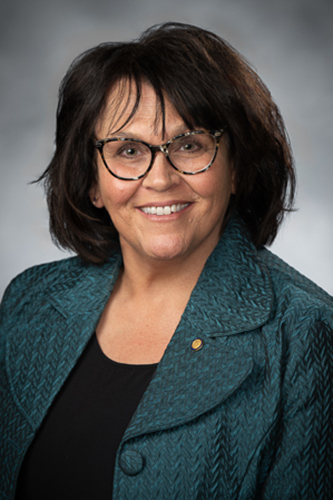
Del. Lori Dittman
Sponsored bills
Maddy summaryHB 3033 shortens the time limit for suing over contract disputes in West Virginia. It reduces the statute of limitations for written contracts from 10 years to 5 years and for oral contracts from 5 years to 3 years. This change directly affects individuals and businesses entering into written or verbal agreements, as they would have less time to file legal claims if a contract is breached. The bill amends West Virginia Code §55-2-6 to align the state's rules with those of most other states. The legislation is currently pending in the House Judiciary Committee after its introduction on February 28, 2025.
Maddy summaryHB 2999 amends West Virginia law to extend the payment deadline for fees charged by county fire prevention units from 75 days to 180 days after a fire service response. This change directly affects property owners, businesses, or individuals responsible for paying fire department charges for services like firefighting, rescue, or hazardous material cleanup. The bill requires these fees to be itemized in writing and allows fire departments to pursue legal action for unpaid fees after 90 days if no payment plan is established. The amendment specifically updates Section 7-1-3d of the West Virginia Code regarding fee collection timelines.
Maddy summaryHB 3022 would allow West Virginia's Division of Motor Vehicles to issue special license plates featuring autism awareness. Vehicle owners who apply can choose this plate design by paying a $10 one-time fee and a $15 annual fee, with both fees deposited into the State Road Fund. The bill amends existing law to authorize this specific plate type, without changing autism support services or funding. It directly affects West Virginia residents who wish to display this awareness plate on their vehicles.
Maddy summaryHB 3023 requires every West Virginia county school board to employ at least one full-time school nurse for each public school, based on kindergarten through seventh-grade enrollment (one nurse per 1,500 students or major fraction). County boards may contract with public health departments for equivalent services if approved by the state board, and the state may provide funding to support additional health services beyond the minimum requirement. The bill mandates school nurses be licensed registered professionals and establishes standards for trained school employees (like teachers or aides) to assist with specialized health procedures under nurse supervision. It also creates a council of school nurses to develop training standards and recommends a procedural manual for implementation.
Maddy summaryHB 2888 amends West Virginia Code §17-2A-8 to clarify and expand the West Virginia Commissioner of Highways' authority over road maintenance and repair. The bill requires the commissioner to implement "reasonable design techniques to minimize flood damage" during road projects and mandates public hearings with virtual participation options before closing or discontinuing state roads. It also updates procedures for acquiring land for road projects, establishing road standards, and maintaining public records related to road rights-of-way. The bill directly affects the state highway department's operational procedures and public engagement processes for road maintenance decisions. (This is a procedural amendment to existing duties, not a new funding or program.)
Maddy summaryHB 2972 amends West Virginia law to clarify which tree removal activities qualify as "timbering operations" for sediment control regulations. It narrows existing exemptions by specifying that tree cutting for oil/gas infrastructure, highway maintenance, or personal use (on one's own property without hiring a professional) only counts as timbering if the trees are sold for commercial wood products. The bill directly affects timber operators, landowners, and entities like oil/gas companies that previously might have been exempt from sediment rules. It updates the legal definition to ensure sediment control measures apply to commercial timber harvesting activities, excluding incidental removals not tied to commercial wood sales.
Maddy summaryHB 2969 increases West Virginia's homestead property tax exemption for eligible homeowners. The bill raises the exemption amount from $20,000 to $30,000 immediately, with further increases to $35,000 by 2028 and $40,000 by 2030. This exemption applies to the first $30,000 (and higher amounts over time) of a home's assessed value for primary residences owned by residents aged 65 or older, or those certified as permanently and totally disabled. To qualify, applicants must meet residency requirements, including being a West Virginia resident for two consecutive years prior to the tax year, with exceptions for military service and returning residents.
Maddy summaryHB 2839 requires all West Virginia public elementary, middle, and high schools to provide free feminine hygiene products to female students. County boards of education must supply these products using existing funds allocated for hygiene items, without requiring new state spending. The bill directly affects female students in public K-12 schools by ensuring access to these essential products during school hours. It establishes a clear policy change to address period poverty in educational settings through existing budget mechanisms.
Maddy summaryHB 2798 creates a pilot program for public high schools in West Virginia to offer a trades-focused elective course. This course, taught at community colleges across the state, replaces standard English, language arts, and science instruction with trade-specific content while counting toward graduation credit. It directly affects high school students interested in trade careers by providing career preparation, resume help, and exposure to available trade fields. The pilot, funded through existing state resources and potential industry grants, begins in the 2025/2026 school year and requires annual reports on its effectiveness.