

Maddy summaryThis West Virginia House resolution states that the U.S. national debt (over $38 trillion in 2026) poses a national security threat, citing foreign debt ownership, projected Social Security/Medicare shortfalls, and warnings from military/intelligence leaders. It urges Congress to establish regular budgeting procedures but does not create new laws or alter federal spending. As a symbolic resolution, it has no direct legal effect on national debt policy or federal budgets. The resolution focuses on raising awareness rather than implementing concrete changes.
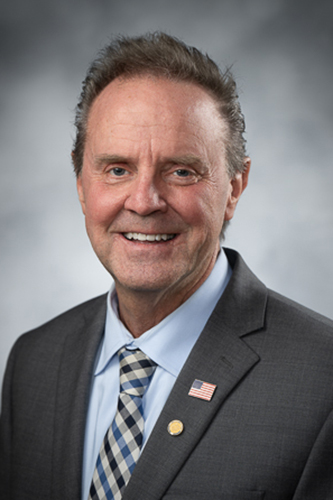
Rep. Dana Ferrell
Sponsored bills
Maddy summaryHB 4152, the Workforce-Education Partnership Act, allows West Virginia business owners to contract employees to vocational programs or high school classes while the employees retain full-time status and benefits. Businesses receive a 100% tax credit on wages paid during participation, capped at $50,000 per business annually and $5 million statewide yearly. Employees must meet program qualifications and cannot replace certified teachers in core subjects, but may provide specialized training in fields like trade skills or healthcare. The law ensures fiscal responsibility through strict caps and uses existing state resources to minimize administrative costs.
Maddy summaryHB 5035 requires medication-assisted treatment (MAT) programs - facilities providing medication for opioid addiction - to create written community relations policies. These policies must detail how the program will engage with local communities and avoid disrupting public functions. The bill mandates that MAT programs publish a public notice 60 days before opening or moving, notify county commissioners and mayors by certified mail, and obtain local government approval for new locations. It also restricts new MAT facilities from locating within half a mile of schools or daycares (with limited variances for existing facilities), aiming to address community concerns through transparency and local input.
Maddy summaryHB 4918 requires West Virginia public schools to provide a minimum of 180 instructional days per year, with specific daily minute requirements: 315 minutes for kindergarten through fifth grade, 330 minutes for sixth through eighth grade, and 345 minutes for ninth through twelfth grade. Counties may extend the school day by at least 30 minutes to meet the 180-day requirement, using the extra time for up to five days of weather-related closures or teacher professional development. The bill also mandates that noninstructional days total 20 annually, including holidays, election day, and designated days for staff training and school preparation. This directly affects all West Virginia public school districts and their annual calendars.
Maddy summaryHB 4856 requires all rebates from state agency purchasing cards (P-cards) to be directed entirely to the PEIA Rainy Day Fund, replacing current allocations. Currently, rebates are split between multiple funds (e.g., Purchasing Improvement Fund, Entrepreneurship Fund, Hatfield-McCoy Authority, and State Parks), but this bill eliminates those other transfers. The bill amends WV Code §12-3-10d to mandate that all remaining rebate funds - after any necessary operational costs - be transferred to the PEIA fund within three days of receipt. This directly affects state agencies using P-cards, as their card spending rebates will now solely support the PEIA fund’s stability.
Maddy summaryHB 4469 requires county surveyors first elected or appointed after January 1, 2027, to be West Virginia residents, defined as someone who lives in the state and has intent to stay (e.g., holds a driver's license, pays state taxes, or registers vehicles there). It does not affect current county surveyors but applies to future appointments. The bill also creates a process for county surveyors to request exemptions from the Ethics Commission if they wish to hold multiple public offices simultaneously. These exemptions require demonstrating the office is not widely available, requires personal prestige, and allows financial gain outside the role.
Maddy summaryHB 4849 allows county school superintendents or school improvement committees to directly request emergency funding from the School Building Authority to repair safety hazards in school buildings caused by natural events, such as floods or landslides. The School Building Authority must quickly assess the hazard and begin a process to hire contractors for the repairs. If the repair cost is less than 50% of the school's value as determined by the Comprehensive Education Facilities Plan, the Authority must prioritize funding to preserve the existing building. This bill directly affects West Virginia county school districts and the School Building Authority in addressing urgent infrastructure risks.
Maddy summaryHB 4844 modifies West Virginia teachers' personal leave policies. It increases the annual leave without cause from four to five days (effective July 2023), requires 14 days' notice for consecutive days off or 24 hours for non-consecutive days (with exceptions for emergencies), and mandates substitute coverage for classroom absences. The bill also establishes "leave banks" allowing teachers to contribute up to two days annually, which can be used by colleagues with fewer than five accumulated days for illness or accidents, but not for retirement or insurance purposes. These changes directly affect all full-time public school teachers in West Virginia county school districts.
Maddy summaryHB 4762 amends West Virginia's veterinary licensing laws to create reciprocity for veterinarians and veterinary technicians licensed in other states. It allows professionals with active, unrevoked licenses from states with "substantially equivalent" requirements to practice in West Virginia without re-taking exams, provided they submit documentation of good standing. The bill also establishes new pathways for graduates of foreign veterinary schools and creates special permits for participants in international credentialing programs. These changes directly affect licensed veterinarians and veterinary technicians seeking to practice across state lines, simplifying the process to meet existing licensing standards.
Maddy summaryHB 4761 modifies parole eligibility for individuals convicted of murder or attempted murder in West Virginia. It increases the minimum time inmates must serve before becoming parole-eligible: 20 years for second-degree murder (up from 10), and 10-40 years for attempted first-degree murder (up from 3-15) or 5-20 years for attempted second-degree murder (up from 1-3). The bill also adds provisions allowing prosecutors and victims' families to attend parole hearings remotely or in person. These changes directly affect inmates serving sentences for these specific violent offenses. The bill does not alter sentence lengths but restricts early release opportunities for these crimes.