

Maddy summaryHB 5087 establishes the Interstate Cosmetology Licensure Compact, allowing cosmetologists licensed in West Virginia to practice in other participating states with a single multistate license. It creates the Interstate Cosmetology Licensure Compact Commission to administer the agreement and requires applicants for interstate practice to undergo state and national criminal history checks. The bill directly affects cosmetologists seeking to work across state lines, particularly military members and their spouses, by reducing licensing barriers. Key provisions include standardized background checks, enforcement by the West Virginia Board of Barbers and Cosmetologists, and mechanisms for states to share disciplinary information to protect public safety.
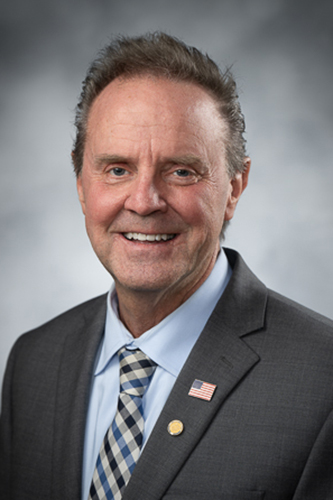
Rep. Dana Ferrell
Sponsored bills
Maddy summaryHB 5101, the Joanna Phillips Domestic Violence Prevention Act, increases penalties for specific domestic violence offenses in West Virginia. It raises the minimum prison sentence for strangulation, suffocation, or asphyxiation of a family or household member (causing injury or loss of consciousness) from one year to two years, and for repeat offenders from one year to three years. For second offenses of domestic battery or assault, the bill sets a minimum jail term of 60 days and increases the maximum fine from $500 to $4,000. The bill also alters bail requirements for domestic violence cases to enhance victim safety protections.
Maddy summaryHB 4007 amends West Virginia's Industrial Access Road Fund rules to clarify how state funds can be used for constructing or maintaining access roads to industrial sites. The bill directly affects counties and municipalities seeking funding for roads leading to approved manufacturing, distribution, or processing facilities (including West Virginia Business Ready Sites), while restricting the fund from covering roads to schools, hospitals, shopping centers, or private property. Key changes include raising the annual funding cap to $6 million per fiscal year, setting a $800,000 maximum for unmatched funds per county, and requiring counties to certify site construction or provide surety before funds are allocated. The bill also clarifies that funds cannot be used for utility adjustments or roads on private property, and mandates the Division of Highways must review location requests within 90 days.
Maddy summaryHB 4842 clarifies and strengthens civil remedies for individuals whose intimate images are disclosed without consent in West Virginia. The bill amends §55-20-3 to explicitly apply to cases involving sexual extortion (as defined in §61-8B-6), establish joint and several liability for all liable parties, and create civil penalties. It directly affects people who suffer harm from intentional or reckless disclosure of private intimate images they did not consent to share. The law ensures victims can pursue legal action against perpetrators who knew the image was private, the victim didn’t consent, and the victim was identifiable.
Maddy summaryHB 4881 removes a $9,500 value limit that previously prevented automobile dealers, licensed auctions, repair facilities, or towing companies from obtaining titles for abandoned or junked vehicles on their property. The bill allows these businesses to apply for title and registration for any abandoned vehicle - regardless of its value - after following standard notification procedures to the owner and lienholders. If the vehicle isn't claimed within 10 days (or after publication notice if the owner can't be found), the business may sell it. This change directly affects dealers and related businesses handling abandoned vehicles, streamlining title processing for all such vehicles.
Maddy summaryHB 4995 requires public schools in West Virginia to install video cameras in self-contained special education classrooms (where most students receive special education services) and audio recording devices in restrooms of those classrooms. The bill mandates that cameras monitor all classroom areas except restrooms for clothing changes, while audio devices must be placed in restrooms with visible notices about the recording. Schools must maintain the equipment, document any malfunctions, and provide recordings to authorized personnel upon request. This law directly affects public school districts operating self-contained special education classrooms, aiming to enhance safety monitoring for students with disabilities.
Maddy summaryHB 4990 creates new criminal offenses related to gift card fraud in West Virginia. It makes it a crime to steal, tamper with, or fraudulently obtain gift cards or their redemption information (defined as unique access codes), and to use stolen gift cards for purchases. Specifically, using stolen gift cards for $1,000+ in value over six months escalates the offense to grand theft. The bill directly affects individuals committing gift card fraud, while protecting cardholders, issuers, and sellers. It provides clear definitions for terms like "closed-loop gift card" (e.g., store-specific) and "gift card redemption information" to clarify the scope of the law.
Maddy summaryHB 4002 establishes the West Virginia Collaboratory at Marshall University to connect state university research with practical needs of government and citizens. It directs the Collaboratory to focus on workforce development, education, economic growth, and environmental research, requiring state and local agencies to provide free access to infrastructure, personnel, and data for its projects. The bill sets specific funding rules, prohibiting university overhead fees on allocated funds and ensuring funds remain available until spent. An advisory group of legislators, university leaders, and public experts will guide research priorities and review reports, all while exempting advisory meetings from public record requirements.
Maddy summaryHB 4198, the E-Verify Requirement Act, requires all employers in West Virginia - including businesses, government entities, and public agencies - to use the federal E-Verify system to confirm employees' work authorization. It replaces criminal penalties with fines for knowingly employing unauthorized workers ($100-$10,000 per violation depending on offense count) and allows license suspension or revocation for repeat violations. The bill also creates a "safe harbor" for employers who use E-Verify, shielding them from penalties for failure to verify status. It repeals a provision denying business expense deductions for non-compliance but maintains financial penalties and licensing consequences for violations.
Maddy summaryThis bill asks a state committee to study whether West Virginia should create a flexible respite care program for seniors and their caregivers. The proposed program would allow families to schedule short-term, on-demand assistance for specific needs like medical appointments or personal obligations, rather than being limited to fixed weekly service blocks. The study will examine costs, potential savings from delaying nursing home placement, and how to fund and manage the program, especially in rural areas with fewer resources. If the committee finds the idea feasible, it will recommend new legislation to establish the program.