

Maddy summaryHB 5548, the "Stop Non-Consensual Distribution of Intimate Deep Fake Media Act," prohibits distributing deepfake videos or images that falsely depict a person engaging in non-consensual sexual conduct without their permission. It targets individuals who intentionally share such content to coerce, harass, or damage reputations, with penalties including fines up to $10,000 or up to five years in prison for repeat offenses. The law explicitly excludes constitutionally protected speech like political satire, commentary, or media with clear disclosures that it is manipulated. It also allows affected individuals or officials to seek court orders to stop violations.
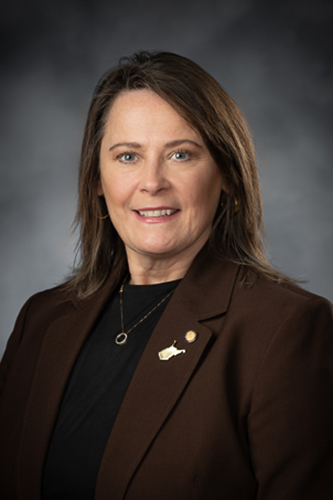
Del. Tresa Howell
Sponsored bills
Maddy summaryHB 5570 proposes to exempt transportation companies (common or contract carriers) that move processed recycled materials for commercial or industrial businesses from certain state regulations. Specifically, it would remove requirements for vehicles transporting these materials from business customers to recycling facilities. The exemption applies only to "processed source-separated recycled materials" and does not eliminate safety or insurance rules that carriers must still follow. This bill directly affects waste haulers and businesses generating recyclable materials who use contracted transportation services.
Maddy summaryThis is a commemorative House resolution honoring former West Virginia House Speaker and Chief Justice Timothy P. Armstead following his passing. It memorializes his service, names a conference room in the House as the "Speaker Tim Armstead Memorial Conference Room," and extends condolences to his family. The resolution does not create new laws or affect policy - it formally recognizes his legacy and contributions to West Virginia.
Maddy summaryHB 5592 would allow pharmacists and pharmacies to sell ivermectin to consumers without a prescription, removing current requirements for a doctor's order. This change applies specifically to human use of ivermectin and overrides existing provisions in West Virginia law that currently require a prescription. The bill directly affects pharmacies, pharmacists, and individuals seeking ivermectin for personal use. It does not alter the medical use or safety of ivermectin, only the legal mechanism for its sale.
Maddy summaryHB 5550 amends West Virginia law to clarify and strengthen the definition of proper shelter for tethered or roaming free dogs. It requires shelters to be four-sided, roofed, moisture-proof, windproof, and ventilated with suitable bedding (like hay or straw), while prohibiting inadequate options such as cardboard boxes, vehicles, or exposed porches. The bill also limits tethering outside to 30 minutes during extreme weather (85°F+ heat, 32°F or below cold, or severe storms) unless the dog is a working dog inspected as safe by animal control. These requirements directly affect dog owners and animal control officers, ensuring dogs have adequate protection from weather conditions.
Maddy summaryHB 5498 clarifies that members of county child abuse investigative teams cannot be personally liable for actions taken during investigations of child sexual assault, abuse, or neglect - such as prosecutors, law enforcement, child protective services workers, health care providers, and mental health professionals. The bill specifically protects team members from liability for routine work in these investigations, but does not shield them from claims arising from gross negligence, willful misconduct, or intentional harm. This amendment to West Virginia law directly affects the 8 permanent team member roles listed in the bill and ensures they can participate without personal legal risk for standard investigative actions. The change aims to strengthen team collaboration by removing personal liability concerns during sensitive child abuse cases.
Maddy summaryHB 5497 provides legal immunity to employees of child advocacy centers (CACs) in West Virginia for actions taken during child abuse investigations or while delivering CAC services. This immunity applies to routine work in the investigation process but does not protect against liability for gross negligence, willful misconduct, or intentional harm. The bill amends West Virginia Code §49-3-101 to explicitly add this immunity provision for CAC staff. It directly affects CAC employees who participate in child abuse response teams, shielding them from personal lawsuits for their professional conduct in these cases.
Maddy summaryHB 4769 requires West Virginia's Governor to develop comprehensive crisis preparedness plans for five specific threats: nuclear attacks, major energy grid disruptions (including cyber or physical attacks), prolonged cyberattacks on communications, invasion, and insurrection. The plans must include preventative measures, immediate response strategies, and recovery steps for each crisis type. The Governor must submit initial plans by November 2026, with annual updates to the legislature. This bill affects state government operations by mandating structured planning for high-risk scenarios, not individual citizens.
Maddy summaryHB 4600 requires that all absentee ballots for primary and general elections must be received by 8:00 p.m. on election day to be counted. This applies to voters who request absentee ballots by mail or electronically. The bill amends West Virginia law to establish a clear deadline for ballot receipt, ensuring all absentee ballots are processed by the same time as in-person voting. It directly affects voters who choose to mail in their ballots, requiring timely delivery to meet the election day cutoff.
Maddy summaryHB 5369, the West Virginia Rural School Protection Act, aims to prevent the closure or consolidation of qualifying rural schools by establishing strict requirements. It defines "protected rural schools" as those in low-population counties, where students would exceed one-way transportation limits (under §18-5H-7), or are the sole school in their area. The bill mandates detailed public impact statements (including transportation times, enrollment trends, and rejected alternatives), a two-thirds vote by county school boards, and voter approval via referendum before any closure or consolidation can proceed. These measures ensure decisions consider student transportation burdens, community impact, and reasonable alternatives before closing a rural school.