

Maddy summaryHB 5101, the Joanna Phillips Domestic Violence Prevention Act, increases penalties for specific domestic violence offenses in West Virginia. It raises the minimum prison sentence for strangulation, suffocation, or asphyxiation of a family or household member (causing injury or loss of consciousness) from one year to two years, and for repeat offenders from one year to three years. For second offenses of domestic battery or assault, the bill sets a minimum jail term of 60 days and increases the maximum fine from $500 to $4,000. The bill also alters bail requirements for domestic violence cases to enhance victim safety protections.

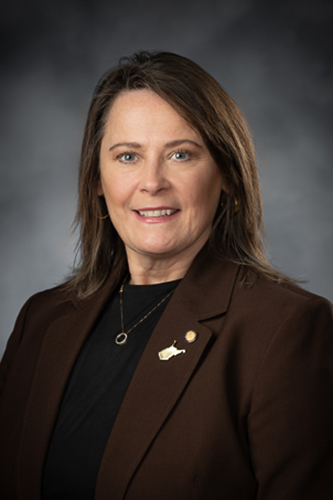
Rep. Tresa Howell
Sponsored bills
Maddy summaryHB 5484 creates a new felony crime in West Virginia for conspiring to deny medical care to victims of sexual exploitation, assault, incest, or abuse. It directly affects individuals who work together (conspire) to block victims from accessing licensed medical treatment for injuries or conditions caused by these crimes. The bill establishes penalties of 5-10 years in prison, a $50,000 fine, or both for violations. This law specifically targets efforts to prevent victims from receiving necessary medical care following sexual offenses, without altering existing abortion laws.
Maddy summaryHB 4712, known as "Baylea's Law," increases criminal penalties for drivers convicted of DUI that causes death or injury in West Virginia. It raises prison sentences to 3-30 years for DUI causing death (up from prior limits), 2-10 years for serious bodily injury, and up to 1 year for lesser bodily injury. The bill also mandates license revocation for 10 years (or permanently) for DUI causing death, 5 years for serious injury, and 2 years for minor injuries, with options to reinstate through a "test and lock program." This law directly affects drivers convicted of DUI-related offenses resulting in harm to others, including minors or fetuses as defined by the law.
Maddy summaryThis bill requests the Joint Committee on Government and Finance to study women's collegiate sports programs in West Virginia, focusing on financial sustainability, name image and likeness impacts, and Title IX obligations. The study will examine current funding levels, endowment feasibility, revenue-sharing models, and operational efficiency methods to support female student-athletes. The committee must submit a report by January 1, 2027, to state officials with findings, conclusions, and potential legislative recommendations. Funding for the study will come from existing legislative appropriations to the committee.
Maddy summaryHB 4793 would lower the minimum age for barber and cosmetology apprentices in West Virginia from 16 to 14 years old. Apprentices must work under direct supervision of a licensed professional and meet requirements like being enrolled in school or having a high school credential. Sponsors (licensed professionals who supervise apprentices) must have at least five years of experience in a shop. This change adjusts the existing apprenticeship program to permit younger participants while maintaining oversight and safety standards.
Maddy summaryHB 5660 amends West Virginia's statute governing concealed weapons licenses, updating the process for obtaining a permit to carry deadly weapons (specifically pistols and revolvers). It affects both West Virginia residents (requiring a $50 fee) and nonresidents (requiring a $100 fee), who must submit detailed applications verifying citizenship/residency, age (21+), criminal history (no recent felonies/misdemeanors involving violence or domestic abuse), and background checks. The bill specifies required applicant information including personal details, proof of lawful status, and compliance with federal firearm restrictions. It also waives the weapon-handling qualification requirement for renewal applicants. This legislation modifies existing licensing procedures without changing the core eligibility criteria.
Maddy summaryThis House resolution formally recognizes President Donald J. Trump for various policies and actions that the West Virginia House of Delegates claims have benefited the state. The document highlights specific initiatives including regulatory reforms in the energy sector, tax relief measures, funding for rural healthcare, and programs aimed at reducing prescription drug costs and establishing investment accounts for newborns. It also cites border security improvements and drug control efforts as contributing factors to public safety and economic well-being. The resolution expresses appreciation for these actions and requests that the formal recognition be sent to the President.
Maddy summaryThis bill asks the West Virginia Legislature to conduct a comprehensive study on how the state manages disaster recovery and flood resiliency funding, coordination, and case management. The study will examine whether the State Resiliency Office is effectively using available funds, coordinating with other agencies, and complying with state laws, while also analyzing how federal policy changes might impact West Virginia's ability to access disaster relief money. Additionally, the bill requests a feasibility study to determine if state emergency personnel should receive cross-training as disaster case managers to improve recovery efforts and reduce reliance on outside organizations. The findings will include recommendations for improving the state's disaster response system and may lead to changes in laws or budget allocations.
Maddy summaryThis House Resolution honors the life and legacy of the late West Virginia legislator Larry D. Kump, who passed away on February 28, 2026. The resolution formally expresses the House of Delegates' condolences to Kump's family and acknowledges his service as a representative for Berkeley County across three different terms. It recognizes his career in criminal justice and mediation, his commitment to limited government, and his role as a devoted family member and church leader. The document is a ceremonial tribute rather than a law that changes policy or affects public programs.
Maddy summaryHB 5474 creates a tax credit for businesses in West Virginia's outdoor recreation industry located between Charleston and the New River Gorge. The bill directly affects qualifying outdoor recreation businesses operating in this specific corridor, including those offering activities like hiking, biking, and fishing. It establishes a tax credit to reduce business taxes for eligible operations, aiming to encourage economic growth and job creation in the region. The legislation cites the area's natural resources, transportation access, and appeal to remote workers as key reasons for this incentive.