

Maddy summaryHB 2997 creates the "Support for Neglected Schools Act" to allocate state funds for school construction and major improvements in West Virginia. It authorizes up to 10% of available funds for school facility projects, including vocational programs at high/middle schools and multicounty arrangements, requiring comprehensive 10-year plans approved by the state board. An additional 2% of funds is set aside as an emergency reserve for urgent projects. The bill directs the School Building Authority to evaluate projects and prioritize those addressing statewide educational needs, with specific provisions for vocational education partnerships. The legislation applies directly to school districts, vocational centers, and the state board of education.
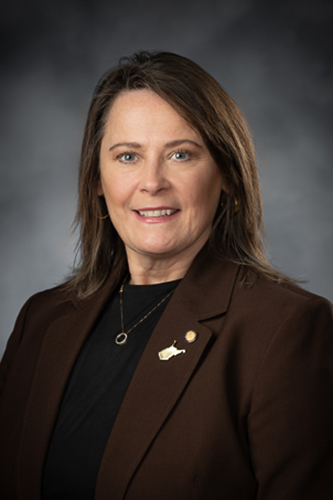
Del. Tresa Howell
Sponsored bills
Maddy summaryHB 2974, the "Second Amendment Preservation Act," declares federal regulations on intrastate firearm sales within West Virginia invalid, prohibiting state officials from enforcing such rules. It imposes $50,000 civil penalties for violations and requires the West Virginia Attorney General to defend residents facing federal charges over intrastate firearm transactions or prosecute federal agents who enforce prohibited regulations. The bill directly affects West Virginia residents engaging in local firearm sales, law enforcement, and federal agencies like the ATF operating within the state. It explicitly states that federal laws restricting intrastate firearm transfers violate both the U.S. and West Virginia constitutions.
Maddy summaryHB 2969 increases West Virginia's homestead property tax exemption for eligible homeowners. The bill raises the exemption amount from $20,000 to $30,000 immediately, with further increases to $35,000 by 2028 and $40,000 by 2030. This exemption applies to the first $30,000 (and higher amounts over time) of a home's assessed value for primary residences owned by residents aged 65 or older, or those certified as permanently and totally disabled. To qualify, applicants must meet residency requirements, including being a West Virginia resident for two consecutive years prior to the tax year, with exceptions for military service and returning residents.
Maddy summaryHB 2938 would allow pharmacists in West Virginia to sell ivermectin over the counter without a prescription, directly affecting pharmacies and residents seeking the medication. The bill amends state law to remove the requirement for a prescription for ivermectin, permitting its sale, distribution, or possession by individuals without medical authorization. This change applies specifically to human-use ivermectin, not veterinary products. The legislation does not alter medical guidelines or safety standards but shifts access from prescription-dependent to over-the-counter availability. The bill is currently pending in the Health and Human Resources Committee.
Maddy summaryHB 2814 requires West Virginia's Governor to create comprehensive crisis preparedness plans to address five specific threats: nuclear attacks, major energy grid disruptions, long-term cyber-attacks, invasion, and insurrection. The bill mandates that these plans include preventative measures, mitigation strategies, immediate response protocols, remediation steps, and recovery efforts. The Governor must brief the legislature on initial plans by August 31, 2025, with final plans due by November 30, 2025, followed by annual updates. The legislation directly affects state government operations and aims to protect all West Virginia residents by preparing for high-risk scenarios.
Maddy summaryHB 2834 requires all West Virginia public schools to observe a one-minute period of silence at the start of each school day in every classroom. This applies directly to county school boards (which must implement the policy) and classroom teachers (who must ensure students remain seated and silent without suggesting any specific activity, such as prayer or meditation). The bill prohibits teachers from making recommendations about what students should do during the silence to avoid influencing their choices. It also mandates that the Office of the Attorney General defend the law if challenged legally. The policy aims to guarantee students' individual freedom to engage in silent reflection without state pressure.
Maddy summaryHB 2477 provides a one-time 20% cost-of-living adjustment (COLA) to retirement benefits for eligible retired state employees covered by the Public Employees Retirement System and State Teachers Retirement System. It directly affects retirees who voluntarily retired under normal circumstances and currently receive annual annuities, with the first payment due by June 30, 2025. The adjustment applies to both retirees and their beneficiaries (payable pro rata) and is subject to federal tax limitations. The bill corrects the title's 15% figure to the actual 20% specified in the legislation.
Maddy summaryHB 2717 would repeal all existing laws requiring mandatory vehicle inspections in West Virginia. It directly affects vehicle owners who currently must obtain state inspections to register or operate their vehicles. The bill eliminates the legal requirement for inspections by removing sections of the state code that established the inspection process, including penalties for non-compliance. This change would end the state's requirement for vehicles to undergo safety or emissions inspections. The bill does not create new provisions but removes the current inspection mandate entirely.
Maddy summaryHB 2613 reclassifies possession of Schedule I and II narcotics and methamphetamine as felonies in West Virginia, increasing penalties from previous misdemeanor or lesser felony classifications. It establishes minimum prison sentences of one to three years for these offenses (up to 15 years for fentanyl), prohibits probation for certain drug convictions, and requires inert substances mixed with drugs to count toward weight measurements for sentencing. The bill also mandates a minimum 10-year prison term for "drug delivery death" cases and creates a process to reduce some felony convictions to misdemeanors under specific conditions. This bill directly affects individuals convicted of drug possession in West Virginia, particularly for higher-schedule substances.
Maddy summaryHB 2606 would increase payments to therapists and other non-state-employed professionals contracted to provide early intervention services through West Virginia's Birth-to-Three program by 25 percent. This applies to providers delivering services for children with developmental delays, effective July 1, 2025. The bill amends existing law to require this payment adjustment for all contracted services under the program. The change directly affects contracted service providers in the Birth-to-Three program, improving their compensation for delivering early intervention care.