

Maddy summaryHB 3072 requires new two-lane highways in West Virginia to use a "Super Two" design, which adds alternating passing lanes on rural roads to allow safe passing in both directions. This applies to all new road construction projects that do not need full four-lane infrastructure, meeting existing safety standards for lane width and shoulders. The design improves immediate traffic safety by reducing hazardous passing attempts while enabling future upgrades to four lanes with minimal modifications. It follows Texas' approach to cost-effectively enhance safety on existing two-lane corridors.
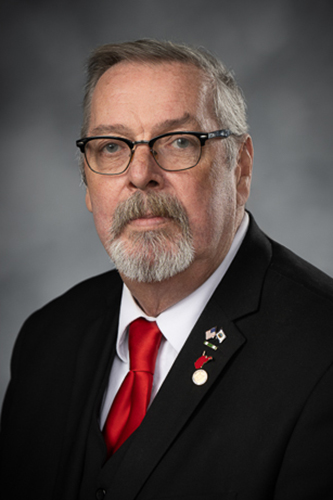
Del. Marshall Clay
Sponsored bills
Maddy summaryHB 2475 raises pay for special education staff in West Virginia. It matches the salary of Special Education Aides (Aide V) to Early Childhood Classroom Assistant Teachers' pay scale and adds a 5% increase for those aides. It also provides a 10% pay increase for self-contained special education teachers. The bill defines a "critical vacancy" as a position needed for student safety or compliance, requiring certified staff to fill such roles immediately until a new hire is secured. This directly affects special education aides and teachers in self-contained classrooms across West Virginia school districts.
Maddy summaryHB 3135 creates a new felony offense for protestors who intentionally block public roads, streets, or sidewalks used by the public, making it illegal to obstruct passage. It defines "obstruct" as rendering a path impassable, unreasonably inconvenient, or hazardous. Violations are misdemeanors (fines of $500+ and up to 1 month in jail), but become felonies with harsher penalties ($1,000+ fine and 3-3 years in prison) if the obstruction blocks emergency vehicles, hospitals, or if the person has prior similar convictions. The bill directly affects individuals who protest by physically blocking public thoroughfares, imposing specific criminal penalties for such actions.
Maddy summaryHCR 92 is a non-binding legislative resolution prohibiting compensation for assisting veterans with benefits applications, except as permitted under federal law. It bans charging fees for preparing, presenting, or advising on veterans' benefits claims, guaranteeing specific benefit amounts, or charging excessive fees. The resolution requires written agreements meeting federal fee standards (38 CFR §14.636) before any assistance is provided. It aims to protect veterans from exploitative fees when seeking benefits support.
Maddy summaryHB 3077 creates a tax credit for West Virginia employers who hire interns or apprentices in high-demand fields like manufacturing, healthcare, IT, and skilled trades (e.g., electricians, welders). Employers receive a 50% credit on wages paid (up to $10,000 per trainee annually), with a maximum $150,000 total credit per business yearly. The credit excludes retail, food service, administrative roles, and non-technical positions. Employers must apply for certification through the West Virginia Department of Economic Development to claim the credit and report trainee details annually.
Maddy summaryHB 3049, the Community School Parent Choice Act, requires West Virginia county school boards to provide parents a formal process before closing or consolidating a school. The bill mandates that boards prepare written reasons and impact statements for public review 30 days prior to a hearing, hold public hearings with specific accessibility requirements, and consider input from school improvement councils representing affected schools. Parents of students at schools facing closure or consolidation are directly affected, as they gain a structured opportunity to voice concerns before a final decision. The law includes a 10-year expiration date and applies to all school closures except those approved via prior voter-approved construction bonds.
Maddy summaryHB 3254 establishes the Summer Feeding for All Program to ensure West Virginia students have access to nutritious meals during summer and other non-school periods. It requires each county public school system to conduct an annual survey of students' food access when school is closed and compile a list of community food resources (including charities and religious groups) for families. County school boards may develop local initiatives - such as mentorship programs or entrepreneurship opportunities - to deliver meals and must provide training for feeding site operators. They are also required to report survey results and program activities annually to the West Virginia Office of Child Nutrition.
Maddy summaryHB 2863 clarifies West Virginia sheriffs' authority to hire within their offices by amending civil service rules for deputy sheriffs. It explicitly allows sheriffs to appoint multiple chief deputies with county commission approval (per §7-7-7) and clarifies that current or future chief deputies and jailers retain all civil service rights, including having time in those roles count toward promotion eligibility. The bill does not change existing hiring standards but resolves ambiguity about seniority and appointment flexibility for these positions. It directly affects sheriffs, county commissions, and deputy sheriff staff across West Virginia counties.
Maddy summaryHB 3218 creates a tax credit program to incentivize the rehabilitation of underutilized commercial, industrial, and residential properties across West Virginia. Businesses and property owners who invest at least $250,000 in renovation, increase property value by 30%, and create or sustain five full-time jobs within three years can claim a 25% tax credit (up to $2 million) on eligible costs for business and occupation or corporate income tax, plus a 50% property tax credit on increased value for up to five years. Additional credits of up to 15% are available for projects in rural or distressed areas (10%) or for brownfield/historic properties (5% each). The bill also establishes a fast-track permitting process for qualifying projects to streamline development approvals within 90 days.
Maddy summaryHB 3149 establishes a program to provide one-time, equal grants to all chartered American Legion posts in West Virginia without requiring applications or financial documentation. The Department of Veterans Assistance will distribute these grants equally to all eligible posts by October 1, 2026, using funds appropriated through the state budget process. The bill requires the Governor to include a dedicated budget line item for this purpose in the fiscal year 2026 budget and mandates a post-distribution report to the Joint Committee on Government and Finance by January 1, 2027. This program directly supports American Legion posts statewide, which provide community and veteran services, by offering streamlined, no-strings-attached funding.