

Maddy summaryHB 4827 increases payments by 25% for therapists and other professionals contracted through West Virginia's Birth-to-Three program who are *not* state employees. This change applies to services provided starting July 1, 2026, and is funded through the existing West Virginia Birth-to-Three Fund. The bill specifically targets contracted providers, not state agency employees, and modifies §16-5K-6 of the code to implement this payment adjustment. The fund sources include legislative appropriations, transfers from health divisions, private donations, and client fees. This is a direct payment increase for contracted service providers under the program.
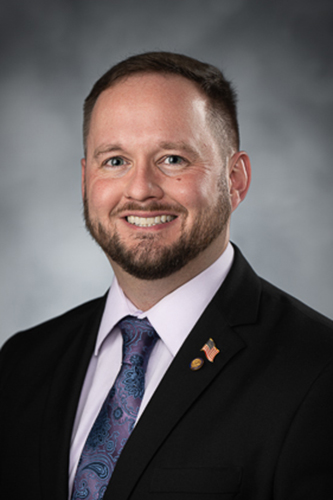
Del. Elliott Pritt
Sponsored bills
Maddy summaryHB 4831 prohibits advertising "lewd public content" anywhere in West Virginia, directly affecting businesses and advertisers promoting adult entertainment venues, images of undress, or sexually explicit language. The bill amends existing outdoor advertising laws (§17-22-4(15)) to ban such content from all outdoor signs, displays, and devices adjacent to roads. It defines "lewd public content" as including adult entertainment advertising, images of people in states of undress, or explicit terms like "nudity." The law does not change other existing restrictions on sign size, placement, or lighting.
Maddy summaryHB 4824 requires utilities (both public and private) in West Virginia that receive rate increases from the West Virginia Public Service Commission to set aside 5% of the new rate increase (from customer bills) into a dedicated infrastructure fund. This fund must be used exclusively for physical infrastructure repairs and improvements, such as water lines, electrical transmission lines, and treatment facilities, but cannot cover routine maintenance. Utilities are prohibited from passing the cost of this fund to consumers through future rate hikes or fees. The bill ensures that a portion of rate increases directly supports infrastructure upgrades without increasing customer bills.
Maddy summaryHB 4828 allows public service districts (PSDs) to publish a single notice for both federal and state violations when a federal violation also triggers a state violation, instead of requiring two separate notices. This change directly affects PSDs that receive notices of violations with overlapping federal and state implications. The bill modifies existing law to permit combining these notices in one publication, eliminating the current requirement for separate notices. It applies specifically to situations where a federal violation notice also indicates or triggers a state violation. The bill does not alter the content of the notices or the violations themselves.
Maddy summaryHB 4830 establishes the West Virginia Supreme Court of Appeals Victim's Fund to compensate individuals harmed by actions or inactions of the Supreme Court's Judicial Investigative Committee or related divisions. The fund, administered by the Legislative Claims Commission, allows affected residents to apply for financial relief by detailing their harm, with decisions made by the fund's supervisor (subject to appeal). Claims can be filed retroactively for up to 10 years from July 1, 2026, covering cases where West Virginia residents suffered negative impacts due to court committee actions. This bill creates a formal process for compensation but does not specify eligibility criteria or funding sources beyond the fund's establishment.
Maddy summaryHB 4825 authorizes West Virginia municipalities to place signage on state roads located within their municipal boundaries. The bill specifically permits signs such as speed warnings or radar-based speed displays that inform drivers of their current speed. This applies only to state roads situated inside a municipality's jurisdiction, not to all state highways. The legislation directly affects local governments by giving them new authority to install traffic safety signage on roads they oversee within city limits.
Maddy summaryHB 4836 prohibits people from bringing dogs, cats, or other non-service animals into grocery stores or food retail establishments in West Virginia. The bill only allows entry with registered service animals, banning all other pets. Violators face a $500 fine for a first offense, increasing to $1,000 for repeat violations. This directly affects store patrons who bring non-service pets into food-selling locations.
Maddy summaryHB 4776 would increase the maximum allowable hotel occupancy tax rate from 6% to 8% for local governments (cities or counties) in West Virginia. This change directly affects hotels and visitors, as the tax applies to the price paid for a hotel room stay, excluding meals, phone charges, or other non-room fees. Local governments would need to hold a public hearing before raising the tax rate and must follow specific procedures for implementation. The bill modifies existing law (§7-18-2) to allow this higher rate for both municipal and county ordinances.
Maddy summaryHB 4774 amends West Virginia law to reduce the number of associate state superintendent of schools positions from two to one. The bill directly affects the State Department of Education's organizational structure by limiting this specific leadership role. It changes §18-3-9 of the Code of West Virginia to state that "there may be no more than one associate state superintendent of schools position." This is a procedural adjustment to staffing levels, not a policy change affecting schools or students.
Maddy summaryHB 4778 allows West Virginia residents without a permanent address to obtain a standard driver's license or identification card. It directly affects people without fixed housing, such as those experiencing homelessness or living in temporary shelters. The bill requires the Department of Motor Vehicles to audit addresses used for licensing, sets standards for canceling licenses based on address issues, and waives the $5 annual fee for applicants without a permanent address. This policy change removes a significant barrier to obtaining essential identification for vulnerable residents.