

Maddy summaryHB 4954 would reduce West Virginia's business and occupation tax rate by 2.5% for companies employing at least 75% of their workforce as state residents. It directly affects eligible businesses meeting the residency threshold, requiring them to verify workforce composition to qualify. The tax reduction applies to the overall business and occupation tax rate starting with the 2026 tax year. Companies must provide evidence of workforce residency to claim the reduction, with implementation guidance to be issued by the West Virginia Department of Tax and Revenue.
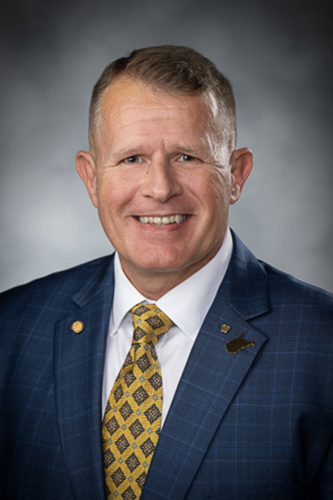
Rep. Eric Brooks
Sponsored bills
Maddy summaryHB 4944 establishes a new system for setting maximum salaries for West Virginia's 55 county school superintendents, effective July 1, 2027. The bill requires the state Department of Education to create a formula based on each county's student population, ensuring maximum salaries are prorated so that the per-pupil maximum is equal across all counties. This replaces current salary structures with a population-based standard, aiming for equitable funding per student. The salary schedule must be reviewed and revised at least every five years.
Maddy summaryHB 4903 provides a $6,000 pay equity salary adjustment over three years for specific correctional employees in West Virginia. It directly affects non-uniform administrative staff at the Division of Corrections and Rehabilitation (starting July 1, 2026), as well as all employees of the Division of Corrections, Division of Juvenile Services, and West Virginia Regional Jail Authority (with adjustments effective July 1, 2018-2020). The bill mandates annual $2,000 raises each July 1 for these employees, funded from general revenue for state divisions and a special jail fund for regional facilities. This policy aims to address recruitment and retention challenges by increasing base pay for these roles, without altering existing pay grade maximums.
Maddy summaryHouse Bill 4902 provides a 3% salary adjustment for non-uniform administrative staff in West Virginia's Division of Corrections and Rehabilitation (DCR) who have at least three years of continuous service, effective July 1, 2026. Employees with less than three years of service will receive the same 3% adjustment after completing three years, calculated based on their salary at that time. The bill directs that funding for these increases come from the DCR's general revenue appropriations and specifies that adjustments will take effect even if they exceed standard pay grade maximums. This change directly affects DCR non-uniform administrative staff by creating a separate pay structure for their roles.
Maddy summaryHB 4875 would increase the minimum monthly pay for all West Virginia state school service personnel by 25% across every salary grade. This applies to employees working more than 3.5 hours daily (full-time equivalent) and half that rate for those working 3.5 hours or less, affecting roles like custodians, cafeteria workers, aides, and specialized staff listed in the pay scale. The bill amends §18A-4-8a of West Virginia law to implement this across all experience levels and job classifications, effective July 1, 2024. The change directly affects all state school service employees covered under the current minimum pay scale structure.
Maddy summaryHB 4901 modifies West Virginia's workers' compensation system to create a new award category for miners with occupational pneumoconiosis (black lung disease) who have pulmonary massive fibroids but no current breathing impairment. This change allows affected miners to file claims earlier, before symptoms develop, addressing a gap where future impairment would otherwise fall outside filing deadlines. The bill specifically establishes payment guidelines for this condition under Section 23-4-2 of the West Virginia Code. It directly affects coal miners diagnosed with early-stage pneumoconiosis who have not yet experienced respiratory symptoms. The key mechanism is the new compensation category, enabling timely benefits for a condition that may cause future health issues.
Maddy summaryThis bill proposes a constitutional amendment to change West Virginia's term limits for county sheriffs. Currently, sheriffs are barred from serving more than two consecutive terms; the amendment would allow them to serve up to three consecutive terms before becoming ineligible. The change would apply to future elections and does not affect current sheriffs serving in 2026. The amendment must be approved by voters in the 2026 general election to take effect.
Maddy summaryHB 4478 creates legal immunity for West Virginia racing facilities from certain civil claims by surrounding property owners. It protects facilities operating lawfully for five or more years against lawsuits based on noise, vibration, nuisance, or similar claims brought by owners who acquired property after the facility opened or failed to sue within five years. The bill also prohibits local governments from enacting rules that conflict with this immunity. Key provisions include defining "racing facility" broadly and stating that compliance with state/federal law is prima facie evidence of reasonable operation. The law would take effect immediately upon passage.
Maddy summaryHB 4831 prohibits advertising "lewd public content" anywhere in West Virginia, directly affecting businesses and advertisers promoting adult entertainment venues, images of undress, or sexually explicit language. The bill amends existing outdoor advertising laws (§17-22-4(15)) to ban such content from all outdoor signs, displays, and devices adjacent to roads. It defines "lewd public content" as including adult entertainment advertising, images of people in states of undress, or explicit terms like "nudity." The law does not change other existing restrictions on sign size, placement, or lighting.
Maddy summaryHB 4812, the West Virginia Anti-Federal Commandeering Act, prohibits federal authorities from compelling state or local law enforcement agencies to conduct activities that violate constitutional rights. It defines "commandeering" as federal control of state resources without explicit state authorization and requires such authorization for any federal request. The bill empowers the West Virginia Attorney General to challenge federal actions deemed unconstitutional and to publish model policies for law enforcement. It directly affects all West Virginia law enforcement entities, including local police departments and state agencies, by preventing federal coercion of their personnel or resources. The law aims to protect constitutional rights while allowing cooperation on lawful federal-state law enforcement efforts.