

Maddy summaryThis resolution directs West Virginia's Economic Development Authority to identify land near Flatwoods (specifically near Interstate 79 Exit 67) for developing tourism and entertainment facilities, similar to attractions like Pigeon Forge, Tennessee. It requires the Authority to secure funding and recruit private/public developers to create these facilities. The resolution aims to boost tourism, economic activity, and job growth in the Flatwoods area by establishing a major entertainment complex accessible to both West Virginia residents and visitors from neighboring states. As a procedural resolution, it does not create new law but instructs state agencies to pursue this development initiative.
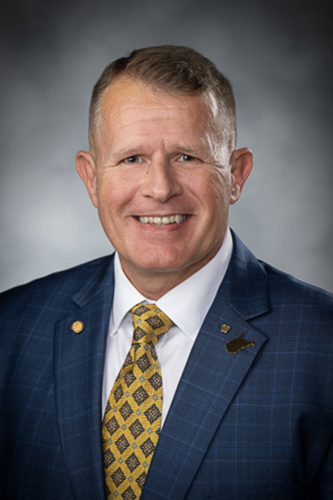
Rep. Eric Brooks
Sponsored bills
Maddy summaryHB 4969 increases retirement benefits for eligible retired state employees and teachers by a total of 5% over three years, starting July 1, 2026. It applies to retirees aged 70+ with at least 25 years of service as of July 1, 2023, including those receiving minimum benefits under existing law. The increase is phased: 2.5% on July 1, 2026, 1.5% on July 1, 2027, and 1% on July 1, 2028. The bill amends provisions for both the Public Employees Retirement System and the State Teachers Retirement System. It does not affect current retirees' benefits retroactively but adjusts payments for those already retired as of the effective date.
Maddy summaryHB 4953 requires all West Virginia high school students to pass a civics examination and the U.S. Naturalization Examination as a prerequisite for graduation. This bill directly affects all public, private, parochial, and denominational high school students in West Virginia who are nearing graduation. Key provisions mandate that schools teach U.S. government history, civics, and the Constitution (as outlined in §18-2-9), provide standardized tests aligned with these standards, and make the two exams mandatory for graduation. The bill does not change existing curriculum requirements but adds the passing of these specific exams as a new graduation requirement.
Maddy summaryThis bill establishes specific class size limits for West Virginia public schools: kindergarten classes must have no more than 20 students per teacher with an aide (for classes over 10 students), and grades 1-3 must have no more than 25 students per teacher with an aide, phased in from the 2023-2024 school year through 2025-2026. It requires counties to maintain these ratios in K-6 classrooms, allowing interventionists as an alternative staffing option for grades 4-6. The law directly affects K-6 teachers and students by mandating smaller class sizes to maximize teacher-student interaction time and support staff utilization.
Maddy summaryHB 4427 amends West Virginia law to require state agencies to transfer 25% of funds from "unencumbered" special revenue accounts - those with no activity (receiving or disbursing) for a period - to the General Revenue Fund. It directly affects state agencies managing special accounts (e.g., for education, infrastructure, or specific programs) that hold dormant funds. The key provision mandates this transfer after accounts remain inactive, ensuring unused funds support broader state spending rather than sitting idle. This policy change focuses on reallocating unspent resources without specifying new program requirements or impacts on beneficiaries.
Maddy summaryHB 4967 would amend West Virginia law to authorize the West Virginia Secondary School Activities Commission (WVSSAC) to revoke the coaching credentials of any high school coach found guilty of illegal recruiting. This directly affects high school coaches in West Virginia who engage in prohibited recruiting practices, such as improper contact with student-athletes. The key provision requires WVSSAC to remove a coach's certification upon a determination of illegal recruiting violations, adding a specific enforcement mechanism to existing athletic regulations. The bill focuses on enforcing ethical recruiting standards within high school athletics.
Maddy summaryHB 4913 exempts the first 100 acres of qualifying working farms from all state, county, and municipal property taxes. A "working farm" is defined as land primarily used for agricultural production (crops, livestock, etc.), actively managed, and producing goods for sale. The exemption applies per parcel - not per owner - to prevent landowners from splitting parcels to gain more tax breaks, and a clawback provision reinstates taxes if the land stops farming or is subdivided. The bill also prohibits reassessments based on nearby development or "highest and best use" theories unrelated to agriculture.
Maddy summaryHCR 15 designates November 7th annually as "Pastor Appreciation Day" in West Virginia. The resolution honors clergy members for their community service, spiritual leadership, and support during crises like natural disasters. It is a ceremonial resolution with no new policies, funding, or requirements for government action. The bill directly affects pastors and religious leaders in West Virginia by recognizing their contributions through an official state designation.
Maddy summaryHB 4353 prohibits West Virginia municipalities from collecting business and occupation (B&O) taxes on projects funded by state or federal government programs. This directly affects municipalities (which can no longer impose this tax) and projects receiving such funding (which will avoid this tax burden). The bill amends existing tax law to explicitly exclude state/federal-funded projects from municipal B&O tax collection, aligning with the current exemption for such projects under state tax code. This is a specific policy change to prevent double taxation on government-funded initiatives.
Maddy summaryHB 4966 increases penalties for adults who purchase tobacco products (including vapes and cartridges) for minors under 21. It directly affects adults who buy these products for underage children, not the minors themselves. The bill imposes a $500 fine for a first offense, with higher fines ($1,500-$5,000) for repeat violations within specific timeframes, and allows for jail time (up to 60 days) for third offenses. Retail employees who violate the law face non-criminal penalties like education programs instead of fines, while employers may terminate employees who sell to minors after prior written warnings.