

Maddy summaryHB 2481 requires most West Virginia retail businesses - including those selling food, goods, or services - to accept physical cash as payment without discrimination, meaning they cannot force customers to use credit cards or digital payments. The bill applies to in-person transactions at physical locations but excludes online, mail-order, or remote sales. Businesses violating the rule face a maximum $500 fine, and the Treasurer’s Office may create exemptions for specific situations like small transactions or certain business types. The law takes effect immediately upon passage.
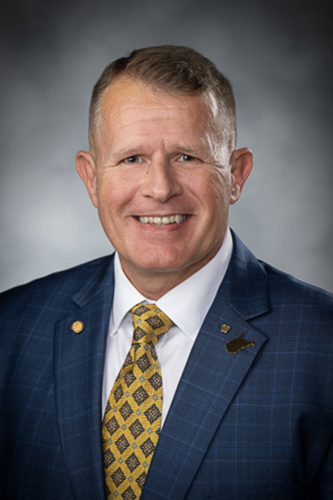
Del. Eric Brooks
Sponsored bills
Maddy summaryHB 2525 requires all West Virginia public elementary and secondary schools to display a durable poster or framed copy of the Ten Commandments in every classroom starting in the 2025-2026 school year. The display must be at least 16 inches wide by 20 inches tall, include the exact biblical text listed in the bill (including the full wording from "I AM the LORD thy God" to "nor anything that is thy neighbor's"), and be visible from anywhere in the classroom. Schools must accept private donations meeting these specifications if they lack compliant displays, and may replace non-compliant existing displays using public funds or donations. The bill directly affects all public K-12 schools in West Virginia, mandating a specific religious text in every classroom.
Maddy summaryHB 2398 would impose penalties on delegates attending a "Convention of States" (a state-led gathering to propose U.S. constitutional amendments) who exceed their assigned authority. Delegates found violating their mandate would face mandatory recall, a $100,000-$500,000 fine, up to 10 years in prison, and voided votes. The bill directly affects state delegates appointed to such conventions, requiring them to strictly adhere to their pre-defined roles. It establishes these specific consequences as mandatory measures for any deviation from their authorized purpose.
Maddy summaryHB 2343 requires the West Virginia State Auditor to conduct financial audits of all county boards of education. The bill mandates these audits cover every source of income or funds received by school districts, including local property taxes, state allocations, and federal grants. This policy change directly affects all 55 county school boards across West Virginia by expanding audit requirements beyond previous limitations. The State Auditor must now review all financial records related to these funds, ensuring comprehensive oversight of public education funding. The bill aims to standardize financial accountability for school district finances statewide.
Maddy summaryHJR 8 proposes a constitutional amendment to increase West Virginia's homestead exemption for property taxes. Currently, the exemption covers the first $20,000 of assessed value for primary residences owned by residents who are 65 or older, permanently disabled, or citizens of the state. If approved by voters in the 2026 general election, the amendment would raise this exemption amount, reducing property tax burdens for qualifying homeowners. This change directly affects eligible homeowners meeting the age, disability, and residency criteria.