

Maddy summaryHR 5 is a non-binding resolution designating October as "Military Toxic Exposure Awareness Month" in West Virginia. It recognizes the health impacts of toxic exposures on military personnel, veterans (including Agent Orange veterans), workers, and their families, particularly those linked to West Virginia military sites. The resolution encourages public awareness campaigns, educational initiatives, and community outreach to support affected individuals, directing copies to state agencies and congressional leaders. It does not create new laws or funding but aims to raise visibility for ongoing health and environmental concerns.
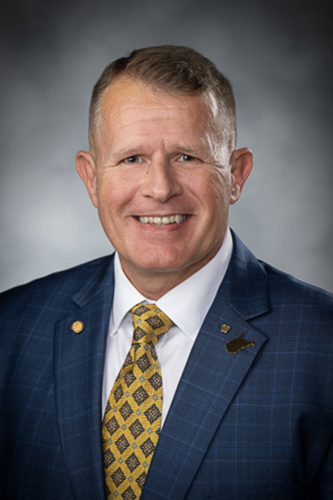
Del. Eric Brooks
Sponsored bills
Maddy summaryHB 2460 requires state permitting agencies, counties, and municipalities to treat private and parochial schools the same as public schools for all construction-related requirements. This includes building permits, fees, safety standards, wastewater management, septic systems, and the speed of permit approvals. The bill directly affects private and parochial schools (non-public, often religiously affiliated institutions) and the government entities that regulate construction processes. It mandates equal application of these rules to end current disparities where private schools faced stricter or different requirements than public schools.
Maddy summaryHB 2476 would increase all West Virginia state teacher salaries by 25% across every salary scale, effective for the 2024-2025 school year and continuing annually. This bill directly affects all public school teachers in the state, raising base pay rates shown in the State Minimum Salary Schedule table. The legislation amends existing law to implement this across-the-board increase, replacing current salary figures with new rates calculated at 125% of the existing amounts. It also maintains existing provisions for special education and math teachers (adding three years of experience for salary purposes) and the $600 annual payment for teachers with 20+ years of experience.
Maddy summaryHB 2404 creates a tax credit for West Virginia businesses that donate to local pregnancy or birth centers. Businesses can claim a credit equal to their donation amount (nonrefundable), provided they submit proof of the contribution to the Tax Commissioner. The credit directly affects businesses operating in West Virginia that choose to support these specific health centers. The bill requires no new state funding, as it offsets existing tax revenue based on private donations. This policy change aims to incentivize private financial support for facilities offering pregnancy-related services.
Maddy summaryHB 2474 would increase the minimum monthly pay for all West Virginia state school service personnel by 25% across every salary grade. This affects non-teaching school support staff, including aides, custodians, cafeteria workers, and other classified roles listed in the bill's pay scale schedule. The bill amends existing law to set new minimum pay rates effective July 1, 2024, applying the 25% increase uniformly to all existing pay grades (A-H) and experience levels. The change directly affects thousands of state school support workers by raising their baseline compensation.
Maddy summaryHB 2483 allows West Virginia county school boards to remove students deemed "chronically disruptive" from public schools for one year and provide their parents or guardians with a proportional share of the student's education funding. A student is defined as chronically disruptive if they commit physical abuse plus four or more verbal abuse incidents (as verified by educators), with different requirements for elementary vs. secondary grades. Parents must use the funds solely for the student's homeschooling or approved alternative education, and misuse incurs a 15% penalty. The student must be reevaluated after one year for potential return to public school, and the policy excludes foster care or state wards.
Maddy summaryHB 2459 expands eligibility for West Virginia secondary school athletic and extracurricular activities to home-schooled students, Hope Scholarship participants, and microschool learners. It requires the West Virginia Secondary School Activities Commission to create rules allowing these students to join public school activities if they meet academic standards (fourth stanine test results), are under 19 by August 1, participate as amateurs, and comply with commission rules. Private school students may also join public school activities if their private school doesn't offer the same activity. The bill mandates that all participants pay reasonable fees and adhere to the same requirements as public school students. This policy directly affects non-public school students seeking athletic and extracurricular participation.
Maddy summaryHB 2403 prohibits the use of hormone blockers for transgender minors under 18 in West Virginia. The bill amends existing law to remove all exceptions that previously allowed hormone blockers (referred to as "pubertal modulating and hormonal therapy") for minors with severe gender dysphoria, even under strict medical oversight. It explicitly states that "hormonal therapy, otherwise known as 'hormone blockers,' may not be provided in any circumstance" for minors. This directly affects transgender youth seeking medically supervised care for gender dysphoria, eliminating a previously permitted treatment pathway. The change takes effect January 1, 2024, as noted in the bill's current provisions.
Maddy summaryHB 2435 repeals a West Virginia law (§55-2-1) that set a time limit for lawsuits involving entry onto or recovery of land. This change removes a specific statute of limitations, meaning property owners or others involved in land disputes would no longer face a fixed deadline to file such legal actions. The bill directly affects individuals or entities pursuing or defending claims related to land ownership or access. As a repeal bill, it eliminates an existing legal restriction without adding new provisions.
Maddy summaryThis House Resolution (HR 6) is a non-binding statement by the West Virginia House of Delegates declaring that: (1) only two biological sexes exist (male/female), based on scientific and biblical references; and (2) transgender identity requires psychological evaluation and care, not "blind affirmation." It directs healthcare professionals to prioritize "scientifically-supported treatments" for gender dysphoria, particularly for minors, and encourages policies protecting children's well-being through evidence-based care. The resolution does not create new laws or affect individuals directly but sets forth the chamber's position on gender and healthcare approaches. It is currently pending in the Health and Human Resources committee.