

Maddy summaryHB 2780 would require West Virginia's child care department to provide state-funded child care subsidies for the children of employees working at least 20 hours per week in licensed child care centers or certified family child care homes. This directly affects child care workers in these settings, regardless of their household income level. The bill eliminates income requirements for eligibility, ensuring all qualifying employees can access subsidized child care for their children. The key mechanism is a direct state subsidy administered by the department for child care services provided to these employees' children.
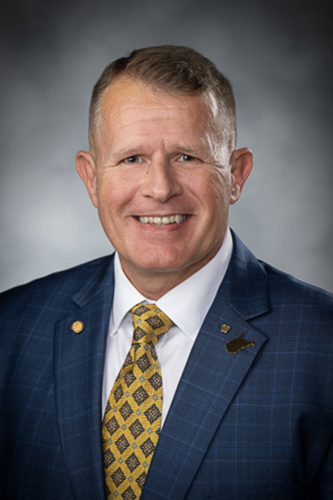
Del. Eric Brooks
Sponsored bills
Maddy summaryHB 2876 increases the Natural Resources Commission from seven to eleven members by adding four new positions. These additional members must be Division of Natural Resources staff wildlife biologists, each specializing in a specific wildlife area: deer, bears, turkeys, or fisheries. The bill directly affects the commission's structure and operations, requiring specialized expertise in key species management. This change takes effect with appointments in 2025, expanding the commission's capacity to address species-specific conservation needs.
Maddy summaryHB 3438, titled the "Connor Drennan Substitute Teachers' Act," allows retired teachers with specialties in math, science, STEM fields, English, or foreign languages to work as long-term substitutes for up to 180 days per academic year without losing retirement benefits. It directly affects retired educators in these high-need subject areas who fill substitute roles, preventing disruptions to student learning when substitutes must leave due to prior retirement pay restrictions. The bill amends retirement rules to set a clear 180-day limit for such substitute work (up from 140 days) and clarifies that employers won’t make additional retirement contributions during this period. Retired teachers may choose to contribute to their retirement from substitute earnings, but it’s not required. This change aims to stabilize classrooms by retaining qualified retired teachers in critical subject areas.
Maddy summaryHB 2646 allows eighth and ninth-grade students in West Virginia to attend summer school specifically to improve their grades and meet academic eligibility requirements for fall sports. The bill amends existing law to explicitly permit this use of summer school programs, which previously focused on general remedial or accelerated instruction. Key provisions ensure counties can operate these programs with tuition limited to actual costs, offer reduced fees for financially needy students, and maintain existing teacher pay structures. This change directly affects middle and high school athletes seeking to qualify for sports participation under current academic standards.
Maddy summaryHCR 40 is a resolution directing West Virginia's Economic Development Authority to identify land near Flatwoods for a tourism and entertainment complex modeled after attractions like Pigeon Forge, Tennessee. It requires the Authority to locate suitable sites, secure funding, and recruit private and public developers to build facilities for tourism, entertainment, and amusement. The bill specifically targets the Flatwoods area near Interstate 79 exit 67, citing its central location and access to major regional cities. This resolution aims to replicate economic benefits seen in neighboring states through new tourism infrastructure, directly affecting Flatwoods and surrounding communities.
Maddy summaryHB 2730 proposes a three-year pilot program to make childcare more affordable for working parents in West Virginia. The bill would require the state, employers, and employees to each pay one-third of childcare costs for children under 18, targeting households earning 150-250% of the Federal Poverty Level who don’t qualify for existing subsidies. The program would launch in 2025 across three urban and two rural counties, with the Department of Human Services developing guidelines and reporting annually on participation and outcomes. If successful, it could lead to a statewide expansion of this cost-sharing model. The bill focuses on improving childcare access, stability, and quality without changing existing subsidy programs.
Maddy summaryHB 3168, titled "The Rossi Act," requires businesses providing goods, services, or utilities in West Virginia to allow customers to modify their online accounts via phone or mail, with identity verification. It directly affects utility companies, telecom providers, and other service entities operating in the state. The law mandates this change to replace current online-only account management options and specifies that violations will be enforced under the West Virginia Consumer Credit and Protection Act by the Attorney General. The bill focuses on expanding customer access to account changes through traditional channels, not on specific outcomes or political implications.
Maddy summaryHCR 72 designates March 20, 2025 as "Black Lung Awareness Day" in West Virginia. It honors coal miners affected by black lung disease (coal worker's pneumoconiosis), a preventable occupational lung condition caused by coal dust exposure. The resolution does not create new laws, funding, or policy changes - it serves as a ceremonial observance recognizing the disease's impact and existing protections like the Black Lung Benefits Act. It follows the Federal Coal Mine Health and Safety Act's emphasis on miner safety without altering current regulations.
Maddy summaryHCR 83 is a memorial resolution naming a specific bridge in Kanawha County (WV 61 over Morris Creek, Bridge #20-061/00-000.32) the "Benny Filiaggi, III Memorial Bridge." It honors Benny Filiaggi III, a Montgomery Fire Department member for 49 years who served as Fire Chief and trained firefighters, requesting the Division of Highways install signs with this name. This is a procedural resolution with no policy changes, solely commemorating his service.
Maddy summaryHB 2502 requires West Virginia internet and telecom providers to automatically credit customers for service interruptions lasting five or more days (120 hours) when the outage isn't caused by the customer. Credits must be calculated proportionally to the days without service and applied in the next billing cycle. The Attorney General can enforce this by suing providers for excessive charges and imposing civil penalties up to $5,000 per violation. Providers must also report monthly outage data (including credit amounts and geographic scope) to the Attorney General's Consumer Protection Division, excluding mobile service disruptions.