

Maddy summaryHB 4890 would provide a 10% annual pay increase for non-uniformed administrative staff and personnel at West Virginia's Division of Corrections, Division of Juvenile Services, and the West Virginia Regional Jail and Correctional Facility Authority, effective July 1, 2026. This adjustment aims to address staffing challenges by helping retain current workers and attract new employees to these correctional facilities. Funding would come from general revenue for the Division of Corrections and Juvenile Services, and from a special revenue fund for the Regional Jail Authority, avoiding additional general fund appropriations. The bill also requires that the pay increase be applied even if it exceeds the current maximum pay grade for an employee's position.
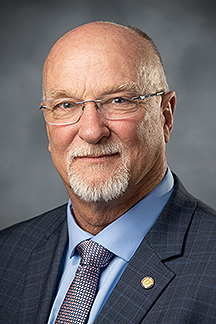
Del. Bill Roop
Sponsored bills
Maddy summaryHB 4886 clarifies travel permissions for individuals under home confinement in West Virginia. It specifies that people confined to their homes may travel only for essential purposes: work, medical appointments, religious services at their chosen place of worship, court-ordered activities, and grocery shopping for food and household items. The bill amends existing law to explicitly define these permitted destinations, removing ambiguity about allowable travel. This directly affects individuals sentenced to home confinement by circuit or magistrate courts. The change focuses solely on defining permitted travel, not altering sentencing terms or monitoring requirements.
Maddy summaryHB 4839 creates a geographic compensation differential for sworn members of the West Virginia State Police assigned to areas with significantly higher housing costs than the statewide median. Eligible troopers receive a salary supplement calculated as a percentage of their base pay, based on how much housing costs exceed the state average in their designated zone. The State Budget Office will designate these zones using objective housing data (median home values and rental rates) and update them biennially. The supplement does not count toward retirement calculations, ends if a trooper leaves the zone, and is funded through new legislative appropriations without reducing existing benefits. This bill directly affects State Police personnel in high-cost regions, aiming to improve recruitment and retention.
Maddy summaryHB 4815 allows West Virginia community health centers designated as political subdivisions to offer recruitment and retention bonuses to staff. These centers, which primarily serve rural and underserved communities and rely on federal grants or third-party funding for most operations, may use non-state funds (like federal grants) for such bonuses. The bill requires all bonuses to comply with federal rules and prohibits the use of state-appropriated funds. It does not create new funding but clarifies how existing non-state resources can be used to address staffing challenges.
Maddy summaryHB 4813 exempts all-terrain vehicles (ATVs) and utility terrain vehicles (UTVs) used as farm equipment from West Virginia's sales tax. This applies specifically to farmers who use these vehicles for agricultural operations, not for recreational purposes. The bill amends West Virginia Code §11-15-3c to add ATVs and UTVs to the list of farm equipment eligible for sales tax exemption. This change directly affects farmers purchasing or using these vehicles for farm work, reducing their costs for necessary agricultural equipment.
Maddy summaryHB 4814, the Equipment Right to Repair Act, requires manufacturers of farm equipment sold or leased in West Virginia to provide independent repair providers and equipment owners with necessary tools, manuals, parts, and technical updates after the new equipment warranty expires. It specifically covers farm equipment like tractors, combines, and sprayers (excluding road vehicles) and applies to all owners and independent repair shops operating in the state. The law mandates that manufacturers make these resources available without restrictions, such as requiring repair shops to become authorized providers or register tools. The Commissioner of Agriculture will enforce the law, which prohibits manufacturers from disclosing trade secrets but requires access to repair information. This directly affects farmers, independent repair businesses, and manufacturers of agricultural equipment sold in West Virginia.
Maddy summaryHB 4636 changes the official term "salesperson" to "sales agent" in West Virginia's real estate licensing code. This bill directly affects real estate professionals who work under a broker's supervision, updating terminology across multiple sections of the state code. The key mechanism is a simple terminology revision - replacing "salesperson" with "sales agent" in definitions and licensing requirements without altering any duties, qualifications, or regulatory processes. The bill does not create new requirements or change how real estate transactions are conducted.
Maddy summaryHB 4722 creates a new offense for knowingly making or spreading false claims in court or legal proceedings after being notified the claim is false, with intent to cause harm. It imposes criminal penalties (misdemeanor for first offense, felony for repeat) and enhanced penalties for cases leading to arrest, loss of custody, or job loss. Upon conviction, courts must order restitution, correct false records, and assist with expungement, while victims can sue for damages including triple damages for repeat violations. The bill also establishes a confidential registry for convicted individuals and includes protections for good-faith reports.
Maddy summaryHB 4750 prohibits registered sex offenders in West Virginia from living within 3,000 feet of schools (public or private elementary/secondary), childcare facilities, residential child-care agencies, children's group homes, or recreational areas used by children under 18. The bill directly affects all sex offenders required to register under West Virginia law. Exceptions include offenders in correctional facilities within the restricted zone, those under specific court commitments, or minors under guardianship. The law aims to create physical separation between sex offenders and vulnerable youth facilities while acknowledging certain institutional settings.
Maddy summaryHB 4714 creates a program allowing county jails and Regional Jail Authorities to involve inmates in voluntary litter cleanup on public lands like highways, roads, and parks. Inmates participating earn sentence reduction credits, with strict safety requirements including proper equipment, supervision ratios, and compliance with occupational regulations. The program is funded through the Litter Control Fund, and proceeds from recyclable materials collected during cleanups must be returned to that fund. The bill also mandates educational materials for schools about litter reduction and requires local governments to develop recycling plans for public facilities.