

Maddy summaryHB 4616 would require West Virginia courts to issue a final decision in child abuse and neglect cases within 12 months of the initial petition being filed. This time limit applies to all such proceedings and aims to prevent prolonged delays in resolving these cases. The bill does not change the legal standards for determining abuse or neglect but sets a strict deadline for court action. This change directly affects courts handling these cases and the families involved, ensuring more timely resolutions.
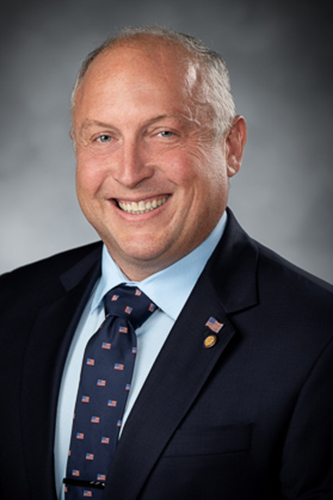
Del. Bill Flanigan
Sponsored bills
Maddy summaryHB 4618 would temporarily increase payments to kinship parents (relatives caring for children) to match foster parent subsidies under specific conditions. To qualify, kinship parents must pass a background check within five days of placement, pass a home safety screening, and be assigned to a child placing agency to help them become foster parent certified. The temporary payment would begin within 30 days of placement and last up to six months, ending if certification isn't completed within that time. This bill directly affects relatives caring for children in West Virginia's child welfare system who are temporarily placed with them.
Maddy summaryHB 4621 requires West Virginia circuit courts to include specific written findings of fact and conclusions of law in all juvenile child abuse and neglect court orders. This bill directly affects judges and legal proceedings in cases involving child welfare, mandating that courts explicitly state the factual basis and legal reasoning for their decisions. The key provision amends existing statutes to ensure courts document key determinations - such as whether abuse/neglect occurred and why custody decisions were made - rather than issuing general orders. This change aims to increase transparency and accountability in family court rulings without altering the underlying legal standards or services provided.
Maddy summaryHB 4619 creates a special revenue account within West Virginia’s Department of Human Services to fund expanded in-state residential treatment capacity for children, directly targeting youth currently placed out-of-state (over 10% of children in care). It establishes a Commission composed of agency leaders and stakeholders to study current placement practices, in-state facility capacity, and strategies to reduce out-of-state placements - focusing on older youth in juvenile justice systems. The Commission must develop recommendations on improving collaboration between child-serving agencies, promoting community-based alternatives, and making in-state placement availability accessible via an online system. These recommendations will guide future funding decisions and policy changes to build a more integrated, cost-effective system for at-risk children and families.
Maddy summaryHB 4617 requires West Virginia's Bureau of Social Services to formally document its existing policies as official legislative rules. The bill mandates filing a complete policy manual covering child protective services, foster care, youth services, licensing, and casework standards by July 1, 2026. Subsequent updates to these policies must also follow the legislative rule process. This is a procedural requirement - changing how policies are documented, not the policies themselves - and directly affects the Bureau of Social Services' administrative processes.
Maddy summaryHB 4585 modifies eligibility requirements for West Virginia volunteer firefighters seeking a state tax credit. To qualify, firefighters must now obtain certification from their fire department chief confirming they were active members for the full year, participated in at least 30 hours of on-site activities, met all required training, and provided specific details like rank, years of service, emergency responses, and training attendance. This certification must be submitted to the Tax Commissioner to claim the credit. The bill directly affects volunteer firefighters who currently or will seek this tax credit under West Virginia’s Volunteer Firefighter Tax Credit Act.
Maddy summaryHB 4496 requires creators and distributors of AI-generated media (such as videos, audio, or images) to include clear, visible disclosures identifying the content as artificial intelligence-generated. This applies to any public-facing media created or materially altered by AI, mandating specific disclosures like a 3-second on-screen label for videos or a spoken statement for audio content. Exceptions include internal research, basic AI-assisted editing (e.g., spell-check), and privately shared personal content. Violations could result in civil penalties of up to $100,000 per day for organizations or $1,000 per day for individuals.
Maddy summaryHB 4499 would change West Virginia's eminent domain law to require property owners whose land is taken for public use to receive compensation equal to twice the fair market value of the property, plus damages to any remaining property. This applies to all eminent domain cases - whether initiated by the state, local governments, or private companies - commencing after the bill's effective date. The bill specifies that fair market value would be determined using current legal standards as of the date the property is taken. It also requires initial payments in expedited cases to be based on the condemning authority's estimate of double the fair market value.
Maddy summaryHB 4457 would allow unaffiliated voters (such as independents) to request voting in any major political party's primary election ballot, if the party's state committee permits it. Currently, unaffiliated voters in West Virginia cannot vote for party candidates in primaries and only receive ballots for nonpartisan races and public questions. The bill requires each major party's state executive committee to decide whether to allow unaffiliated voters to cast a ballot for that party's candidates. Unaffiliated voters would still receive separate ballots for nonpartisan races and public questions, as required by existing law.
Maddy summaryHB 4451, the Veteran Justice Act, creates a program allowing eligible veterans charged with certain offenses to avoid a criminal conviction or have a felony reduced to a misdemeanor. It applies to veterans with military-related conditions like PTSD, TBI, or substance use disorder (SUD) that contributed to their offense, provided the crime is probation-eligible and not excluded (e.g., murder, sexual assault). Eligible veterans enter a court-supervised program involving evidence-based treatment tailored to their military service challenges, a personalized case plan, and probation instead of incarceration. If they successfully complete the plan, they avoid conviction; failure results in standard sentencing. The bill excludes serious crimes like human trafficking and requires verification of veteran status using federal databases like SQUARES.