

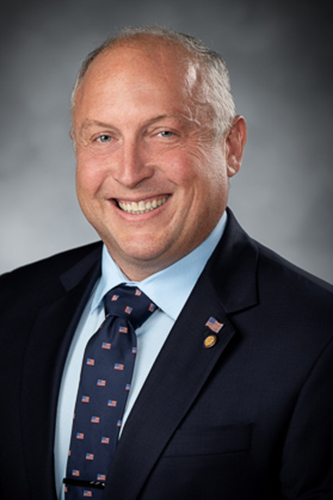
Photo of Bill Flanigan
R West Virginia House of Delegates · District 4

Del. Bill Flanigan

Compare
Total votes
1,396
all sessions
Attendance
93%
94 missed
Near the chamber average
With party
91%
of cast votes
Lower than 92% of chamber peers
Bipartisan score
4%
crosses aisle rarely
Higher than 91% of chamber peers
Sponsored
162
bills & resolutions
Near the chamber average
Committees
2
assignments
162 bills and resolutions

Sponsored bills

Total
162
Primary
29
Co-sponsor
133
This page
162
matching current filters
Co-sponsor HB 4627
In committee · West Virginia House of Delegates · Co-sponsor
Mandate free cancer screenings for professional firefighters.

Maddy summaryHB 4627 requires health insurance plans and self-insured employer health plans in West Virginia to cover preventive cancer screenings for professional firefighters without cost-sharing (such as copays or deductibles), except in high-deductible health plans where standard deductibles apply. The bill applies to all firefighters employed by state, county, or municipal entities and mandates coverage based on the International Association of Fire Fighters' current screening guidelines. This ensures firefighters can access regular cancer screenings at no additional cost, promoting early detection and health monitoring for this occupational group.

In committee Jan 21, 2026 1 co-sponsor
Co-sponsor HB 4664
In committee · West Virginia House of Delegates · Co-sponsor
Relating to increasing compensation for panel attorneys.

Maddy summaryHB 4664 increases compensation rates for panel attorneys who represent eligible clients in public defense cases in West Virginia. It directly affects these attorneys and the Public Defender Services agency that processes their payments. Key provisions require Public Defender Services to annually report to oversight bodies on legal services provided by panel attorneys, while also clarifying voucher submission, review, and dispute resolution processes for compensation claims. The bill aims to improve payment accuracy and transparency without altering the core structure of public defense funding.

In committee Jan 21, 2026 1 co-sponsor
Co-sponsor HB 4549
In committee · West Virginia House of Delegates · Co-sponsor
Local Government Freedom Act

Maddy summaryHB 4549 requires West Virginia local governments to award public construction contracts over $50,000 to the lowest qualified responsible bidder - defined as the lowest-priced bidder meeting standards for ability, compliance with state laws, and a valid bid bond. The bill also permits political subdivisions (like counties, cities, and school boards) to enter into project labor agreements (pre-hire union contracts) for construction projects. Additionally, for projects exceeding $250,000, the winning bidder must provide a list of subcontractors performing over $25,000 in work within one business day of the bid opening. This directly affects local governments and contractors involved in public construction projects across West Virginia.

In committee Jan 21, 2026 1 co-sponsor
Co-sponsor HB 4548
In committee · West Virginia House of Delegates · Co-sponsor
WV building and constructions trades code enforcement West Virginia First

Maddy summaryHB 4548 requires employers on West Virginia public construction projects to hire at least 75% of workers from the local labor market, with flexibility for up to two non-local workers per project. If employers cannot find enough local workers, they must request a waiver from WorkForce West Virginia, which then permits hiring outside the area using the same qualifications and wage rates previously provided. The bill clarifies that the West Virginia Jobs Act applies to all public construction projects, including those managed by the West Virginia Development Authority. It also mandates the Division of Labor to create a public online database (redacting personal information) showing where workers reside on these projects, accessible for transparency. This directly affects construction employers receiving public contracts and public authorities overseeing such projects.

In committee Jan 20, 2026 1 co-sponsor
Co-sponsor HB 4581
In committee · West Virginia House of Delegates · Co-sponsor
Relating to monthly status meeting of county entities

Maddy summaryHB 4581 requires each county Bureau of Social Services office to hold monthly meetings to review child welfare operations and improve coordination. The bill mandates attendance by county supervisors, law enforcement, school officials, health providers, and other partners to discuss staffing, caseloads, service barriers, and child safety issues. Each meeting must produce a written report documenting attendees, key issues, and action items. This bill directly affects county child welfare offices and their local partners, aiming to enhance timely responses to child abuse and neglect through structured communication.

In committee Jan 20, 2026 1 co-sponsor
Co-sponsor HB 4614
In committee · West Virginia House of Delegates · Co-sponsor
Relating to statewide prevention plan.

Maddy summaryHB 4614 requires West Virginia's Department of Human Services (DoHS) to develop and implement a statewide prevention plan by January 1, 2027. The plan must provide evidence-based, trauma-informed services to children under 18 and their families - including those in foster care, youth aging out of foster care, pregnant youth, post-adoption youth, and families with specific needs - through a mix of physical locations and telehealth. DoHS must track service outcomes, report annually starting December 2027 on county-level service reach and costs, and seek federal funding to support these services. The bill focuses on expanding accessible prevention support for vulnerable youth and families without creating new funding.

In committee Jan 20, 2026 1 co-sponsor
Co-sponsor HB 4571
In committee · West Virginia House of Delegates · Co-sponsor
Taxpayer Protection Act

Maddy summaryHB 4571, the "Taxpayer Protection Act," prevents West Virginia residents from being wrongly classified as independent contractors instead of employees. It requires the Tax Commissioner to apply an "ABC" test to determine worker status: (1) absence of employer control, (2) work being unusual for the employer’s business, and (3) the worker operating as an independent business. Employers must prove all three criteria to classify a worker as an independent contractor; otherwise, the worker is presumed an employee for tax purposes. This ensures the state collects proper income taxes from employment relationships, directly affecting both workers (who may gain tax protections) and hiring businesses (which must comply with the classification rules).

In committee Jan 20, 2026 1 co-sponsor
Co-sponsor HB 4620
In committee · West Virginia House of Delegates · Co-sponsor
Relating to clothing and necessity allowance.

Maddy summaryHB 4620 establishes requirements for clothing and necessity allowances for children in foster care in West Virginia. It defines "adequate wardrobe" as appropriate, seasonally suitable clothing in good condition and sets a minimum $375 initial clothing allowance for new placements, plus up to $175 for supplementary needs like illness or damaged items. The bill requires placement providers (foster parents, kinship caregivers, or residential providers) to assess a child's existing wardrobe and necessities at intake, update an inventory periodically, and use a reloadable card as the primary payment method for approved items. It directly affects children in state custody and their caregivers by ensuring access to essential clothing and supplies during foster care. The law specifies that initial allowances cover immediate needs only, not full outfitting, and outlines three payment options for the Department of Human Services.

In committee Jan 20, 2026 1 co-sponsor
Co-sponsor HB 4579
In committee · West Virginia House of Delegates · Co-sponsor
Relating to body-worn cameras

Maddy summaryHB 4579 requires West Virginia child protective services (CPS) workers to use body-worn cameras during investigations of child abuse or neglect reports. CPS workers must first obtain consent to use cameras in private areas where people expect privacy, and they may skip using cameras if it would harm a child's privacy or impede the investigation - though they must document the reason in the case file. All audio and video recordings become confidential child welfare records, protected from public disclosure under state law, and must be kept until all legal appeals are complete. This bill directly affects CPS workers conducting in-person investigations across West Virginia.

In committee Jan 20, 2026 1 co-sponsor
Co-sponsor HB 4580
In committee · West Virginia House of Delegates · Co-sponsor
Relating to the establishment of a pilot program for the use of mobile devices in child abuse and neglect investigations.

Maddy summaryHB 4580 establishes a two-county pilot program requiring child protective service (CPS) workers in West Virginia to use mobile devices (like tablets) during child abuse and neglect investigations starting October 1, 2026. The bill mandates that these devices must have customized software allowing real-time digital record-keeping, automatic daily secure uploads to the department’s server, and compatibility with existing systems to track quality metrics. The pilot will last five years, with annual reports to the Legislative Oversight Commission detailing device usage and system performance. This directly affects CPS workers and the child welfare system in the participating counties, focusing on evaluating whether mobile technology improves investigation efficiency.

In committee Jan 20, 2026 1 co-sponsor
Showing 71 to 80 of 162 bills
Previous 1 … 7 8 9 … 17 Next